
Gordon Merrick
American-born writer of gay romance
About Gordon Merrick
Lived 1916 – 1988 (aged 71). Gordon Merrick was an American and French novelist, stage actor, intelligence agent, journalist, television editor and actor.
William Gordon Merrick (3 August 1916 – 27 March 1988) was a Broadway actor, wartime OSS field officer, best-selling author of gay-themed novels, and one of the first authors to write about homosexual themes for a mass audience.
Early life William Gordon Merrick was born in Bala Cynwyd, Pennsylvania, a suburb of Philadelphia. His father, Rodney King Merrick, was a manager of a truck company who eventually became a bank manager. His mother was the former Mary Cartwright Gordon (b. 26 July 1893, in Natchez, Mississippi). His only sibling was his older brother Samuel. Gordon and Samuel were great-grandsons of the Philadelphia philanthropist Samuel Vaughn Merrick (1801–1870).
Merrick enrolled in Princeton University in 1936, studied French literature, and was active in campus theater. He quit in the middle of his junior year and moved to New York City, where he became an actor, landing the role of Richard Stanley in George S. Kaufman and Moss Hart's The Man Who Came to Dinner. Merrick became Hart's lover for a time, but tired of the theater, with its endless nights playing the same role.
Writing career In 1941, Merrick quit Broadway to become a reporter. Exempt from the draft because of hearing problems, Merrick moved to Washington, D.C., where he got a job with the Washington Star. He later worked for the Baltimore Sun, before returning to New York City to write for the New York Post. His years as a reporter helped him to develop a love of writing as well as a writing style. The somewhat autobiographical novel is about a gay American spy in France during World War II. Homosexual themes are minimized in the novel, which explores concepts of individual liberty and freedom. The spy's director is a dazzlingly handsome, but sadistic, bisexual. With the money he earned from his success, Merrick moved to France, and then to Greece, continuing writing. He published three further novels in the 1950s, but success eluded him.
Second breakout In 1970, 10 years after moving to Hydra, Merrick published his second successful novel and his best-known book, The Lord Won't Mind. The story's protagonists, Charlie Mills and Peter Martin, both young, handsome, and well-endowed, fall madly in love. The book follows Charlie's path from a closeted gay man to a person who accepts himself. Charlie is terrified of rejection, especially that of his elitist, moralistic grandmother, whom he loves but who expects him to maintain an aristocratic lifestyle. She plots against all of his romantic relationships not only to keep him to herself, but in the belief that his blood is racially tainted. At first, Charlie attempts to live a double life, expressing his homosexuality through acting and painting, but he feels incomplete without Peter.
It is through Charlie's anguish that Merrick's interest in the problems gays face in establishing an identity becomes evident. Charlie's socially imposed resistance contrasts with Peter's childlike innocence. Charlie eventually throws Peter out and marries a woman to appease his controlling grandmother.
Critical assessment Merrick contributed book reviews and articles to The New Republic, Ikonos, and other periodicals. In all, he wrote 13 books. Merrick's works are rarely included in anthologies, and few discussions of American gay authors mention him.
Although Merrick's novels are often criticized for their focus on handsome, virile men, some critics defend this emphasis as authentic:Beauty is a part of gay life, an important part – those men aren’t spending all those hours at the gym just for the cardiovascular benefits. This “obsession” has its roots in our core definition: We are gay because we find men beautiful. Beauty has its dangers, of course. That’s part of our complex response to it, and it is in fact this complexity that makes beauty a valid and vital subject for our literature. Some dismiss Merrick because of his obvious romanticism; others do so because he sprinkles explicit scenes of gay sexual intercourse throughout each novel.But underneath the handsome blonde studs with too much wealth falling in love on the Côte d'Azur, are fairly progressive and even radical conceptualizations of what it means to be gay, the likelihood of self-actualization, identity politics, and the role that power plays in relationships.
Merrick died of lung cancer aged 71 in Colombo, Sri Lanka, on 27 March 1988. He was survived by his partner of 29 years, Charles G. Hulse, and his brother and nephews.
Don’t just read it —
keep it.
Full-length biographies made to live with: read them, listen on the way to work, watch them tonight.
- E-book
- Audio
- Video
Instant download · yours to keep · every purchase keeps this site free
Important facts
People in Gordon Merrick's life
Named in this biography and alive at the same time





Related people
Same field, nearest in time

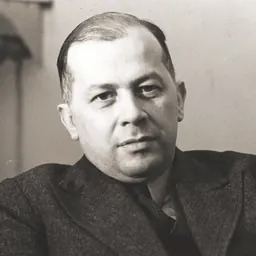


Contemporaries
People whose lives overlapped Gordon Merrick's



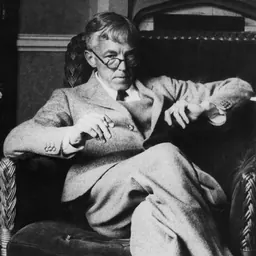

Frequently asked questions
Who was Gordon Merrick?
American-born writer of gay romance (1916–1988)
When was Gordon Merrick born?
Gordon Merrick was born on 3 August 1916 in Bala Cynwyd.
When did Gordon Merrick die?
Gordon Merrick died on 27 March 1988 in Colombo.
What was Gordon Merrick's occupation?
Gordon Merrick was a novelist, stage actor, intelligence agent, journalist, television editor and actor.
What nationality was Gordon Merrick?
Gordon Merrick was American and French.
Sources & further reading
Cite this page
APA: Biography.guide. (2026). Gordon Merrick. https://biography.guide/gordon-merrick/
MLA: "Gordon Merrick." Biography.guide, https://biography.guide/gordon-merrick/.
Chicago: "Gordon Merrick." Biography.guide. https://biography.guide/gordon-merrick/.
Data last updated: 2026-09-20 · Spot an error? Report a correction.
Page generated 2026-09-27 05:21 UTC