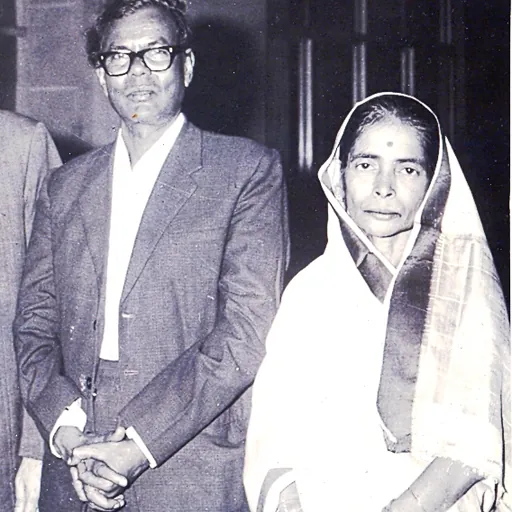
About Gopinath Mohanty
Lived 1914 – 1991 (aged 77). Gopinath Mohanty was an Indian writer, academic, civil servant and utkal University.
Gopinath Mohanty (1914–1991), winner of the Jnanpith award, and the first winner of the National Sahitya Akademi Award of odia language in 1955 – for his novel, Amrutara Santana – was a prolific Odia writer of the mid-twentieth century. Satya Prakash Mohanty, professor of English, Cornell University says: "In my opinion, Gopinath Mohanty is the most important Indian novelist in the second half of the twentieth century."
Career Mohanty joined the Odisha Administrative Service in 1938 and retired in 1969. He was invited by Professor Prabhat Nalini Das, then head of the English department at Utkal University as University Grants Commission, UGC Distinguished Visiting Professor and writer-in-residence for two years at the English department, Utkal University, in the late 1970s.
In 1986, he joined San Jose State University in the United States as an adjunct professor of Social Sciences. He died at San Jose, California on 20 August 1991.
Novels Gopinath's first novel, Mana Gahirara Chasa, was published in 1940, which was followed by Dadi Budha (1944), Paraja (1945) and Amrutara Santana (1947). His literary output was prolific. He wrote twenty-four novels, ten collections of short stories, three plays, two biographies, two volumes of critical essays, and five books on the languages of the Kandha, Gadaba and Saora tribes of Odisha. He translated Tolstoy's War and Peace (Yuddh O Shanti), in three volumes, 1985–86), and Rabindranath Tagore's Jogajog, (1965), into Odia.
Dadi Budha (The Ancestor) (1944) is his first novel on the tribal community and it offers a realistic portrait of life and tradition of the tribal people of the mountainous region surrounded by thick forest. It is a seminal novel in Tribal Literature and corresponds to Chinua Achebe's classic tale of Colonial invasion of tribal culture Things fall Apart and foregrounds almost the same theme – the impact of modernity and disintegration of tribal society.
Paraja (1945) is a moving narrative based on the life of a tribal community. It is the tale of one's attachment to land, the soil of one's ancestors. Sitakant Mahapatra describes the novel as "the story of shattered dreams". The novel also implicitly portrays the impact of colonial rule on Odia tribals.
Amrutara Santana (1949), the first novel to receive the Central Sahitya Akademi Award (1955), is centered round the life of the Kandhas, another tribe in the southern parts of Odisha.
Short stories In the post-Independence era Odia fiction assumed a new direction. The trend which Fakir Mohan Senapati had started developed after the 1950s. Gopinath Mohanty, Surendra Mohanty and Manoj Das are considered the three literary jewels of this period. They were pioneers of a new trend, namely, that of developing or projecting the "individual as protagonist" in Odia fiction. Another of Gopinath's stories, 'Pimpudi' has had great influence. It is the story of a forest officer checking rice smuggling to Madras.
English translations Six of Mohanty's novels, along with a number of short stories, have been translated into English. It is extremely difficult to render in English the nuances of Gopinath Mohanty's language. However, translators have attempted to convey the richness and complexity of the original texts to readers unfamiliar with Odia.
Awards Mohanty received the Visuva Milan citation in 1950. He won the first central Sahitya Akademi Award in 1955 for his novel, Amrutara Santana.. It was the first Sahitya Akademi Award ever given to a creative literary work in any language or any genre. The Jnanpith Award was conferred on him in 1973 for his epic Mati Matala (The Fertile Soil). He was awarded the Soviet Land Nehru Award in 1970, for his Odia Translation of Gorky's work, a D.Litt. by Sambalpur University in 1976 and a distinguished visiting professorship for creative writing by the U.G.C. at the Department of English, Utkal University in 1976. In 1981, the government of India conferred the Padma Bhushan on him in recognition of his distinguished contribution to literature. He was an Emeritus Fellow of the Government of India for creative writing.
Don’t just read it —
keep it.
Full-length biographies made to live with: read them, listen on the way to work, watch them tonight.
- E-book
- Audio
- Video
Instant download · yours to keep · every purchase keeps this site free
Important facts
People in Gopinath Mohanty's life
Named in this biography and alive at the same time
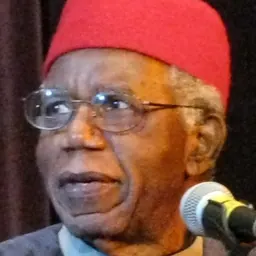
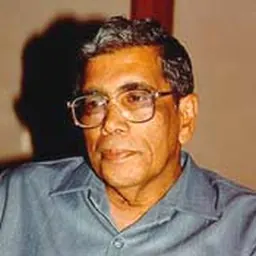
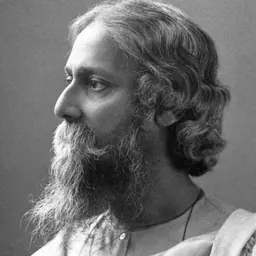


Related people
Same field, nearest in time



Contemporaries
People whose lives overlapped Gopinath Mohanty's




Frequently asked questions
Who was Gopinath Mohanty?
Indian (Odia) writer (1914-1991)
When was Gopinath Mohanty born?
Gopinath Mohanty was born on 20 April 1914 in Cuttack district.
When did Gopinath Mohanty die?
Gopinath Mohanty died on 20 August 1991 in San Jose.
What was Gopinath Mohanty's occupation?
Gopinath Mohanty was a writer, academic, civil servant and utkal University.
What nationality was Gopinath Mohanty?
Gopinath Mohanty was Indian.
Sources & further reading
Cite this page
APA: Biography.guide. (2026). Gopinath Mohanty. https://biography.guide/gopinath-mohanty/
MLA: "Gopinath Mohanty." Biography.guide, https://biography.guide/gopinath-mohanty/.
Chicago: "Gopinath Mohanty." Biography.guide. https://biography.guide/gopinath-mohanty/.
Data last updated: 2026-09-22 · Spot an error? Report a correction.
Portrait: Wikimedia Commons · author & licence
Page generated 2026-09-27 05:03 UTC