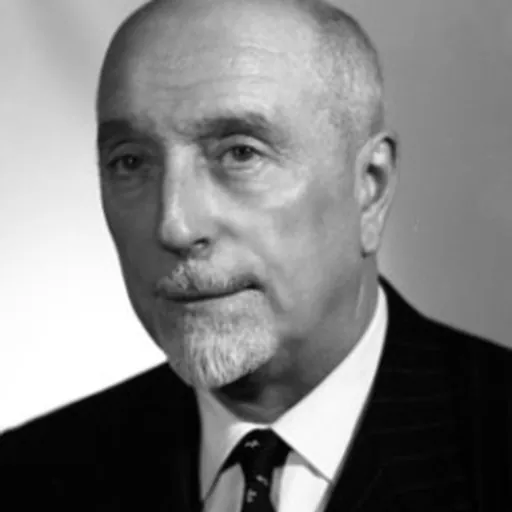
About Giuseppe Medici
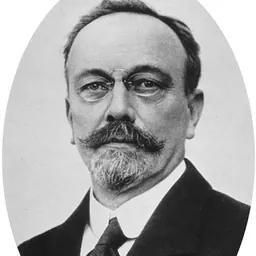
Lived 1907 – 2000 (aged 92). Giuseppe Medici was an Italian politician, diplomat, university teacher, economist and agronomist.
Giuseppe Medici (24 October 1907 – 21 August 2000) was an Italian politician and economist.
Biography He was born in Sassuolo, in the province of Modena, to Agostino Medici and Ersilia Messori, the second of four children. In 1926, after graduating as a surveyor at the Guarini Institute in Modena, he enrolled at the "Istituto Superiore Agrario di Milano" where he graduated in Agricultural Sciences in 1929, with a thesis on the economy of irrigation in the Lombard plain. Once military obligations were fulfilled, he briefly taught at the Technical Institute for Surveyors of Piacenza. In 1930 he published numerous publications and in 1931 he became the assistant of Giuseppe Tassinari; the following year he was a lecturer in agricultural economics and politics at the University of Bologna. In 1933 he won the competition for the chair at the University of Perugia and was then called to teach at the University of Turin.
In 1934 he published the Introduction to Agrarian Estimation which was a prelude to the Principles of Estimation of 1948, a text that will know many editions and will be adopted in numerous schools. In that same year he married Grazia Fiandri, with whom he had three children. In 1940 he wrote numerous agricultural voices in the Dictionary of Politics of the National Fascist Party. He was head of the Research Office of the Ministry of Agriculture, actively participated in the drafting of the civil code of 1942. The provisions of Book V in matters of agricultural law were set up by a subcommittee in which Medici had a prominent role, and great part of those rules were drafted by him in person.
Doctors also carried out a scientific activity focused on the themes of agriculture, agrarian reform and land reclamation. In July 1943 he took part in the work that led to the drafting of the Code of Camaldoli.
In 1960 he was called to hold the chair of Economic and Financial Policy of the Faculty of Political Science at the Sapienza University of Rome and became president of the National Academy of Agriculture.
From 1945 onwards he had more and more frequent relations with political circles thanks above all to agricultural skills: he was called by Manlio Rossi Doria to give his contribution to the solution of the problems of the agricultural economy in Italy and was included in the Italian delegation which in 1947 he went to the United States to discuss the Marshall Plan.
Initially close to the Italian Liberal Party, Medici then decided to join the Christian Democracy.
In 1948 he was elected Senator and held office until 1976. Medici served numerous times as Minister: he was Minister of Agriculture (Fanfani I Cabinet and Scelba Cabinet), Minister of Treasury (Leone II Cabinet and Andreotti II Cabinet), Minister of Budget (Fanfani II Cabinet), Minister of Public Education (Segni II Cabinet), Minister of Public Administration (Fanfani IV Cabinet), Minister of Industry (Moro I Cabinet and Moro II Cabinet) and Minister of Foreign Affairs (Andreotti II Cabinet).
He declined to run for re-election in 1976. Following his retirement from politics, he returned to academia and served as a professor emeritus at Sapienza University of Rome. He was also President of Montedison from 1977 to 1980.
He was also president of the Bolognese economic studies firm "Nomisma" from 1984 to 1995 and honorary president from 1995 until his death.
He died on 21 August 2000 at the age of 92.
Don’t just read it —
keep it.
Full-length biographies made to live with: read them, listen on the way to work, watch them tonight.
- E-book
- Audio
- Video
Instant download · yours to keep · every purchase keeps this site free
Important facts
People in Giuseppe Medici's life
Named in this biography and alive at the same time

Related people
Same field, nearest in time






Contemporaries
People whose lives overlapped Giuseppe Medici's



Frequently asked questions
Who was Giuseppe Medici?
Italian politician (1907-2000)
When was Giuseppe Medici born?
Giuseppe Medici was born on 24 October 1907 in Sassuolo.
When did Giuseppe Medici die?
Giuseppe Medici died on 21 August 2000 in Rome.
What was Giuseppe Medici's occupation?
Giuseppe Medici was a politician, diplomat, university teacher, economist and agronomist.
What nationality was Giuseppe Medici?
Giuseppe Medici was Italian.
Sources & further reading
Cite this page
APA: Biography.guide. (2026). Giuseppe Medici. https://biography.guide/giuseppe-medici/
MLA: "Giuseppe Medici." Biography.guide, https://biography.guide/giuseppe-medici/.
Chicago: "Giuseppe Medici." Biography.guide. https://biography.guide/giuseppe-medici/.
Data last updated: 2026-09-22 · Spot an error? Report a correction.
Portrait: Wikimedia Commons · author & licence
Page generated 2026-09-27 05:04 UTC