
About Giorgio Antonucci
Lived 1933 – 2017 (aged 84). Giorgio Antonucci was an Italian physician, psychoanalyst, essayist and poet, known for Freedom of thought.
Giorgio Antonucci (24 February 1933 – 18 November 2017) was an Italian physician, known for his questioning of the bases of psychiatry.
Biography
Antonucci was born, on 24 February 1933, in Lucca, Tuscany. In 1963 he studied psychoanalysis with Roberto Assagioli, the founder of psychosynthesis, and began to dedicate himself to psychiatry trying to solve the problems of the patients and avoiding hospitalisation and any kind of coercive method (mechanical, pharmacological, psychological). In 1968 he worked in Cividale del Friuli with Edelweiss Cotti, in a ward of the city hospital that had been opened as an alternative to the mental hospitals, called the Centro di Relazioni Umane [Centre for Human Relations].
In 1969 he worked at the psychiatric hospital in Gorizia, directed by Franco Basaglia. From 1970 to 1972 he directed the mental health centre of Castelnuovo nei Monti in the province of Reggio Emilia. From 1973 to 1996, he worked in Imola on the dismantling of several wards of the psychiatric hospitals Osservanza and Luigi Lolli. During the earthquake that struck Sicily in 1968, he worked as a physician for the Civil Protection Service of Florence. At the time of his death in 2017 Antonucci lived in Florence and collaborated with the Italian branch of the Citizens Commission on Human Rights, with the Centro di Relazioni Umane and with Radicali Italiani.
Thought on psychiatry
In a 1979 interview with Dacia Maraini, Antonucci make a provocation about the abolition of psychiatry.
In his writings, Antonucci affirmed that theoretically he is close to the humanistic-existential perspective of Carl Rogers, the approaches focused on the critique of psychiatry (Erving Goffman, R. D. Laing and Thomas Szasz . He is the founder of the non-psychiatric approach to psychological suffering, that is based on the following propositions: The involuntary commitment cannot be a scientific and medical approach to suffering, because it is based on violence against the patient's will. The ethic of the dialogue is substituted for the ethic of coercion. The dialogue cannot take place unless the individuals recognize themselves as persons in a confrontation among peers. The diagnosis is rejected as a psychiatric prejudice that impedes the undertaking of the real psychological work on the suffering of people, due to the contradictions of nature and the conscience and because of the contradictions of society and the conflicts of living together. Psychoactive drugs aim to sedate, to drug the person in order to improve the living conditions of the people who look after the psychiatric patient. All the other instruments that damage the person are refused, from the lobotomy to the castration (proposed by some people also in Italy, with reference to sexual offences), and every type of shock. In order to criticize the institutions it is necessary to bring into question also the thought that created them.
Antonucci posited that the "essence of psychiatry lies in an ideology of discrimination". He defended a different "psychiatric thought, which considers psychiatry as an ideology without scientific content, a non-knowledge, whose aim is to annihilate people instead of trying to understand the difficulties of life, both individual and social, in order to defend people, change society and give life to an authentically new culture."
Giorgio Antonucci and Thomas Szasz
In the words of Thomas Szasz, "Italian psychiatry has been incalculably enriched by Giorgio Antonucci. It is possible to consider him a good psychiatrist (whatever the meaning of the word): and that is true. It is also possible to consider him a good antipsychiatrist (whatever the meaning of the word): and that is just as certain. I prefer to consider him a respectable person that puts the respect for the so-called insane person above the respect for the profession. For that I send him my regards."
Awards
On 26 February 2005 Antonucci received in Los Angeles the Thomas Szasz Humanitarian Award. Szasz said of Antonucci, "His long-standing, courageous, and effective efforts to liberate psychiatric slaves in Italy from their bondage makes him an eminently worthy recipient of CCHR's Thomas Szasz Award."
Works I pregiudizi e la conoscenza critica alla psichiatria (preface by Thomas S. Szasz), ed. Coop. Apache – 1986 Psichiatria ieri ed oggi, Enciclopedia Atlantica (European Book, Milano) – 1989 Il pregiudizio psichiatrico, Eleuthera – 1989 La nave del paradiso, Spirali – 1990 Freud e la psichiatria, Enciclopedia Atlantica, European Book, Milano – 1990 Aggressività Composizione in tre tempi in Uomini e lupi, Edizioni Eleuthera – 1990 Psichiatria e cultura, Enciclopedia Atlantica, European Book, Milano – 1991 Contrappunti, Roma: Sensibili alle foglie – 1994 Critica al giudizio psichiatrico, Sensibili alle foglie – 1994 Il giudice e lo psichiatra, collection Volontà di Eleuthera – volume – Delitto e castigo – 1994 (with Alessio Coppola) Il telefono viola. Contro i metodi della psichiatria, Eleuthera – 1995 Pensieri sul suicidio, Eleuthera – 1996 Il pregiudizio psichiatrico, Eleuthera – 1998 Le lezioni della mia vita. La medicina, la psichiatria, le istituzioni, Spirali – 1999 Pensieri sul suicidio, Eleuthera – 2002 Il cervello. Atti del congresso internazionale Milano, dal 29 novembre al 1º dicembre 2002 (it contains Antonucci's speech at the congress), Spirali – 2004 Critica al giudizio psichiatrico, Sensibili alle foglie – 2005 Diario dal manicomio. Ricordi e pensieri, Spirali – 2006 Igiene mentale e libero pensiero. Giudizio e pregiudizio psichiatrici, publication by the association "Umanità nova", Reggio Emilia – October 2007. Foucault e l'antipsichiatria. Intervista a Giorgio Antonucci."Diogene Filosofare Oggi" N. 10 – Anno 2008 – Con «IL DOSSIER: 30 anni dalla legge Basaglia» Corpo – "Intervista di Augusta Eniti a Giorgio Antonucci", Multiverso" Università degli studi di Udine, n.07 08 . 2008 Conversazione con Giorgio Antonucci edited by Erveda Sansi. Critical Book – I quaderni dei saperi critici – Milano 16.04.2010. S.p.A. Leoncavallo. (with other authors) La libertà sospesa, Fefè editore, Roma – 2012 (contributions by Giorgio Antonucci and Ruggero Chinaglia) Della Mediazione by Elisa Ruggiero, Aracne – 2013 El prejuicio psiquiátrico [Il pregiudizio psichiatrico], introductions by Thomas Szasz and Massimo Paolini, translation and editorial coordination by Massimo Paolini, Katakrak, Pamplona, 2018 – Il pregiudizio psichiatrico, with a preface by Thomas Szasz, Ed. Elèuthera, 2020,
Interviews [ES] Periódico Diagonal nº 250: Antonucci: La locura no tiene ningún significado filosófico, interview conducted by Massimo Paolini at Antonucci's home in Florence in 2015 with the aim of promoting Antonucci's work abroad, particularly in the Spanish-speaking world. (see 'External links') The interview has been republished by CTXT nº 28, Infolibre, by the political magazine Viento Sur and by Paolini's website Perspectivas anómalas - ciudad arquitectura ideas. It was later published in Antonucci's first book, translated into Spanish, El prejuicio psiquiátrico (Psychiatric Prejudice), Ed. Katakrak, Pamplona, 2018. , interview to Giorgio Antonucci by Moreno Paulon, in «A Rivista Anarchica», 46, No. 408, June 2016.
Don’t just read it —
keep it.
Full-length biographies made to live with: read them, listen on the way to work, watch them tonight.
- E-book
- Audio
- Video
Instant download · yours to keep · every purchase keeps this site free
Important facts
People in Giorgio Antonucci's life
Named in this biography and alive at the same time



Related people
Same field, nearest in time

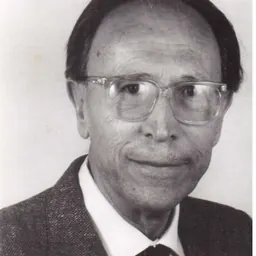

Contemporaries
People whose lives overlapped Giorgio Antonucci's



Frequently asked questions
Who was Giorgio Antonucci?
Italian physician (1933–2017)
When was Giorgio Antonucci born?
Giorgio Antonucci was born on 24 February 1933 in Lucca.
When did Giorgio Antonucci die?
Giorgio Antonucci died on 18 November 2017 in Florence.
What was Giorgio Antonucci's occupation?
Giorgio Antonucci was a physician, psychoanalyst, essayist and poet.
What was Giorgio Antonucci known for?
Giorgio Antonucci was known for Freedom of thought.
What nationality was Giorgio Antonucci?
Giorgio Antonucci was Italian.
Sources & further reading
· Wikipedia: Giorgio Antonucci
Cite this page
APA: Biography.guide. (2026). Giorgio Antonucci. https://biography.guide/giorgio-antonucci/
MLA: "Giorgio Antonucci." Biography.guide, https://biography.guide/giorgio-antonucci/.
Chicago: "Giorgio Antonucci." Biography.guide. https://biography.guide/giorgio-antonucci/.
Data last updated: 2026-09-20 · Spot an error? Report a correction.
Page generated 2026-09-27 05:30 UTC