
About Roberto Assagioli
Lived 1888 – 1974 (aged 86). Roberto Assagioli was an Italian psychiatrist, psychologist and author.
Roberto Assagioli (27 February 1888 – 23 August 1974) was an Italian psychiatrist in the fields of humanistic and transpersonal psychology. Assagioli founded the psychological movement known as psychosynthesis, which is still being developed today by therapists and psychologists who practice the psychological methods and techniques he developed.
Assagioli's published work in English includes four books and many monographs published as pamphlets as well as numerous lectures and papers in Italian that remain unpublished but which are being translated into English and posted online. His approach to psychosynthesis emphasized the possibility of progressive integration (that is, synthesis) of the personality, as well as the integration of the personality with the Higher Self from which it is derived.
“Psychosynthesis is a dynamic conception of psychic life as a struggle between a multiplicity of disparate, often conflicting forces, and a unifying Center that aims to master and harmoniously organize them.”
In addition, Assagioli's work has been shown to be effectively applicable in such fields as psychotherapy and treatment, medicine, education, organizational development, community development, spiritual life, and personal self-improvement.
Author Piero Ferrucci has said, “As far as I know, Roberto Assagioli is the only individual who has participated personally and actively in the unfurling of two distinct and fundamental revolutions in twentieth-century psychology. The first revolution was the birth of psychoanalysis and depth psychology in the beginning of the century: Assagioli, then a young medical student, presented his MD dissertation on psychoanalysis, wrote in the official Jahrbuch side by side with Freud and Jung, and was part of the Zurich Freud Society, the group of early psychoanalytical pioneers. The idea of unconscious processes in the mind made a lasting impression on him, an impression which he later developed into a variety of hypotheses well beyond the boundaries of orthodox psychoanalysis.
The second revolution in which Assagioli participated was the creation of humanistic and transpersonal psychology in the 1960’s. A. H. Maslow was the pioneer of these new developments. The main idea was simple: rather than focusing on pathology in order to define the human being (as psychoanalysis had all too often done), or on the structural similarities between the human and the animal nervous system (as behaviorism suggested), the humanistic and transpersonal point of view, while not denying the findings of the other schools, put the main emphasis on the organism’s striving for wholeness, on the human being’s potential for growth, expansion of consciousness, health, love and joy.”
Life Assagioli was born on 27 February 1888 in Venice, Italy, from a middle-class, Jewish background. He was born Roberto Marco Grego, the son of Elena Kaula and Leone Greco. However, his biological father died when Assagioli was two years old, and his mother remarried to Dr. Alessandro Emanuele Assagioli soon afterward. Assagioli was exposed to many creative outlets at a young age, such as art and music, which were believed to have inspired his work in Psychosynthesis. He was born with a clubfoot which his step-father straightened without surgery. He was very physically active in his youth, particularly in mountain climbing, swimming and rowing.
He grew up speaking Italian, French and English, which were spoken on alternate days in his home. It was at this age that he began to travel, mainly to other parts of Italy as well as England, France, Switzerland and Germany. He also had what he called “an adventure” in traveling for a short time in Russia, where he was exposed to Russian psychology and learned of the very unstable social situation there.
The Assagioli family moved from Venice to Florence in 1904 in order for Roberto to enroll in the Institute of Higher Studies, which became years later a division of the University of Florence. As a young man Assagioli read voraciously and decided on a career in neurology and psychiatry, and the institute was well equipped for such studies, having a psychology laboratory and museum even though there was no formal curriculum in “psychology.” Assagioli chose psychoanalysis for the subject of his doctoral thesis and persuaded his professors to allow this even though this topic was virtually unknown in Italy at the time.
He took his medical degree in 1910. He was considered by Freud and Jung to be among the first advocates of psychoanalysis in Italy, however he criticized aspects of it in his dissertation and later disavowed specific theories that Freud had while continuing to appreciate and use the methods of psychoanalysis. Among those notes is this observation:
"I realized that I was free to take one attitude or another towards the situation, to give it one value or another, to utilize it or not in one or another way . . .I could rebel inwardly or curse; or I could submit passively, vegetating; or I could indulge in the unwholesome pleasure of self-pity and assume the martyr’s role; or I could take the situation in a sporting way and with a sense of humor, considering it as a novel and interesting experience (what the Germans call an erlebnis)[an experience]. I could make it a rest cure; or a period of intense thinking either about personal matters, reviewing my past life and pondering on it, or about scientific and philosophical problems; or I could take advantage of the condition in order to submit myself to a definite training of my psychological faculties and make psychological experiments on myself; or finally as a spiritual retreat . . . I had the clear sure perception that this was entirely my own affair; that I was free to choose any or several of these attitudes and activities; that this choice would have definite and unavoidable effects which I could foresee, and for which I was fully responsible. There was no doubt in my mind about this essential freedom and power and their inherent privileges and responsibilities. A responsibility towards myself, towards my fellow mankind and towards life itself or God."
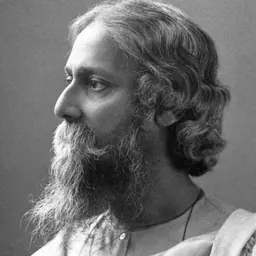
According to author and Assagioli's personal student Piero Ferrucci, "“Richness in contacts and interchanges was quite important in Assagioli’s background: consider such diverse acquaintances (some of them brief, others lasting) as Italian idealist Benedetto Croce, Russian esotericist P. D. Ouspensky, German philosopher Hermann Keyserling, Indian poet Rabindranath Tagore, Sufi mystic Inhayat Khan, Zen Scholar D. T. Suzuki, Tibet’s explorer Alexandra David Neel, plus psychologists Viktor Frankl, the founder of logotherapy, Robert Desoille, creator of the guided daydream, and C. G. Jung himself, before and after his break with psychoanalysis. Such contacts, coupled with a life of experimentation and reflection, provided an undoubtedly wide perspective for Assagioli’s creation, which he called Psychosynthesis.” Assagioli's earliest development of what became Psychosynthesis started in 1906, when he began his formal education in psychology. He continued his work on Psychosynthesis right up until his death. Freud and Assagioli were known to have corresponded, although they never had the chance to meet.
Assagioli said, "Psychosynthesis presupposes psychoanalysis, or rather, includes it as a first and necessary stage." However, Assagioli disagreed with specific theories formulated by Sigmund Freud that he considered limiting. He refused to accept Freud's materialism, reductionism and neglect of the positive dimensions of the personality. Psychosynthesis became the first approach born of psychoanalysis that also included the artistic, altruistic and heroic potentials of the human being. with whom he had a cordial relationship that began in 1906 and lasted until Jung's death. and developed his thought until “Psychosynthesis” was publicly introduced in his 1927 pamphlet, “A New Method of Healing: Psychosynthesis.” This broad discipline became the core of his work in psychology for the rest of his life. He founded psychosynthesis teaching and training centers in Rome, Florence, and supported the establishment of such centers in Europe, North America, and elsewhere.
Psychology Today interview In the December 1974 issue of Psychology Today, Assagioli was interviewed by Sam Keen, in which Assagioli discussed the differences between Freudian psychoanalysis and psychosynthesis:
Assagioli noted that Carl Jung, "of all modern psychotherapists, is the closest in theory and practice to psychosynthesis", and further expanded on the similarities between his own and Jung's views:
He also highlighted the differences between Jung's work and psychosynthesis:
Assagioli asserted about the will:
At the end of the interview, Keen himself concluded:
Spiritual work and parapsychology
Assagioli was also interested and active in the field of consciousness and transpersonal work. Having studied theosophy and Eastern philosophy, his written work developed different meditation techniques, including reflective, receptive and creative meditation. He wrote on a variety of spiritual topics for several periodicals, including the Hibbert Journal, The Beacon, Ultra (An Italian periodical devoted to theosophy), Medicina Psicosomatica (Psychosomatic Medicine), and the Journal of Transpersonal Psychology, of which he was a member of the original editorial board. He also contributed to several spiritual groups in the tradition known as the "ageless wisdom."
He founded two groups intended to teach meditation based on the ideas of the New Age teacher Alice Bailey: The Group for Creative Meditation and the Meditation Group for the New Age, for which he wrote essays and a basic teaching/training manual. He was also a co-founder of the School for Esoteric Studies, intended to teach the work of Alice Bailey at an advanced level. He was the direct inspiration for the founding of at least two meditation centers: Sundial House in the UK, and Meditation Mount in California, USA.
Assagioli maintained a lifelong interest in paranormal phenomena and parapsychology, some of which he regarded as having been sufficiently demonstrated — as psychological facts — so as to be regarded as legitimate subjects for scientific study. He wrote numerous essays on such phenomena, many of which he investigated personally, beginning with the then-famous case of the “thinking horses of Elberfeld,” which he witnessed during a trip to Germany in 1913 and about which he published a series of articles in the magazine Psiche. Assagioli regarded his own work as genuinely scientific and began writing on scientific activity along his critique of modern reductionist, materialist science with an essay (in Italian) titled “Gli Errori Degli Scienziati” or “The Errors of Scientists," published in Psiche in July–August 1913. In this article he advocated the need for clear thought and appropriate conceptions in theory and practice. In 1961 he wrote several essays and gave a talk on “parapsychological faculties” in which he asserts that “Parapsychological faculties are generally regarded as something exceptional, extraordinary and marvelous, but this does not correspond to the truth, and I aim precisely to highlight their universality and normality.”
Assagioli states, “Psychosynthesis includes parapsychology without reservation in its integral conception of the psyche and in its techniques of strengthening all functions: bio-psycho-spiritual. This inclusion is one of the characteristics that most differentiate Psychosynthesis from other psychological conceptions and from other methods of psychotherapy.”
An e-Book has been published that contains a collection of Assagioli's thought in this area, titled Psychosynthesis and Parapsychology.
During this period Assagioli also became active in progressive Judaism. He had never been the member of a synagogue or associated with orthodox organizations, although he had a personal relationship with Martin Buber and other prominent members of the Jewish community and was welcomed in synagogues when he visited them in Italy or other countries. He delivered several talks and wrote papers concerning the role of the Jews in the world and his home was the headquarters of the Italian Union for Progressive Judaism. He was quite enthusiastic about the possibilities for Judaism being a catalyst for world peace, and was opposed to any kind of militant or nationalistic Zionism.
Published works Assagioli's published works number in the hundreds, many of which were written in Italian or French for European periodicals from 1903 to 1974. His most well-known works are as follows:
1927 – Psychosynthesis – A New Method of Healing by Roberto Assagioli. Booklet. Institute of Psychosynthesis, Rome, Italy & Lucis Publishing Company, New York, USA (English) 1965 – Psychosynthesis: A Manual of Principles and Techniques by Roberto Assagioli - republished in 2000 as Psychosynthesis: A Collection of Basic Writings by Roberto Assagioli (English) 1966 – Per l'armonia della vita. La psicosintesi by Roberto Assagioli. Istituto di Psiconsintesi, Firenze, Italy (Italian) 1973 – The Act of Will by Roberto Assagioli (English) 1993 – Transpersonal Development: The Dimension Beyond Psychosynthesis (English) 2007 – Transpersonal Development: The Dimension Beyond Psychosynthesis by Roberto Assagioli - (new translation in English) 2016 – (Freedom in Jail by Roberto Assagioli. ed. by Catherine Ann Lombard, Istituto di Psiconsintesi, Firenze, Italy (English) 2019 - Psychosynthesis of the Couple by Roberto Assagioli, ed. by Jan Kuniholm 2024 - Creating Harmony in Life by Roberto Assagioli. Ed. by Catherine Ann Lombard, Istituto di Psiconsintesi, Firenze, Italy
Don’t just read it —
keep it.
Full-length biographies made to live with: read them, listen on the way to work, watch them tonight.
- E-book
- Audio
- Video
Instant download · yours to keep · every purchase keeps this site free
Important facts
People in Roberto Assagioli's life
Named in this biography and alive at the same time






Related people
Same field, nearest in time
Contemporaries
People whose lives overlapped Roberto Assagioli's




Frequently asked questions
Who was Roberto Assagioli?
Italian psychiatrist and pioneer (1888-1974)
When was Roberto Assagioli born?
Roberto Assagioli was born on 27 February 1888 in Venice.
When did Roberto Assagioli die?
Roberto Assagioli died on 23 August 1974 in Capolona.
What was Roberto Assagioli's occupation?
Roberto Assagioli was a psychiatrist, psychologist and author.
What nationality was Roberto Assagioli?
Roberto Assagioli was Italian.
Sources & further reading
· Wikipedia: Roberto Assagioli
Cite this page
APA: Biography.guide. (2026). Roberto Assagioli. https://biography.guide/roberto-assagioli/
MLA: "Roberto Assagioli." Biography.guide, https://biography.guide/roberto-assagioli/.
Chicago: "Roberto Assagioli." Biography.guide. https://biography.guide/roberto-assagioli/.
Data last updated: 2026-09-20 · Spot an error? Report a correction.
Page generated 2026-09-27 05:28 UTC