
About Gijsbert Karel van Hogendorp
Lived 1762 – 1834 (aged 71). Gijsbert Karel van Hogendorp was a Dutch politician, magistrate and diplomat.
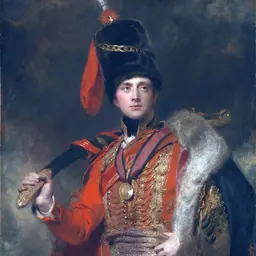
Gijsbert Karel van Hogendorp in front of the Beurs-WTC building in Rotterdam. Gijsbert Karel, Count van Hogendorp (27 October 1762 – 5 August 1834) was a liberal conservative and liberal Dutch statesman. He was the brother of Dirk van Hogendorp the elder and the father of Dirk van Hogendorp the younger.
Early life and education Gijsbert Karel van Hogendorp was born in Rotterdam into a regent family. A few years after his birth, his father Willem left for the Dutch East Indies in search of riches, but he would never return, as his ship sank on the way back. Wilhelmina of Prussia, Princess of Orange, consort to the Stadtholder William V, concerned herself with the fate of the young Gijsbert and his older brother Dirk, and arranged an education for them at the cadet corps in Berlin. He graduated as an officer but did not particularly like his new job in the Prussian military. He later became a page to Prince Henry of Prussia. During his stay in Berlin befriended the enlightened Dr Johann Erich Biester, a scholar and undersecretary at Prussian ministry of Cult who later became head of the Royal Library. Bister taught him English, Latin and Greek and together they read classical and modern literature. He returned to Holland in 1781 at the request of his mother to serve in the army of William V. He became quite close to the stadtholder, but especially to his wife, princess Wilhelmina, the sister of the King of Prussia.
In 1783, Van Hogendorp travelled to United States of America. He accompanied Pieter Johan van Berckel, who had been appointed the first emissary to the young republic. and headed the commission that wrote the Constitution of the Netherlands of 1814. On 6 April 1814 he was named the first Vice-President of the Council of State, making him the second most important person in the Netherlands. In 1815 the Netherlands became a Kingdom. Prince William accepted the throne as King William I. Belgium was later added to the Netherlands. The new King was too authoritarian to the taste of Van Hogendorp and the two men became enemies. Van Hogendorp constantly had to remind the King that he was a Constitutional, and not an absolute King. The relation between King and Vice-President became unworkable when Van Hogendorp criticised the King's protectionist policy. Van Hogendorp preferred free trade instead of protectionism. In 1816 Van Hogendorp asked to be relieved from his position of Vice-President of the Council of State. He was relieved on 7 November of that year and was named a member of the Eerste Kamer der Staten-Generaal, the Senate. As an MP he belonged to the moderate and liberal opposition to the King. In 1819 Van Hogendorp was dismissed as a member of the Council of State by the King.
In 1830 he urged the government to listen to the grieves of the Belgium people in order to keep the Belgians within the Kingdom. He showed some sympathy with the Belgians when they seceded from the Netherlands in 1831.
Gijsbert Karel van Hogendorp, who suffered from gout since his early fifties – he was bed stricken very often – died at the age of 71 years old at his house in The Hague.
Personal life Gijsbert Karel van Hogendorp was married to Hester Clifford (1766–1826), the daughter of an extremely wealthy merchant family from Amsterdam. They had ten children. When Gijsbert Karel died in 1834, six of his children were still alive. Actually, two of them still lived at the family home in The Hague.
On 20 September 1815 he was ennobled and became the first Count Van Hogendorp. When he died, his title passed to his eldest son Willem.
Through his wife, he inherited Adrichem Castle in Beverwijk, which they used as their summer retreat until 1808, when they moved to The Hague.
Religious ideas Van Hogendorp belonged to the Dutch Reformed Church. In his younger years he was not very much impressed by religion (he only showed interest in moral aspects of the Mosaic Law), but later on – when he was still a young man – he became a practising Christian. He was a typical middle-of-the-road Christian: he disliked the ultra orthodoxy as much as religious liberalism. He religious views could be described as quite enlightened. He was opposed to the religious and political opinions of the poet Willem Bilderdijk (his son Dirk on the other hand admired Bilderdijk very much) and preferred theologians like Prof Johannes van der Palm of the University of Leiden. Van der Palm was a keen (although quite conservative) supporter of textual criticism but dismissed higher criticism. Van Hogendorp preferred to read Van der Palm's (highly conservative) reconstruction of the text of the New Testament.
When he was suffering from gout and unable to attend Church on Sunday, he used to read devotional literature.
His brother Dirk His older brother, Dirk van Hogendorp (1761-1822), a military, was a General in the army of Napoleon and governor of Eastern Prussia. After Napoleon's escape from Elba and subsequent return to France, Dirk immediately sided with the Emperor. Napoleon named him governor of Nantes during his last hundred days in power. After the defeat of the Emperor, Dirk moved to Brazil and became a landowner.
Other relatives He was the great-great-great-grandfather of Audrey Hepburn.
Trivia When he was unable to sell his country estate at Adrichem, he ordered the demolition of the manor house in 1809. He was a self-declared Liberal. (To today's standards he would be a Liberal conservative.) He was very pro-British and a staunch supporter of Free trade. Van Hogendorp spoke several languages. He was fluent in English, French, Dutch, Latin and Greek. French was his mother tongue. He preferred English literature. He was a member of the Dutch Reformed Church and belonged to its more moderate wing. He used to read the New Testament in Greek. During his later years he made use of the Bible commentaries of Prof Dr Johannes van der Palm, a former Patriot. The Dutch conservative liberal party, VVD, considers Van Hogendorp as a liberal thinker, a precursor of Thorbecke.
Don’t just read it —
keep it.
Full-length biographies made to live with: read them, listen on the way to work, watch them tonight.
- E-book
- Audio
- Video
Instant download · yours to keep · every purchase keeps this site free
Important facts
Family & relationships
People in Gijsbert Karel van Hogendorp's life
Named in this biography and alive at the same time
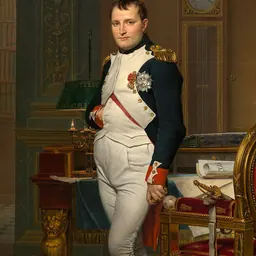
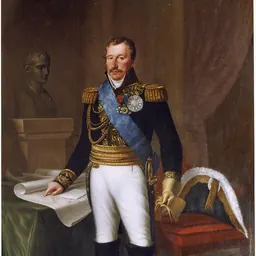
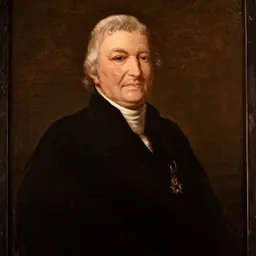
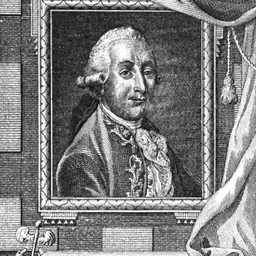
Related people
Same field, nearest in time



Contemporaries
People whose lives overlapped Gijsbert Karel van Hogendorp's





Frequently asked questions
Who was Gijsbert Karel van Hogendorp?
Dutch politician (1762–1834)
When was Gijsbert Karel van Hogendorp born?
Gijsbert Karel van Hogendorp was born on 27 October 1762 in Rotterdam.
When did Gijsbert Karel van Hogendorp die?
Gijsbert Karel van Hogendorp died on 5 August 1834 in The Hague.
What was Gijsbert Karel van Hogendorp's occupation?
Gijsbert Karel van Hogendorp was a politician, magistrate and diplomat.
What nationality was Gijsbert Karel van Hogendorp?
Gijsbert Karel van Hogendorp was Dutch.
Sources & further reading
· Wikipedia: Gijsbert Karel van Hogendorp
· DBpedia: Gijsbert Karel van Hogendorp
Cite this page
APA: Biography.guide. (2026). Gijsbert Karel van Hogendorp. https://biography.guide/gijsbert-karel-van-hogendorp/
MLA: "Gijsbert Karel van Hogendorp." Biography.guide, https://biography.guide/gijsbert-karel-van-hogendorp/.
Chicago: "Gijsbert Karel van Hogendorp." Biography.guide. https://biography.guide/gijsbert-karel-van-hogendorp/.
Data last updated: 2026-09-20 · Spot an error? Report a correction.
Page generated 2026-09-27 05:26 UTC