
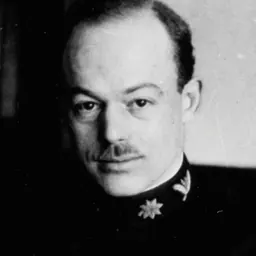
Giangiacomo Feltrinelli
Italian publisher and left-wing political activist
About Giangiacomo Feltrinelli
Lived 1926 – 1972 (aged 45). Giangiacomo Feltrinelli was an Italian editor, businessperson, publisher, politician and activist, known for Doctor Zhivago (novel), Fascist and Giuseppe di Lampedusa.
Library From 1949 Feltrinelli collected documents for the Giangiacomo Feltrinelli Library in Milan, documenting the history of ideas, in particular those related to the development of the international labour and socialist movements.
Publishing Near the end of 1954, Feltrinelli established a publishing company in Milan, Giangiacomo Feltrinelli Editore. Its first published book was the autobiography of Jawaharlal Nehru, the first prime minister of India.
Dr. Zhivago In late 1956, an Italian journalist showed Feltrinelli the manuscript of Doctor Zhivago by the Russian writer Boris Pasternak. Feltrinelli's Slavist advisor told him to publish the novel, stating that to not do so would "constitute a crime against culture". His son Carlo's biography of Feltrinelli records a correspondence between him and Pasternak as they successfully resisted clumsy attempts by the Soviet regime to halt publication of the novel. Doctor Zhivago immediately became an international bestseller.
Feltrinelli sold the film rights to Metro-Goldwyn-Mayer for $450,000. Produced in 1965, the resulting adaptation became one of the highest-grossing and critically acclaimed films of all time. The communist leadership in Moscow, which had not wanted the book published, criticised Feltrinelli, who in turn decided not to renew his PCI membership in 1957. While Feltrinelli remained on good terms with the PCI, party leaders were reluctant to be seen to condone criticism of the Soviet Union.
The Leopard Feltrinelli Editore scored another coup in 1958 when it published a book rejected by every other significant Italian publisher: The Leopard by Giuseppe Tomasi di Lampedusa. Still, the Feltrinelli Libra bookstore chain had a nominal capital of 120 million lire in 1956. The following year, Feltrinelli built up a chain of retail outlets, which after his death became the largest in Italy; it had over a hundred bookshops. Feltrinelli Masonite, which he chaired, had a turnover of 1.421 billion lire in 1965. Another firm, which he advised on real estate development, had a capital of 400 million lire in 1970.
Whatever his own reading tastes, Feltrinelli was always keen to promote the avant-garde, including the works of the influential literary circle Group 63. He also took the risk of publishing and distributing novels banned under Italian obscenity laws, such as Henry Miller's Tropic of Cancer.
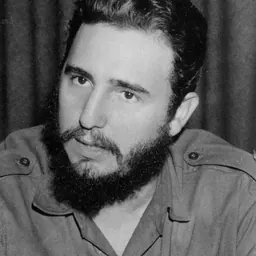
Activism In the post-war period, Feltrinelli had joined the Italian Socialist Party (PSI). However, in 1947 the PSI was engulfed in crisis following the departure of sections of its moderate wing, prompting Feltrinelli (alongside his new wife, Bianca) to rejoin the PCI instead. He remained a member of the party until 1958, when he left in solidarity with 'revisionist' criticism of the Hungarian Uprising and also because of certain conflicts that had emerged within the PCI regarding his publishing house's editorial policy, although he continued to maintain friendly relations with several of the party's leaders. Within six months of Che's assassination, Feltrinelli sold over two million posters bearing the image. In 1964, Feltrinelli met Cuban prime minister Fidel Castro. In 1967, he went to Bolivia and met with Régis Debray.
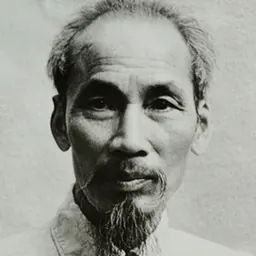
Feltrinelli published the writings of figures such as Castro, Che and Ho Chi Minh, and a series of pamphlets on the unfolding insurgencies and wars in Southeast Asia and the Middle East. His attempt to strengthen Graziano Mesina's rebel forces was eventually nullified by Italian military intelligence.
Feltrinelli increasingly advocated guerrilla activity in Italy. In 1970, fearing a right-wing coup d'etat, he founded the militant Gruppi di Azione Partigiana (Partisan Action Groups, or GAP). GAP would become Italy's second-largest militant organization to be formed during the Years of Lead, after the Red Brigades. Anticipating assassination attempts by the CIA or Mossad, Feltrinelli assumed a nom de guerre ("Osvaldo") and went underground. Some 8,000 people attended Feltrinelli's funeral. His death, like his father's 37 years before, was viewed as suspicious by several intellectuals, including investigative journalist Camilla Cederna, but Barzini rejected the hypothesis of a state-sponsored assassination:
In 1974, an audio recording found in a shelter of the Red Brigades described Feltrinelli as
The defendants denied the thesis of the murder, claiming it was a commemoration of the publisher and his political ideas, and a critique addressed to the circles of the extra-parliamentary left who had tried to deny them. They also admitted that Feltrinelli was not obsessed with a neo-fascist coup, because he wanted to establish in Italy the armed struggle and was one of the first to have had contacts with the German Red Army Faction: (this legal sentence was largely confirmed in 1981).
In cultural memory Senior Service, by Carlo Feltrinelli, 2001. This lengthy biography, written by Giangiacomo's son Carlo, was first published in Italian, and then translated into English. Feltrinelli, an 80-minute documentary by Alessandro Rossetto, was released in 2006. Feltrinelli, played by Fabrizio Parenti, appears in the 2012 film Piazza Fontana: The Italian Conspiracy (Romanzo di una strage) by Marco Tullio Giordana. The film is about the 1969 bomb explosion in Milan's Piazza Fontana, the subsequent fall to his death from a police window of an anarchist suspect, and the putative murder of Luigi Calabresi, the investigating police commissioner. In the film, he takes part personally in the discovery of Feltrinelli's body: Calabresi, in reality, directed the investigation from Milan. Feltrinelli's life story was the subject of the 2013 concept album and theatrical performance Praxis Makes Perfect by the group Neon Neon. Feltrinelli, his publishing, and his suspicious death are mentioned several times in The Flamethrowers, a novel by Rachel Kushner which is set during the Years of Lead.
Don’t just read it —
keep it.
Full-length biographies made to live with: read them, listen on the way to work, watch them tonight.
- E-book
- Audio
- Video
Instant download · yours to keep · every purchase keeps this site free
Important facts
Family & relationships
People in Giangiacomo Feltrinelli's life
Named in this biography and alive at the same time


Related people
Same field, nearest in time


Contemporaries
People whose lives overlapped Giangiacomo Feltrinelli's



Frequently asked questions
Who was Giangiacomo Feltrinelli?
Italian publisher and left-wing political activist (1926-1972)
When was Giangiacomo Feltrinelli born?
Giangiacomo Feltrinelli was born on 19 June 1926 in Milan.
When did Giangiacomo Feltrinelli die?
Giangiacomo Feltrinelli died on 14 March 1972 in Segrate.
What was Giangiacomo Feltrinelli's occupation?
Giangiacomo Feltrinelli was an editor, businessperson, publisher, politician and activist.
What was Giangiacomo Feltrinelli known for?
Giangiacomo Feltrinelli was known for Doctor Zhivago (novel), Fascist, Giuseppe di Lampedusa, Kingdom of Italy and Terrorist group.
What nationality was Giangiacomo Feltrinelli?
Giangiacomo Feltrinelli was Italian.
Sources & further reading
· Wikipedia: Giangiacomo Feltrinelli
· DBpedia: Giangiacomo Feltrinelli
Cite this page
APA: Biography.guide. (2026). Giangiacomo Feltrinelli. https://biography.guide/giangiacomo-feltrinelli/
MLA: "Giangiacomo Feltrinelli." Biography.guide, https://biography.guide/giangiacomo-feltrinelli/.
Chicago: "Giangiacomo Feltrinelli." Biography.guide. https://biography.guide/giangiacomo-feltrinelli/.
Data last updated: 2026-09-25 · Spot an error? Report a correction.
Page generated 2026-09-27 05:12 UTC