
About John Hughes
Lived 1930 – 2022 (aged 92). John Hughes was an American editor, journalist and musician.
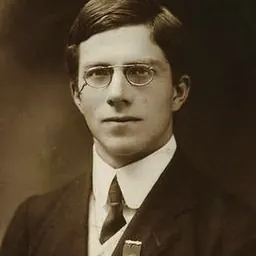
Robert John Hughes (28 April 1930 – 14 December 2022) was a British-born American journalist, a Nieman Fellow at Harvard University, and winner of the Pulitzer Prize for his coverage of Indonesia and the Overseas Press Club Award for an investigation into the international narcotics traffic. He served as editor of The Christian Science Monitor and The Deseret News and was a former president of the American Society of Newspaper Editors. Hughes authored two books and wrote a nationally syndicated column for The Christian Science Monitor.
Early life and education Hughes was born on 28 April 1930 in Neath, Wales, the only child of Evan and Dellis May Hughes. He was raised in London and attended the Ancient Literary Company Trade School. During World War II, both of Hughes' parents contributed to the war effort. His father was drafted into the British Army and served in North Africa for three years. His mother was conscripted into the Government Post Office during that time as well. Following the war, the entire family moved to South Africa.
Career At the age of 16, Hughes started his first job as a reporter at Natal Mercury. Alex Hammond, his first editor, sent him to business school to learn shorthand. Hughes then worked as a reporter for three years before returning to London, where he worked on Fleet Street at a news agency. He eventually was hired by the London-based The Daily Mirror. Shortly after accepting that position, The Natal Mercury contacted Hughes and asked him to come back to be the Chief of the State Capital Bureau. He accepted. He later became a stringer and a freelance writer for a number of papers in London and The Christian Science Monitor in Boston.
In 1955, at the age of 25, Hughes moved to United States and began working in Boston for The Christian Science Monitor. About 18 months later he was sent back to South Africa as a correspondent for The Monitor. He filled that position for six years. Hughes was named the Nieman Fellow at Harvard University the following year.
His achievements were readily recognized by The Christian Science Monitor, and he was promoted to managing editor, a position which he held for nine years from 1970 to 1979, until he was promoted to editor and manager. During his three-year stint as Editor and Manager, Hughes became interested in owning his own newspaper.
His initial purchase was a weekly paper in Cape Cod, Massachusetts, called the Cape Cod Oracle, based in Orleans. Hughes Newspapers, Inc. eventually included five weekly newspapers. The company purchased the Cape Cod News in Hyannis from Frank Fallaci and founded the Yarmouth Sun and Dennis Bulletin in the towns of Dennis and Yarmouth. Hughes Newspapers also published the Lower Cape Shoppers Guide. Hughes sold the newspapers to the G.W. Prescott Publishing Co. in Quincy, in the mid-1980s. The new organization became known as MPG Cape Newspapers, and was operated by MPG Communications in Plymouth. Later MPG Cape Newspapers became Cape Cod Newspapers.
Shortly before Ronald Reagan was elected president, Hughes received a call from one of Reagan's advisors, asking him what Reagan should say in his acceptance speech, should he be elected. Hughes offered some ideas, which were remembered and used. Shortly after Reagan was elected, Hughes was asked to move to Washington D.C. to serve in Reagan's administration from 1981 to 1985.
Hughes initially served as the Associate Director of the United States Information Agency, and was later appointed the director of the Voice of America.
In 1996, Neal A. Maxwell called Hughes with concerns about the Deseret News, a secular newspaper owned by the Church of Jesus Christ of Latter-day Saints. Maxwell solicited his advice on improving the paper's circulation. When Hughes returned from the United Nations he began work as a consultant for the Deseret News. Following his counsel, the paper switched its distribution to morning rather than afternoon, which improved circulation. Following the success of this change, the board of directors asked Hughes to be the editor of the newspaper. Hughes accepted the position, and became the first non-Mormon editor of the Deseret News. He filled that position for 10 years, until 2007, In 2011 he received the National Council for International Visitors' Citizen Diplomat Media Award. for the Christian Science Monitor. In 2014, he published an autobiography, Paper Boy to Pulitzer, which he said he wrote for his children and grandchildren, and because “I thought I had a love story in me, and it’s about journalism. The greatest profession in the world.”
Selected writings The New Face of Africa (1961) Indonesian Upheaval (1967) The End of Sukarno – A Coup that Misfired: A Purge that Ran Wild (2002, Archipelago Press, ) Paper Boy to Pulitzer (2014, )
Don’t just read it —
keep it.
Full-length biographies made to live with: read them, listen on the way to work, watch them tonight.
- E-book
- Audio
- Video
Instant download · yours to keep · every purchase keeps this site free
Important facts
People in John Hughes's life
Named in this biography and alive at the same time




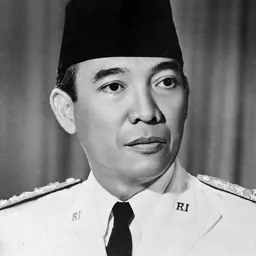
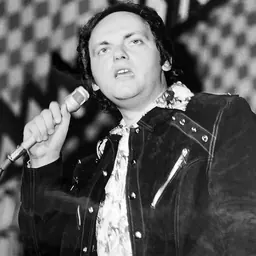

Related people
Same field, nearest in time
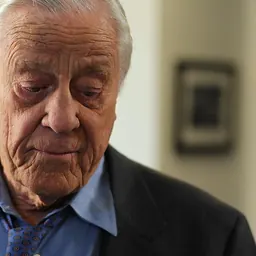
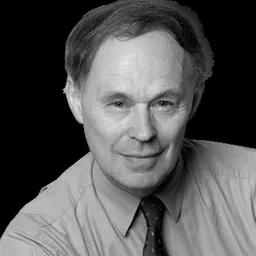


Contemporaries
People whose lives overlapped John Hughes's


Frequently asked questions
Who was John Hughes?
editor, born 1930
When was John Hughes born?
John Hughes was born on 28 April 1930 in Neath.
When did John Hughes die?
John Hughes died on 14 December 2022 in Salt Lake City.
What was John Hughes's occupation?
John Hughes was an editor, journalist and musician.
What nationality was John Hughes?
John Hughes was American.
Sources & further reading
· DBpedia: John Hughes (editor)
Cite this page
APA: Biography.guide. (2026). John Hughes. https://biography.guide/john-hughes-editor/
MLA: "John Hughes." Biography.guide, https://biography.guide/john-hughes-editor/.
Chicago: "John Hughes." Biography.guide. https://biography.guide/john-hughes-editor/.
Data last updated: 2026-09-22 · Spot an error? Report a correction.
Page generated 2026-09-27 05:19 UTC