
About Giacomo Carissimi
Lived 1605 – 1674 (aged 68). Giacomo Carissimi was an Italian composer.
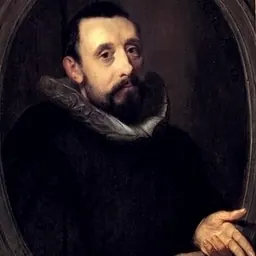
(Gian) Giacomo Carissimi (; baptized 18 April 160512 January 1674) was an Italian composer and music teacher. He is one of the most celebrated masters of the early Baroque or, more accurately, the Roman School of music. Carissimi established the characteristic features of the Latin oratorio and was a prolific composer of masses, motets, and cantatas. He was highly influential in musical developments in northern European countries through his pupils, like Kerll in Germany and Charpentier in France, and the wide dissemination of his music.
Biography Carissimi's exact birthdate is not known, but it was probably in 1604 or 1605 in Marino near Rome, Italy. Of his early life almost nothing is known. Giacomo's parents, Amico (1548–1633, a cooper by trade) and Livia (1565–1622), were married on 14 May 1595 and had four daughters and two sons; Giacomo was the youngest.
Nothing is known of his early musical training. His first known appointments were at Tivoli Cathedral, under the maestri di cappella Aurelio Briganti Colonna, Alessandro Capece and Francesco Manelli; from October 1623 he sang in the choir, and from October 1624 to October 1627 he was the organist. In 1628 Carissimi moved north to Assisi, as maestro di cappella (chapel master) at the Cathedral of San Rufino.
Carissimi seems to have never left Italy at all during his entire lifetime. He died in 1674 in Rome.
Carissimi's successor as maestro di cappella at the Collegium Germanicum in 1686 described him as tall, thin, very frugal in his domestic affairs, with very noble manners towards his friends and acquaintances, and prone to melancholy.
Music The great achievements generally ascribed to Carissimi are the further development of the recitative, introduced by Monteverdi, which is highly important to the history of dramatic music; the further development of the chamber cantata, by which Carissimi superseded the concertato madrigals which had themselves replaced the madrigals of the late Renaissance; and the development of the oratorio, of which he was the first significant composer.
Carissimi's position in the history of church, vocal and chamber music is somewhat similar to that of Francesco Cavalli in the history of opera. While Luigi Rossi was his predecessor in developing the chamber cantata, Carissimi was the composer who first made this form the vehicle for the most intellectual style of chamber music, a function which it continued to perform until the death of Alessandro Scarlatti, Emanuele d'Astorga and Benedetto Marcello.
Carissimi is also noted as one of the first composers of oratorios, with Jephte as probably his best-known work, along with Jonas. These works and others are important for establishing the form of oratorio unaccompanied by dramatic action, which maintained its hold for 200 years. The name comes from their presentation at the Oratory of Santissimo Crocifisso in Rome. He may also be credited for having given greater variety and interest to the instrumental accompaniments of vocal compositions. Charles Burney and John Hawkins both published specimens of his compositions in their works on the history of music, while Henry Aldrich collected an almost complete set of his compositions, which are currently housed at the library of Christ Church, Oxford. The British Museum also possesses numerous works by Carissimi. Most of his oratorios are in the Bibliothèque Nationale in Paris.
Carissimi was active at the time when secular music was about to usurp the dominance of sacred music in Italy. The change was decisive and permanent. When Carissimi began composing, the influence of the previous generations of Roman composers was still heavy (for instance, the style of Palestrina) and when his career came to a close the operatic forms, as well as the instrumental secular forms, were predominant. In addition, Carissimi was important as a teacher, and his influence spread far into Germany and France. Much of the musical style of Johann Caspar Kerll and Marc-Antoine Charpentier, for instance, was influenced by Carissimi.
Selected works
Oratorios Baltazar, oratorio for 5 voices, 2 violons & continuo Dives Malus (The wicked rich man) also known as Historia Divitis for 2 sopranos, tenor, bass (c. 1640), about the Rich man and Lazarus. Ezechia, oratorio for 5 voices, 2 violons & continuo Jephte, oratorio for 6 voices & continuo 1648 Jonas, oratorio for soloists, SATB double chorus, 2 violins & continuo
Carissimi is the viewpoint character for the "Euterpe" series of short stories by Enrico M. Toro within the 1632 series of books edited by Eric Flint.
Footnotes
Don’t just read it —
keep it.
Full-length biographies made to live with: read them, listen on the way to work, watch them tonight.
- E-book
- Audio
- Video
Instant download · yours to keep · every purchase keeps this site free
Important facts
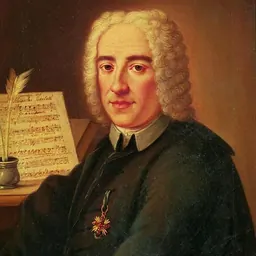
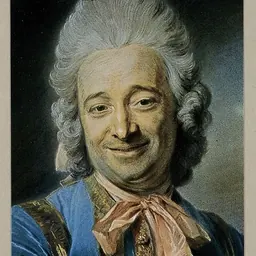
People in Giacomo Carissimi's life
Named in this biography and alive at the same time





Related people
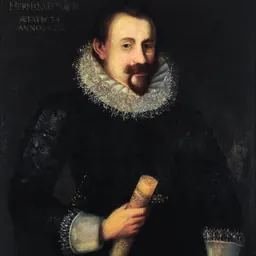
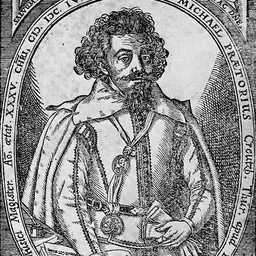
Same field, nearest in time
Contemporaries
People whose lives overlapped Giacomo Carissimi's






Frequently asked questions
Who was Giacomo Carissimi?
Italian composer (1605–1674)
When was Giacomo Carissimi born?
Giacomo Carissimi was born on 18 April 1605 in Marino.
When did Giacomo Carissimi die?
Giacomo Carissimi died on 12 January 1674 in Rome.
What was Giacomo Carissimi's occupation?
Giacomo Carissimi was a composer.
What nationality was Giacomo Carissimi?
Giacomo Carissimi was Italian.
Sources & further reading
· Wikipedia: Giacomo Carissimi
Cite this page
APA: Biography.guide. (2026). Giacomo Carissimi. https://biography.guide/giacomo-carissimi/
MLA: "Giacomo Carissimi." Biography.guide, https://biography.guide/giacomo-carissimi/.
Chicago: "Giacomo Carissimi." Biography.guide. https://biography.guide/giacomo-carissimi/.
Data last updated: 2026-09-20 · Spot an error? Report a correction.
Page generated 2026-09-27 05:03 UTC