
About Gertrude Sinha
Lived 1911 – 2011 (aged 100). Gertrude Sinha was an artist.
Gertrude Sinha (née Hirsch; 15 June 1911 – 5 September 2011) was an Austrian-born artist and children's art educator who spent the majority of her life in India.
Early life Gertrude Hirsch was born on 15 June 1911 in Vienna, Austria. Her older brother, Leopold, was one year her senior, and the siblings grew up in a close-knit family in the Landstraße district. Her father, Markus Hirsch, was a businessman, while her mother, Margarethe Hirsch (née Rebenwurzel), supported the household through domestic work. As a child, Gertrude was educated in German, Italian, French, and English.
Art studies in Vienna Hirsch demonstrated a talent for art as a child, and in October 1926 she enrolled in Vienna's Kunstgewerbeschule / University of Applied Arts (now die Angewandte).
Post-graduation During her art studies, Hirsch developed an interest in theosophy and joined a Theosophical Society lodge in Vienna around 1927. There, she began practising meditation and adopted a vegetarian diet.
In August 1936, George Arundale, president of the Theosophical Society, and his wife, Rukmini Devi Arundale, visited Geneva for the organisation's World Congress. Following the Congress, they embarked on an "Eastern Tour" through Europe, commencing in Vienna, where they stayed for four days.
During this visit, Hirsch met Rukmini Devi, who, two years earlier had founded the Annie Besant Memorial School in Madras (now Chennai). Devi was seeking teachers, and Hirsch was offered a position as an art instructor at the school. While teaching at the school, she met Kiron Sinha, a Bengali artist who had trained at Rabindranath Tagore's Kala Bhavana in Santiniketan, and who was working as an art teacher at Kalakshetra, another institution established by Rukmini Devi. The couple married on 1 June 1939,
In 1941, Kiron left teaching to work as a full-time independent artist. Hirsch continued teaching in various positions to financially support him, including part-time work at the Training College in T. Nagar, Madras, in 1942.
From February to April 1942, Hirsch collaborated with her husband to produce a pair of murals titled "The Rhythm of Life" The murals remain on display. On 12 April 1942, the Government of Madras advised residents to evacuate; approximately 500,000 people left the city within a week. Dr Elizabeth George, then a teacher at Women's Christian College and later its first Indian principal, recalled:
"Sometimes when I look at these pictures and remember the events of the months when the artists were at work, transforming a blank white wall into a permanent stage, presenting and representing the rhythm of life in full swing, a queer sense of strangeness and mystery hangs over me - for those were days when suspense and fear, uncertainty and insecurity made the College atmosphere almost as tense as the atmosphere in the city and the country at large. But the artists worked on, in those critical weeks of February, March and April, with visible leisureliness except when the hand and the brush could not keep pace with the creative forces at work in them, in executing what the mind conceived or the eye perceived in imagination. Yet they too shared a sense of urgency and they worked for long hours, day after day, week after week, with scanty meals and little rest until they were satisfied that they had made each figure true and beautiful according to the vision in their minds. It was a unique privilege to have been in College during those weeks, for although the finished pictures are now with us always and can be enjoyed at leisure, any day, the drama of the two painters had to be enjoyed while the pictures were still in the process of being created. That drama lives in the memory of those who had the privilege of watching them at work, now perched up on piles of packing cases giving full play to their brushes, now bent low on the floor mixing the paints, now standing together, gazing at the unfinished pictures on the wall and critically comparing them with the outline pictures on the paper spread out on the floor, now lost in thought and seeking inspiration, and occasionally relaxing and resting either on the swing or at the piano." On 15 June 1942, they were shot upon arrival. The Head of the department was Anna Molka Ahmed, and other members of the department included Esther Kehinkar (teacher), Nazrat Qureshi (demonstrator), and Sheila Prem Nath (demonstrator). This event prompted the family to purchase land in Santiniketan in 1947 with the intention of settling there. She collaborated closely with the Assam Co-operative Cottage Industries Association, Hirsch worked with the Association to develop designs for weavers and block printers, creating products intended for export. The artists collaborated on several projects, including the design and production of woodblocks.
Hirsch's position in Shillong was disestablished in January 1950 due to funding cuts. By April 1950, the family had returned to Santiniketan.
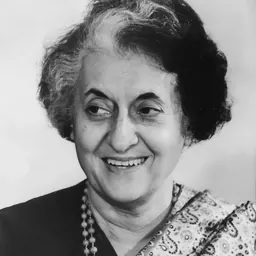
In December 1950, the Delhi State Women's Section of Refugee Handicrafts organised an exhibition of hand-printed textiles which included designs Hirsch had produced during her tenure in Assam. The exhibition was opened by Indira Gandhi. Gandhi later became an admirer of Kiron's paintings and Hirsch's hand-printed textiles, purchasing many works for display in public offices and for gifting to foreign visitors and dignitaries. She also inaugurated their exhibition at Freemasons' Hall in December 1952. Reviewing this exhibition, Fabri again praised Hirsch's textiles:
"The hand-printed textiles on view are works of art, and no doubt about it. The blocks are designed and cut by hand by these two admirable artists, Mr and Mrs Sinha, based on folk art and combined into astonishingly original, striking, and attractive patterns. There is marked advance even from last year's work, and the variety of patterns is greater. Nothing like it has been produced anywhere, and Christmas shoppers will lose their hearts the moment they enter this fairyland of prints. The prices are reasonable."
In March 1959, Hirsch collaborated with Californian artist Jane Woolverton—whom she had met in Santiniketan—to hold an exhibition of Hirsch's textile designs alongside Woolverton's paintings at Artistry House on Park Street in Kolkata. One reviewer noted:
"Mrs Sinha's works deserve particular mention as effective examples of printing of woven material. She has adapted exquisite designs from temple reliefs and statues as well as toys and has drawn her inspiration from various folk styles, primitive art and Santal village scenes. For multicoloured designs combination blocks have been used successfully and their application on batik techniques in one piece is of great interest. In her use of a variety of colour shades the principles of colour harmony are carefully observed. A wealth of pictorial suggestions add enrichment to her finished products whose completeness as works of art makes it difficult to think of a happier combination of artist, printer, and dyer." Their works were also sold internationally, including in Sydney by interior designer Marion Hall Best.
During the 1950s, Hirsch managed the household with minimal domestic help. Twice weekly, she walked the 3.5 km from their home in Rattanpally, Santiniketan, to the market near Bolpur Railway Station to buy groceries, carrying them home on her head or with assistance from a local woman she employed. Water was drawn from a well on the family's property, often by Hirsch or her daughter Kamona. where she remained for three years.
In July 1962, Hirsch received Indian citizenship. The trip also provided an opportunity for Hirsch to reunite with her only brother, Leopold Hirsch, whom she had not seen for 27 years.
The second exhibition was held from 15 to 25 October 1963 at the Dominion Gallery in Sydney.
Hirsch and Kamona returned to India in November 1963. Despite maintaining regular correspondence thereafter, Gertrude and Leo did not meet again. Until the early 1990s, the couple had limited income and lived in poverty. Their financial difficulties and Kiron's blindness contributed to a reclusive lifestyle.
In their final years, Hirsch and Kiron led private lives, remaining within their compound and relying on local people for food and care.
Hirsch died in Santiniketan on 5 September 2011, a few months after her 100th birthday.
Don’t just read it —
keep it.
Full-length biographies made to live with: read them, listen on the way to work, watch them tonight.
- E-book
- Audio
- Video
Instant download · yours to keep · every purchase keeps this site free
Important facts
People in Gertrude Sinha's life
Named in this biography and alive at the same time



Related people
Same field, nearest in time



Contemporaries
People whose lives overlapped Gertrude Sinha's





Frequently asked questions
Who was Gertrude Sinha?
artist and children's art educator (1911-2011)
When was Gertrude Sinha born?
Gertrude Sinha was born on 15 June 1911.
When did Gertrude Sinha die?
Gertrude Sinha died on 5 September 2011.
What was Gertrude Sinha's occupation?
Gertrude Sinha was an artist.
Sources & further reading
· DBpedia: Gertrude Sinha Hirsch
Cite this page
APA: Biography.guide. (2026). Gertrude Sinha. https://biography.guide/gertrude-sinha/
MLA: "Gertrude Sinha." Biography.guide, https://biography.guide/gertrude-sinha/.
Chicago: "Gertrude Sinha." Biography.guide. https://biography.guide/gertrude-sinha/.
Data last updated: 2026-09-20 · Spot an error? Report a correction.
Page generated 2026-09-27 05:20 UTC