
About Gershon Agron
Lived 1893 – 1959 (aged 65). Gershon Agron was an Israeli journalist, writer, newspaper editor and politician.
signature = Gershon Agron signature over typewritten name Nov 9, 1954 01.png native_name = גרשון אגרון native_name_lang = he
Gershon Harry Agron (; ; 1 November 1959) was an Israeli newspaper editor, politician, and the mayor of West Jerusalem between 1955 and his death in 1959.
A Zionist from his youth, Agron joined the Jewish Legion and fought in Palestine towards the end of World War I; he had come to the attention of the Zionist Organization of America from the start, and quickly became a spokesperson for American Jewry.
He then joined the Zionist Commission as a press officer and helped expand the Jewish Telegraphic Agency upon his return to the United States, of which he served as editor. He lobbied for the creation of Mandatory Palestine and immigrated there permanently in 1924, heading the Zionist Executive press office. Lacking journalistic agency, and ambitious to create Zionist press, he started his own newspaper, The Palestine Post, which was renamed as The Jerusalem Post after Israel's founding; he changed his own name (from Agronsky to Agron) around the same time.
Agron continued to serve as press officer, promoting Zionism, in the new government, and became mayor of West Jerusalem in 1955, during which he spearheaded the city's development.
He died in office from a lung infection following a cancer operation. He was considered an influential proponent of Zionism.
Early life and education Gershon Harry Agron was born Gershon Harry Agronsky in Mena, Chernihiv, in the Russian Empire (present-day Ukraine), His maternal grandfather was a rabbi, and his parents had hoped he would be one, too. before he immigrated with his family to the United States in 1906. He grew up in Philadelphia, where he attended Mishkan Israel Talmudic School and Brown Preparatory School, and became friends with Israel Goldstein. When they were fourteen, Agron and Goldstein founded Philadelphia's Zionist boys' club. Dropsie College, and the University of Pennsylvania. His university education introduced him to the Western world, Prior to entering Temple University, in 1914, Agron wrote to Arthur Ruppin, at the time the World Zionist Organization (WZO)'s officer in Jaffa, expressing his desire to settle Palestine for which he moved to New York.
Career 1918–1920: Jewish Legion
Agron joined the Jewish Legion in April 1918, becoming a corporal and then sergeant during training in Windsor (Canada) and Plymouth (England). Within the Legion, he was part of the 40th Battalion of the Royal Fusiliers. In Canada, Agron – with Dov Yosef, Louis Fischer, and the Brainin brothers – took charge of recruitment for the Legion, enlisting, among others, David Ben-Gurion. noted, when meeting recruits in Montreal, "Gershon Agronsky and Louis Fischer stood out among all the other volunteers."
In New York in 1922, Agron helped found the American Jewish Legion organisation, serving as its first chairman. The group had the purpose to, among other goals, "colonize Jewish ex-service men in Palestine". He was one of the first Americans to permanently settle in Palestine. This delegation founded Keren Hayesod. In December 1921, Ze'ev Jabotinsky wrote to Agron, asking him to help a Zionist writer to publish in the United States; the two were friends at the time: in 1919, Agron had praised an article written by Jabotinsky and, in 1920, Agron was living in the Jabotinsky house, Ravakia.
Until his return to Palestine in 1924, he stayed as the editor of the JTA and was the Yishuv correspondent for international newspapers and press agencies, particularly British and American ones, including The Times; the Manchester Guardian; the Daily Express; and United Press International. Despite his international media connections, Agron's attempts at having the Associated Press carry his pro-Zionism articles regularly failed throughout the 1920s; the United States, where he was initially based and later sent copy from Jerusalem, had a media landscape at this time based on isolationism, and was loath to publish the affairs of the Yishuv.
1932–1948: The Palestine Post
Death Agron was admitted to the Hadassah Medical Center in early September 1959, for routine liver surgery to treat cancer. Following the surgery, he contracted pneumonia and subsequently died of this infection on 1 November 1959 at the age of 65. The Canadian Jewish Review said he "died after a long illness." At the time of his death, Agron was running for re-election as mayor of Jerusalem, with the vote set to happen on 3 November 1959.
He received a state funeral, attended by over 40,000 people, with a eulogy from Sharett calling him "one of the greatest personalities of the Zionist movement".
Legacy and impact The opening of Gershon Agron Street took place in October 1960; Agron's mayoral successor Mordechai Ish-Shalom is standing in the foreground. in downtown Jerusalem and Agron House, the former headquarters of the Israeli Press Association, are named after him. in a tribute at the cornerstone ceremony, Goldstein said Agron was "the journalist par excellence", also praising his services as an ambassador for Israel and Zionism:
The personal papers of Gershon Agron are kept at the Central Zionist Archives in Jerusalem. His diaries were posthumously published in 1964.
Don’t just read it —
keep it.
Full-length biographies made to live with: read them, listen on the way to work, watch them tonight.
- E-book
- Audio
- Video
Instant download · yours to keep · every purchase keeps this site free
Important facts
People in Gershon Agron's life
Named in this biography and alive at the same time

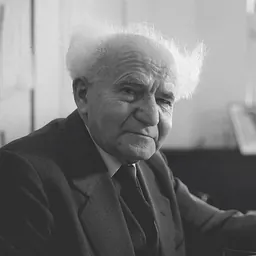



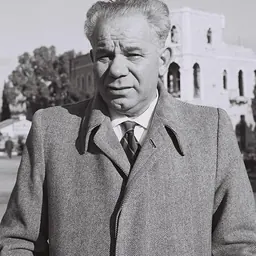
Related people
Same field, nearest in time
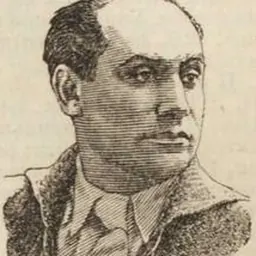
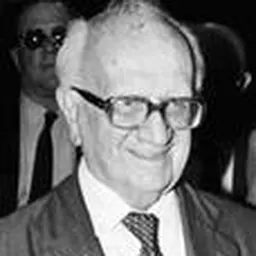


Contemporaries
People whose lives overlapped Gershon Agron's


Frequently asked questions
Who was Gershon Agron?
Israeli journalist & politician (1893–1959)
When was Gershon Agron born?
Gershon Agron was born on 27 December 1893 in Mena.
When did Gershon Agron die?
Gershon Agron died on 1 November 1959 in Jerusalem.
What was Gershon Agron's occupation?
Gershon Agron was a journalist, writer, newspaper editor and politician.
What nationality was Gershon Agron?
Gershon Agron was Israeli.
Sources & further reading
Cite this page
APA: Biography.guide. (2026). Gershon Agron. https://biography.guide/gershon-agron/
MLA: "Gershon Agron." Biography.guide, https://biography.guide/gershon-agron/.
Chicago: "Gershon Agron." Biography.guide. https://biography.guide/gershon-agron/.
Data last updated: 2026-09-27 · Spot an error? Report a correction.
Page generated 2026-09-27 05:16 UTC