
About Gerret Korsemann
Lived 1895 – 1958 (aged 63). Gerret Korsemann was a German police officer.
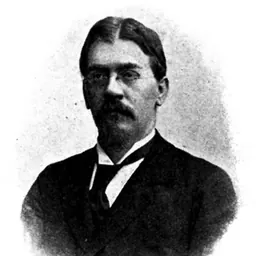
Gerret Korsemann (8 June 1895 – 16 July 1958) was a German SS and police official during the Nazi era and a Holocaust perpetrator. During the Second World War he was a high-ranking police official in the General Government and an SS and Police Leader in the occupied Soviet Union. After the war, he was convicted of war crimes and imprisoned in Poland.
Early life Korsemann was born in Nebel and took part in the First World War as a soldier in the Imperial German Army, receiving the Iron Cross 1st and 2nd class and the Wound Badge in black. After the end of the war, he served in the Freikorps "Grodno" in the Baltic States from 1919 to 1920, and remained there during the early 1920s.
After returning to Germany, Korsemann joined the Nazi Party (membership number 47,735) and its paramilitary unit, the Sturmabteilung (SA), in November 1926. As an early Party member, he was a holder of the Golden Party Badge. At the April 1932 Prussian state election, he was elected to the Landtag of Prussia and served until its dissolution in October 1933. While an SA-Standartenführer, he led SA-Standarte VI. After promotion to SA-Oberführer and SA-Brigadeführer, he was the SA leader in southern Hanover Province from 1931 to 1932. He was then promoted to SA-Gruppenführer in October 1932 and led the SA Gruppe Niedersachsen (Lower Saxony) until early 1937. At that point, he left the SA and joined the Ordnungspolizei (Orpo), Germany's uniformed police force. He worked as an administrator in the Orpo Main Office in Berlin until April 1939, working his way up to Oberstleutnant of Police.
On 20 April 1939 he was accepted into the SS (SS number 314,170) with the rank of SS-Oberführer, and next commanded the police school in Fürstenfeldbruck from April to October 1939.
Second World War Shortly after the outbreak of the Second World War, Korsemann was sent as a police administrator to the General Government in October 1939. He became the commander of all Ordnungspolizei forces in the Lublin District from March 1940 through January 1941; during this period he commanded Police Regiment Lublin. From February to April 1941, he commanded the 14th SS-Standarte "Totenkopfstandarte," and then served at the Reich Security Main Office in Berlin. In August 1941 he was promoted to SS-Brigadeführer and Generalmajor of Police, and was deployed to the Soviet Union as SS and Police Leader (SSPF) "Rowno" (Rivne) from 1 August 1941 to 1 January 1942. During his tenure there, an estimated 17,000 to 18,000 Jews were executed between 6–8 November 1941. In December 1941 he was also involved in the mass murder of around 15,000 Jews at Drobytsky Yar near Kharkiv.
In July 1942, Korsemann was promoted to SS-Gruppenführer and Generalleutnant of Police. He had been slated to lead a newly established command as the Higher SS and Police Leader (HSSPF) "Kaukasien" based at Grozny but, in the event, this higher command was never implemented. Instead, from 27 May to 1 October 1942, he became SSPF "Rostov-Awdejewka" (Rostov-on-Don-Avdiivka), reporting to the HSSPF "Russland-Süd" (Southern Russia), Hans-Adolf Prützmann. After the German defeat at Stalingrad and the German withdrawal from the Caucasus, he was transferred to be the Deputy HSSPF "Russland-Mitte" (Central Russia), headquartered in Mogilev, on 24 March 1943. In this capacity, he acted on behalf of HSSPF Erich von dem Bach-Zelewski who was on extended assignment as the leader of all anti-partisan activities.
At that time, allegations of cowardice were leveled against Korsemann within the SS, alleging that he had retreated too hastily during the withdrawal from the Caucasus. Korsemann wrote to the Wehrmacht commander who led the withdrawal, Generalfeldmarschall Ewald von Kleist, requesting a letter of exoneration. Reichsführer-SS Heinrich Himmler was incensed that such a senior SS officer had involved a Wehrmacht general in this internal SS disciplinary matter, and on 5 July 1943 he relieved Korsemann of his command, demoted him and punitively transferred him to the Waffen-SS. From January 1944 until the end of the war, Korsemann was deployed at the eastern front as an SS-Hauptsturmfuhrer, commanding a company of the 3rd SS Panzer Division Totenkopf.
After the war, Korsemann was extradited to Poland. He was convicted of crimes committed there, sentenced to 18 months imprisonment in 1947 and released in November 1949. He never stood trial for his Holocaust-related crimes in the Soviet Union, and lived in West Germany until his death in Munich in 1958.
Don’t just read it —
keep it.
Full-length biographies made to live with: read them, listen on the way to work, watch them tonight.
- E-book
- Audio
- Video
Instant download · yours to keep · every purchase keeps this site free
Important facts
People in Gerret Korsemann's life
Named in this biography and alive at the same time
Related people
Same field, nearest in time


Contemporaries
People whose lives overlapped Gerret Korsemann's

Frequently asked questions
Who was Gerret Korsemann?
SS and Police Leader and SS-Gruppenführer (1895–1958)
When was Gerret Korsemann born?
Gerret Korsemann was born on 8 June 1895 in Nebel.
When did Gerret Korsemann die?
Gerret Korsemann died on 16 July 1958 in Munich.
What was Gerret Korsemann's occupation?
Gerret Korsemann was a police officer.
What nationality was Gerret Korsemann?
Gerret Korsemann was German.
Sources & further reading
Cite this page
APA: Biography.guide. (2026). Gerret Korsemann. https://biography.guide/gerret-korsemann/
MLA: "Gerret Korsemann." Biography.guide, https://biography.guide/gerret-korsemann/.
Chicago: "Gerret Korsemann." Biography.guide. https://biography.guide/gerret-korsemann/.
Data last updated: 2026-09-20 · Spot an error? Report a correction.
Page generated 2026-09-27 05:29 UTC