
About Geremia Discanno
Lived 1839 – 1907 (aged 67). Geremia Discanno was an Italian painter.
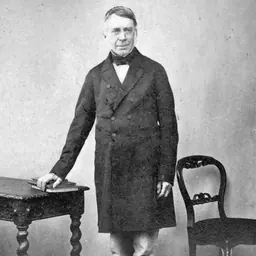
Geremia Discanno (sometimes spelled Di Scanno) (20 May 1839 – 14 January 1907) was an Italian genre and landscape painter, who collaborated with archaeologist Giuseppe Fiorelli, art historian Emil Presuhn, and Naples-based chromolithographer Victor Steeger, to record wall paintings in the Roman ruins of Pompeii and Herculaneum that were being excavated at the time.
Early life Discanno was born on 20 May 1839 in Barletta, a city in southeastern Italy near the site of the Battle of Cannae in 216 BC between the Romans and the Carthaginians led by Hannibal. His father, Gennaro Discanno, was a successful painter of ecclesiastical commissions who lived with his family in the wealthiest district of the city near the intersection of the Corso Vittorio Emanuele and the Corso Garibaldi, just around the corner from the birthplace of another famous painter and contemporary, Giuseppe De Nittis.
Barletta at the time of the Bourbons, and in particular during the reign of Ferdinand II, nicknamed the "Bomb King" for having his own subjects cannonaded, was an extremely class-oriented city and those who could afford it gathered regularly near Discanno's home beneath the Basilica of the Holy Sepulcher with its bronze Colossus of Heraclius in front. Situated on the Adriatic coast, Barletta's port thrived as a point of embarkation for the privileged traveling to or returning from the east.
Both Discanno's father and the father of De Nittis, Raffaele, were publicly outspoken in their opposition to the Bourbon monarchy and their support for the unification of Italy. Raffael was imprisoned for two years while Gennaro, Discanno's father, suffered only a one-year sentence to a spiritual retreat in a monastery of Capuchin friars because of his relationships with the church and local clergy. But Discanno learned instead from his father at home. Geremia Discanno demonstrated his natural gift for art by painting "King Manfredi's Tournament" in 1859, a copy of a curtain made for the Piccinni Theater in Bari by the eminent Terlizzi painter, Michele De Napoli. De Napoli was a well-known painter in Neapolitan art circles and particularly talented in historical landscape paintings and portraiture. At the time, he was involved in competition for a chair in drawing at the Reale Instituto di Belle Arti, a university-level art school in Naples founded by King Charles VII of Naples in 1752. But De Napoli's candidacy was rejected by the Bourbonian-controlled commission because of his liberal ideals. Nevertheless, Michele De Napoli's prestige was undiminished, so he could introduce Geremia Discanno for admission to the Institute as a student. A few years later, during the Risorgamento Di Napoli was named to the Board of Superintendence of the National Museum and the Excavations of Antiquities by a decree of 7 December 1860, signed by Giuseppe Garibaldi himself.
During Discanno's formative years, excavations in Pompeii, finally conducted with a systematic approach beginning in 1748, yielded new, widely published discoveries every day. But excavators were dismayed to observe many paintings not removed from their original site began to decay and disappear at an alarming rate.
With the unification of Italy in 1860, the legal status of Pompeii changed from being a royal possession from which monarchs could use the site to obtain antiquities for their private collections or to gift artifacts to illustrious foreign guests, to property of the state. Archaeologist Giuseppe Fiorelli was named superintendent and he began to manage the excavations to transform Pompeii into a place to visit to gain a glimpse into the past of western civilization and begin to understand those who went before the modern world. Fiorelli developed an address system to identify each structure within the ancient city. Then he focused on copying and cataloging the frescoes left in situ.
Meanwhile, Discanno studied under the guidance of conformists Domenico Morelli and Filippo Palizzi, two of the faculty who voted to expel Discanno's former neighbor, De Nittis, from the Institute for insubordination in 1863.
In 1866, Discanno, the ever-diligent pupil, received a scholarship from his home province of Bari to refine his art in Florence. There, he again encountered his former neighbor, De Nittis. Discanno participated in the "Solemn Exposition of the Society of Encouragement of the Belle Arts" and garnered respectable sums for his paintings, more than acclaimed artists Giovanni Boldini, Giovanni Fattori and Telemaco Signorini.
In 1874, a young art historian from Leipzig, Emil Presuhn, moved to Pompeii and immediately came into contact with Discanno. Their collaboration resulted in the publication of "Die Pompejanische Wanddecoration" (The wall frescoes of Pompeii) published in Leipzig in 1877, containing 24 color plates of Discanno's faithful reproductions, followed by "Pompeji: Die neuesten Ausgrabungen von 1874 bis 1878" (Pompeii: the last excavations from 1874 to 1878) containing 60 plates of Discanno's watercolors. A third publication, updating and extending the previous one, "Pompeji: Die neuessten Ausgrabungen von 1874 bis 1881" containing 80 color plates of Discanno's watercolors was published in 1882 after the untimely death of Presuhn, who died at the age of only 36.
Sampling of work from Pompeii
After Fiorelli left the excavations in 1875, Discanno was directly employed by the Superintedency in 1876. Antonio Sogliano who became director of excavations between 1905 and 1910 recalled there was the workshop of Discanno, in which Geremia with the help of some collaborators crushed and mixed paint colors to use in the reproduction of the Pompeian frescoes. Sogliano said the paintings made by "the master" were so realistic, even in the reproduction of the cracks in the wall, that more than once expert archaeologists had mistaken them for the originals. Discanno became so knowledgeable about the art of Pompeii that he served as arbiter in controversial interpretations between archaeologists and art historians. He was also consulted repeatedly by renowned Dutch painter of classical subjects, (Sir) Lawrence Alma-Tadema.
By 1882, Discanno began to work directly with the Deutsches Archaeologisches Institut, the German Archaeological Institute, in Rome. Based on archived drawing dates, Discanno's collaboration with the German Archaeological Institute continued until 1890.
Between 1902 and 1904, Discanno was engaged in the development of an adhesive to preserve frescoes exhibited at the museum in Naples as evidenced by correspondence in the archive of the Superintendency of Naples. Curators wanted to remove protective waxes that had been applied in the middle of the 19th century which were irreparably yellowing the works. Unfortunately, Discanno was sued by one of his subordinates and their collaborators, who claimed to be the actual inventor and demanded exclusivity of the process. When the trial went badly for the subordinate, the man insisted the solution was poisonous whereby Discanno dramatically seized the evidence vial of the liquid and took a sip to prove the falsity of the claim. Although Discanno won the case, his desire for confidentiality of the proceedings was not upheld.
Other commissions As photography became more economical, fewer requests were made for Discanno to copy works at Pompeii, so he turned to private commissions to decorate churches, hotels, government chambers, such as the council chamber in Resina, opera and manner houses. He also continued to paint oils on canvas depicting Apulian rural scenes. an act that outraged members of Italian parliament including archaeologist Felice Barnabei, a disciple of Pompeian archaeologist Giuseppe Fiorelli. Although the sale of the Boscoreale frescoes was not prevented, in 1902 Italian Parliament approved the first regulation for the protection of Italy's cultural heritage.
His work in Boscoreale is thought to have been Discanno's last commission. Discanno died shortly after its completion on January 14, 1907, in Naples. The Bulletin of Art published by the Directorate General of Antiquities and Fine Arts published his obituary expressing their appreciation for the precious artistic work he carried out in the service of archeology and in particular the excavations of Pompeii. The Municipal Administration of Barletta named a city street after him. But, his last effort in Boscoreale now lies within an abandoned and neglected building, as forgotten as he has become.
Don’t just read it —
keep it.
Full-length biographies made to live with: read them, listen on the way to work, watch them tonight.
- E-book
- Audio
- Video
Instant download · yours to keep · every purchase keeps this site free
Important facts
People in Geremia Discanno's life
Named in this biography and alive at the same time


Related people
Same field, nearest in time

Contemporaries
People whose lives overlapped Geremia Discanno's



Frequently asked questions
Who was Geremia Discanno?
Italian artist
When was Geremia Discanno born?
Geremia Discanno was born on 20 May 1839 in Barletta.
When did Geremia Discanno die?
Geremia Discanno died on 14 January 1907 in Naples.
What was Geremia Discanno's occupation?
Geremia Discanno was a painter.
What nationality was Geremia Discanno?
Geremia Discanno was Italian.
Sources & further reading
Cite this page
APA: Biography.guide. (2026). Geremia Discanno. https://biography.guide/geremia-discanno/
MLA: "Geremia Discanno." Biography.guide, https://biography.guide/geremia-discanno/.
Chicago: "Geremia Discanno." Biography.guide. https://biography.guide/geremia-discanno/.
Data last updated: 2026-09-22 · Spot an error? Report a correction.
Page generated 2026-09-27 05:22 UTC