
About Gerd Müller
Lived 1945 – 2021 (aged 75). Gerd Müller was a German association football player and association football coach.
Gerhard Müller (; 3 November 1945 – 15 August 2021) was a German professional footballer. A prolific striker, especially in and around the six-yard box, he is widely regarded as one of the greatest goalscorers and players in the history of the sport. With success at both the club level and the international level, he is one of eleven players to have won the FIFA World Cup, the UEFA Champions League and the Ballon d'Or.
At international level with West Germany, he scored 68 goals in 62 appearances, and at club level, in 15 years with Bayern Munich, in which he scored 365 goals in 427 Bundesliga matches, he became—and still is—record holder of that league. In 74 European club games he scored 65 goals. Averaging over a goal a game with West Germany, Müller is currently joint-29th on the list of all time international goalscorers, despite having played fewer matches than every other player in the top 37. Among the top scorers, he has the third-highest goal-to-game ratio. He also had the highest ratio of 0.97 goals per game in the European Cup, scoring 34 goals in 35 matches.
Nicknamed "Bomber der Nation" ("the nation's Bomber") or simply "Der Bomber", In 2004, Pelé named Müller in the FIFA 100 list of the world's greatest living players.
Club career TSV 1861 Nördlingen Müller began his football career at his hometown club TSV 1861 Nördlingen youth ranks in 1958. In 1963 he was promoted to the first team and he scored 51 league goals in 31 appearances in his first season in the Bayernliga, Bavaria's regional league.
Bayern Munich In 1963, aged 18, Müller joined Bayern Munich, where he teamed up with future stars Franz Beckenbauer and Sepp Maier. The club, which would go on to become the most successful German club in history, was then still in the Regionalliga Süd (Regional League South), which was one level below the Bundesliga at the time.
Müller autographing a football in 1967. To his left are Franz Beckenbauer and Werner Olk After one season, Bayern Munich advanced to the Bundesliga and started a long string of successes. With his club, Müller amassed titles during the 1960s and 1970s: he won the German Championship four times, the DFB-Pokal four times, the European Cup three consecutive years (the first West German team to win it; Müller scored in the 1974 final replay and the 1975 final), the Intercontinental Cup once, and the European Cup Winners' Cup once.
An opportunistic goal-scorer, Müller also became German top scorer seven times and European top scorer twice. Müller scored 365 goals in 427 Bundesliga matches for Bayern Munich, 53 goals over the second-most successful Bundesliga scorer, Robert Lewandowski, since 2022. Then, Müller also held the record for most club goals scored in all European club competitions in one season for 40 years, scoring 67 goals during the 1972–73 FC Bayern Munich season, and 85 (72 for Munich, 13 West Germany) goals in total during 1972. However, that record was surpassed by Lionel Messi of FC Barcelona in Spain who scored 73 in the 2011/12 season, and 91 goals in the calendar year of 2012.
Fort Lauderdale Strikers After his career in the Bundesliga, Müller went to the United States, where he joined the Fort Lauderdale Strikers (based in the Miami area) of the North American Soccer League (NASL) in 1979. He played three seasons with this team, scoring 38 goals,
International career Müller (right) celebrating after winning the 1974 FIFA World Cup. To his left is Wolfgang Overath. Müller scored 68 goals in 62 games for West Germany. Müller is one of six players to reach 50 international goals in under 50 appearances, doing so in 41 games. Müller's international career started in 1966 and ended on 7 July 1974 with victory at the 1974 FIFA World Cup at his home stadium in Munich. He scored the winning goal for the 2–1 victory over Johan Cruyff's Netherlands in the final and later having a goal wrongfully disallowed for offside. His four goals in that tournament and his ten goals at the 1970 FIFA World Cup combined made him the all-time highest FIFA World Cup goalscorer at the time with 14 goals. His record stood until the 2006 tournament, coincidentally held in Germany, when it was broken by Brazilian striker Ronaldo, who also required more matches than Müller to achieve his tally. Müller also participated in the 1972 European Championship, becoming top scorer with four goals (including two in the final) and winning the Championship with the West German team.
Life after football
After Müller ended his career in 1981, he fell into a slump and suffered from alcoholism. However, his former companions at Bayern Munich convinced him to go through alcohol rehabilitation. When he emerged, they gave him a job as a coach at Bayern Munich II.
He held the position from 1992 until he retired in 2014 due to health problems. There is also a collection of apparel released by sporting giants Adidas under the Gerd Müller name. It is part of the Adidas originals series. In July 2008, the Rieser Sportpark, in Nördlingen, where Müller had begun his career, was renamed the Gerd-Müller-Stadion in his honour.
On 6 October 2015, it was announced that Müller was suffering from Alzheimer's disease. He died on 15 August 2021 in a nursing home in Wolfratshausen, aged 75.
Player profile Style of play
In his book, Brilliant Orange: The Neurotic Genius of Dutch Football, author David Winner writes, "Müller was short, squat, awkward-looking and not notably fast; he never fitted the conventional idea of a great footballer, but he had lethal acceleration over short distances, a remarkable aerial game, and uncanny goalscoring instincts. His short legs gave him a low center of gravity, so he could turn quickly and with perfect balance in spaces and at speeds that would cause other players to fall over. He also had a knack of scoring in unlikely situations."
Müller used extreme acceleration, agility, and deceptive changes of pace to get to loose balls first, and bypass defenders. His teammate Franz Beckenbauer has emphasized Müller's unusual speed: "His pace was incredible. In training I have played against him and I never had a chance."
A prolific goalscorer, Müller was also known for his movement, coordination, intelligence, and clinical finishing inside the penalty area. He had the ability to score goals from awkward positions with almost any part of his body, not only with his head or foot.
Legacy Müller is widely considered to be one of the greatest strikers and goalscorers in the history of football. He is seen as the greatest "goal poacher" in history, with Gary Lineker calling him "the ultimate goal poacher". Müller is one of only two players, alongside Lionel Messi, to have won the FIFA World Cup, the UEFA Champions League, the Ballon d'Or and the European Golden Shoe. After his death in 2021, FC Bayern Munich president Herbert Hainer declared that Müller was "the greatest striker there's ever been", while Franz Beckenbauer stated that Müller was "the most important player in the history of Bayern Munich".
Career statistics
Club
International
Müller scored 68 goals in 62 games for West Germany. His 14 goals in FIFA World Cup tournaments were a record between 1974 and 2006. This score was bettered in 2006 by Brazil's Ronaldo, and eight years later by German Miroslav Klose who achieved a total of 16 World Cup goals, and who also broke Müller's record for goals for Germany with 71 goals in 137 matches. However, Müller managed to score eight hat-tricks in his international career.
Honours Bayern Munich Regionalliga Süd: 1964–65 Bundesliga: 1968–69, 1971–72, 1972–73, 1973–74 DFB-Pokal: 1965–66, 1966–67, 1968–69, 1970–71 European Cup: 1973–74, 1974–75, 1975–76 European Cup Winners' Cup: 1966–67 Intercontinental Cup: 1976
West Germany runner-up: 1972; third place: 1969, 1973 Footballer of the Year (Germany): 1967, 1969 Voted best Player 40 Years Bundesliga 1963–2003 kicker Bundesliga Team of the Season: 1968–69, 1969–70, 1971–72, 1972–73 Eric Batty's World XI: 1969, 1971, 1972, 1973, 1974, 1976, 1977, 1978 FUWO European Team of the Season: 1970, 1972 Sport Ideal European XI: 1971, 1972, 1973, 1974 Bundesliga Top Scorer (Kicker-Torjägerkanone): 1967, 1969, 1970, 1972, 1973, 1974, 1978 FIFA World Cup Golden Boot: 1970 FIFA Selects World XI: 1971, 1972, 1973 Worldwide Topscorer: 1970, 1972 UEFA European Championship Top Scorer: 1972 European Cup Top Scorer: 1973, 1974, 1975, 1977 Onze de Onze: 1976
FIFA Order of Merit: 1998 France Football's Football Player of the Century: 10th (1999) World Soccer The Greatest Players of the 20th century: 15th (1999) FIFA 100: 2004 Bravo Otto: Gold award: 1973, 1974; Silver award: 1975; Bronze award: 1972, 1976 IFFHS Legends Bayern Munich All-time XI IFFHS All-time Men's B Dream Team: 2021 IFFHS All-time Europe Men's Dream Team: 2021
Don’t just read it —
keep it.
Full-length biographies made to live with: read them, listen on the way to work, watch them tonight.
- E-book
- Audio
- Video
Instant download · yours to keep · every purchase keeps this site free
Important facts
People in Gerd Müller's life
Named in this biography and alive at the same time

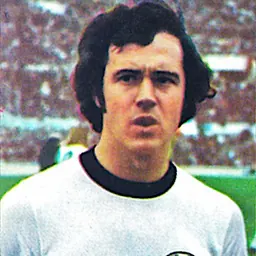



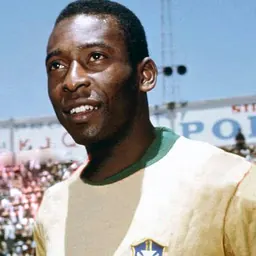
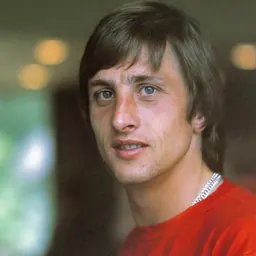
Related people
Same field, nearest in time



Contemporaries
People whose lives overlapped Gerd Müller's




Frequently asked questions
Who was Gerd Müller?
German footballer (1945–2021)
When was Gerd Müller born?
Gerd Müller was born on 3 November 1945 in Nördlingen.
When did Gerd Müller die?
Gerd Müller died on 15 August 2021 in Wolfratshausen.
What was Gerd Müller's occupation?
Gerd Müller was an association football player and association football coach.
What nationality was Gerd Müller?
Gerd Müller was German.
Sources & further reading
Cite this page
APA: Biography.guide. (2026). Gerd Müller. https://biography.guide/gerd-muller-association-football-player/
MLA: "Gerd Müller." Biography.guide, https://biography.guide/gerd-muller-association-football-player/.
Chicago: "Gerd Müller." Biography.guide. https://biography.guide/gerd-muller-association-football-player/.
Data last updated: 2026-09-20 · Spot an error? Report a correction.
Page generated 2026-09-27 05:33 UTC