
About Gerasim Zelić
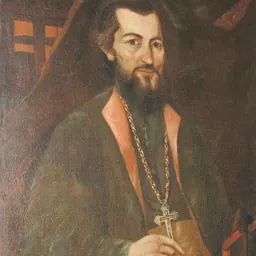
Lived 1752 – 1828 (aged 75). Gerasim Zelić was a Serbian eastern Orthodox bishop, diplomat, writer, eastern Orthodox priest, eastern Orthodox monk and archimandrite.
Gerasim Zelić (; 1752–1828) was a Serbian Orthodox Church archimandrite, traveller and writer. His chief work is Žitije (Lives), in three volumes. They are memoirs of his travels throughout western Europe, Russia and Asia Minor from the latter half of the 18th century to the first decade of the 19th century and the famous personalities (Napoleon, Eugène de Beauharnais, Viceroy of Italy, Joseph II, Holy Roman Emperor, Leopold II, Holy Roman Emperor, Francis II, Holy Roman Emperor, Semyon Zorich, Catherine the Great, Alexander I of Russia, Stanisław August Poniatowski, Dositej Obradović) he encountered. He left behind invaluable original notes on the people, religions, manners, customs, and trade of his era.
As much as Dositej Obradović is an emblematic figure of the 18th century Habsburg Serbian Enlightenment so is Gerasim Zelić. In many ways the east–west travel itineraries of the two men are similar, covering the Levant, the German lands, France and Russia, though Zelić went first to Russia (rather than to the Levant). While both lament their people's plight under the Ottoman rule and promote similar solutions, their perspectives are different, Dositej's cosmopolitanism contrasting with Zelić's clericalism, though their intentions are the same: the emancipation of their people from under the tyrannical yoke of the two empires, the Habsburg and the Ottoman.
Zelić was one of the earliest members of the Serbian Learned Society, better known as Matica srpska, founded at Budapest in 1826.
Life Ćirilo Zelić was born on 11 June 1752 in the village of Žegar, in the Žegar region, located in the Venetian-Ottoman frontier of Venetian Dalmatia. His father was Andreja and mother Jovana. He learnt to read from nun Ana in his village and was then further educated at Krupa and Krka monasteries. He took the name Gerasim upon monastic vows, and became a deacon in Stanjevići by Montenegrin vladika Sava Petrović on 3 June 1774. He stayed in Krupa, working under the hegumen. On 2 march 1778 he was made a priest, in Plaški by vladika Petar Petrović. Zelić spent some time in Syrmia and Bačka, then returned to Krupa. In 1782 he planned to go for Corfu to learn to paint icons, however, while staying in Venice his friends there told him to go to Russia. He arrived in Novorossiya (former Novoserbia) on 30 June 1782 and met many Serbs. He learnt to paint icons in Kiev, but it did not suit him, so he went to Constantinople and then to Mount Athos where he learnt Greek. He stayed in Constantinople and was given the archimandrite rank by Jerusalem Patriarch Abraham on 19 June 1785.
Zelić returned to Krupa and was recognized as the archimandrite. He then travelled to Russia again, via Austria and Poland, meeting Polish king Stanisław August Poniatowski. In Kiev, he met Russian empress Catherine II and Austrian emperor Joseph II. In St. Petersburg and Moscow he received donations for the Krupa monastery, which he gave upon his return in 1789. Some in Dalmatia accused him of being an enemy of the state and reported him to the authorities, and he was forced to flee to Trieste and then Vienna. He was safe to return and in 1796 he was named main "Vicar for affairs of the Orthodox Church in Dalmatia", as the Venetian authorities did not respect Orthodox bishops.
The Orthodox population in Dalmatia was pressured by the Republic of Venice to emigrate from the Venetian Dalmatia, through Catholic propaganda and Uniatization. The Habsburg Monarchy sought to populate their desolate lands and used the Habsburg Orthodox leadership to invite Orthodox Dalmatians, promising religious freedom. In the 1771–74 period some 634 families migrated according to archives; Gerasim Zelić, a witness to this, claimed 1,000 families migrating to Syrmia and Banat, and Ottoman Bosnia, explicitly due to Uniatization.
Works
Don’t just read it —
keep it.
Full-length biographies made to live with: read them, listen on the way to work, watch them tonight.
- E-book
- Audio
- Video
Instant download · yours to keep · every purchase keeps this site free
Important facts
People in Gerasim Zelić's life
Named in this biography and alive at the same time
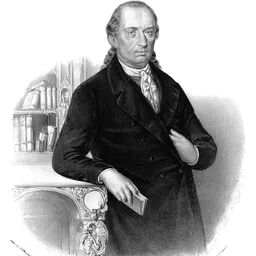
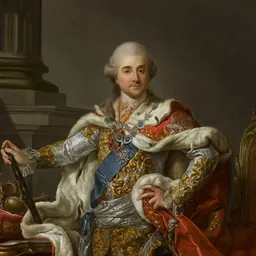

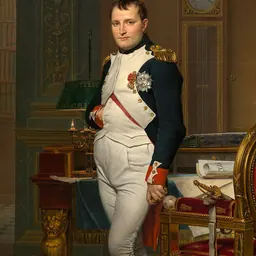
Related people
Same field, nearest in time
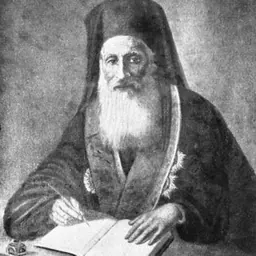


Contemporaries
People whose lives overlapped Gerasim Zelić's





Frequently asked questions
Who was Gerasim Zelić?
Serbian writer
When was Gerasim Zelić born?
Gerasim Zelić was born on 11 June 1752 in Žegar.
When did Gerasim Zelić die?
Gerasim Zelić died on 26 March 1828 in Buda, Budapest.
What was Gerasim Zelić's occupation?
Gerasim Zelić was an eastern Orthodox bishop, diplomat, writer, eastern Orthodox priest, eastern Orthodox monk and archimandrite.
What nationality was Gerasim Zelić?
Gerasim Zelić was Serbian.
Sources & further reading
Cite this page
APA: Biography.guide. (2026). Gerasim Zelić. https://biography.guide/gerasim-zelic/
MLA: "Gerasim Zelić." Biography.guide, https://biography.guide/gerasim-zelic/.
Chicago: "Gerasim Zelić." Biography.guide. https://biography.guide/gerasim-zelic/.
Data last updated: 2026-09-20 · Spot an error? Report a correction.
Page generated 2026-09-27 05:21 UTC