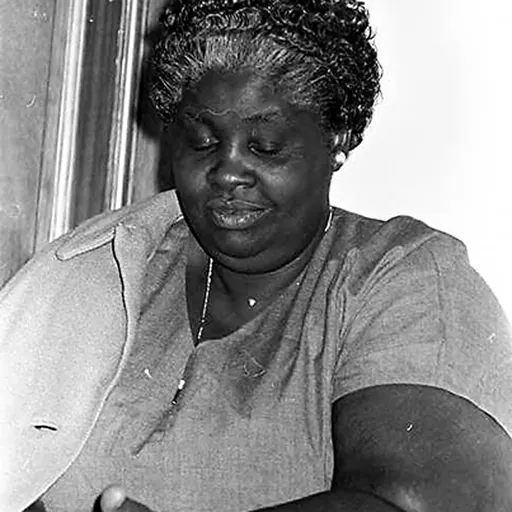
Georgia Gilmore
American civil rights activist
About Georgia Gilmore
Lived 1920 – 1990 (aged 70). Georgia Gilmore was an American midwife, known for Montgomery bus boycott.
Georgia Theresa Gilmore (February 5, 1920 – March 7, 1990) was an American civil rights activist from Montgomery, Alabama, who participated in the Montgomery bus boycott through her fund-raising organization, the club from Nowhere, which sold food at Montgomery Improvement Association (MIA) mass meetings. Her grass-roots activism helped sustain the 382-day boycott and inspired similar groups to begin raising money for the boycott.
Background Georgia Gilmore was born in Montgomery County, Alabama on February 5, 1920. She was one of five children born to Janie Gilmore. As a child, she attended a parochial school run by nuns at St. John the Baptist Catholic church. Throughout the course of her life, Gilmore worked as a midwife, a cook, a domestic worker, and she worked on the railroad. She lived in Montgomery with her six children, and during the 1950s, she supported her mother and helped raise her youngest sister and a niece. Known as a kind and motherly woman with incredible cooking skills, Gilmore had a bold personality and resisted the racial injustices common in Alabama during the 1950s. She was also a member of the local NAACP in Montgomery, where she worked with Rosa Parks and other NAACP workers to protest the discriminatory treatment African Americans experienced in Alabama. Before the start of the Montgomery bus boycott, Gilmore decided to stop riding city buses after she and her mother experienced discrimination on the bus. She was not afraid to confront white men and was fiercely protective of her family. Gilmore worked as a cook at the National Lunch Company, a restaurant, in downtown Montgomery in the 1950s.
Bus Boycott and Gilmore's activism
Georgia Gilmore in her kitchen making a box lunch. She used her culinary skills to support the Montgomery bus boycott. Georgia Gilmore seated in the audience at Holt Street Baptist Church.
After Rosa Parks was arrested for refusing to leave her seat on December 1, 1955, the Women's Political Council declared a boycott of the bus system beginning on December 5. A group of civic leaders and ministers formed the Montgomery Improvement Association (MIA) to help guide the boycott. Gilmore, who had already refused to use the buses in Montgomery, heard of the arrest on the news and announcements of the first MIA mass meeting to be held at Holt Street Baptist church on the evening of the boycott. Gilmore introduced herself to the Martin Luther King Jr., the president of the MIA, and joined the organization that night.
Gilmore and her friends started a fundraising group called the club from Nowhere to help support the operations of the boycott and the MIA. Georgia Gilmore, along with others, testified about the discrimination they faced on city buses during the State of Alabama v. M. L. King, Jr. (1956). trial. Her testimony and involvement with the boycott led to her being fired from her job at the National Lunch Company. However, this did not stop Gilmore as she later said, "this new generation had decided that they just had taken as much as they could."
Following her dismissal from the National Lunch Company, Martin Luther King Jr. (who lived nearby) and other MIA leaders helped Gilmore set up her own restaurant in her home as a way for her to make a living. Though not a licensed restaurant, Gilmore's place became a spot where Dr. King and other members of the MIA could go to eat, congregate, and strategize.
1974 In 1971, the case was reopened for continued litigation and argued to the Supreme Court. The City of Montgomery had reopened the public parks and recreational facilities in the early 1970s. The city had allowed private schools and the YMCA, which were still segregated, sole use of public parks and recreational facilities. Gilmore won the second case in 1974 on the basis that taxpayer's dollars were being used to fund the use of these public spaces by white-only private school's athletic programs.
Aftermath In May 1961, the Freedom Riders arrived at the Greyhound Station in Montgomery, Alabama. A mob attacked the young protestors, which resulted in several injuries. Georgia Gilmore sheltered several of these injured at her home until it was safe for them to leave. Gilmore also participated in the Eyes on the Prize documentary and her famous recipes still appear in cookbooks. Marshall, Sylvia. "Georgia Gilmore and the Montgomery Bus Boycott,"
Don’t just read it —
keep it.
Full-length biographies made to live with: read them, listen on the way to work, watch them tonight.
- E-book
- Audio
- Video
Instant download · yours to keep · every purchase keeps this site free
Important facts
People in Georgia Gilmore's life
Named in this biography and alive at the same time
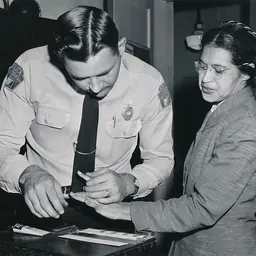


Related people
Same field, nearest in time



Contemporaries
People whose lives overlapped Georgia Gilmore's





Frequently asked questions
Who was Georgia Gilmore?
American civil rights activist (1920-1990)
When was Georgia Gilmore born?
Georgia Gilmore was born on 5 February 1920.
When did Georgia Gilmore die?
Georgia Gilmore died on 3 March 1990.
What was Georgia Gilmore's occupation?
Georgia Gilmore was a midwife.
What was Georgia Gilmore known for?
Georgia Gilmore was known for Montgomery bus boycott.
What nationality was Georgia Gilmore?
Georgia Gilmore was American.
Sources & further reading
Cite this page
APA: Biography.guide. (2026). Georgia Gilmore. https://biography.guide/georgia-gilmore/
MLA: "Georgia Gilmore." Biography.guide, https://biography.guide/georgia-gilmore/.
Chicago: "Georgia Gilmore." Biography.guide. https://biography.guide/georgia-gilmore/.
Data last updated: 2026-09-21 · Spot an error? Report a correction.
Portrait: Wikimedia Commons · author & licence
Page generated 2026-09-27 04:59 UTC