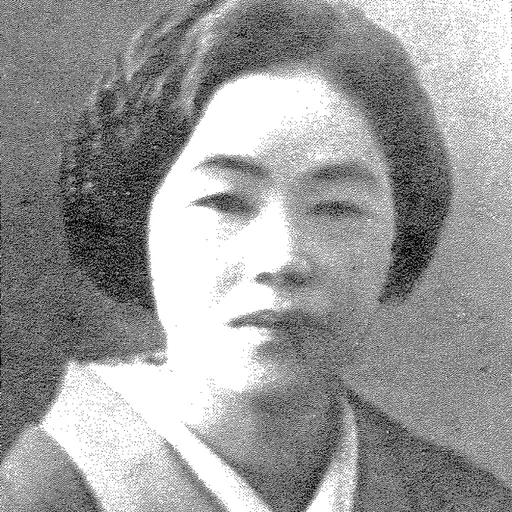
Miyuki Ishikawa
Prime perpetrator of Kotobuki San'in incident
About Miyuki Ishikawa
Lived 1897 – 1987 (aged 90). Miyuki Ishikawa was a Japanese midwife, serial killer and real estate agent.
was a Japanese midwife, real estate agent and serial killer. During the US occupation of Japan, she and several accomplices are believed to have murdered dozens of infants, a crime spree known as the Kotobuki San'in incident.
Early life Miyuki Ishikawa (née ) was born in the village of Honjō in Miyazaki Prefecture. In 1914, she moved to Tokyo, where she graduated from the Tokyo Imperial University as a midwife on 30 September 1919. Takeshi, a former Kenpeitai sergeant and police officer, helped his wife's midwifery work without a regular job. Because Miyuki had had a hysterectomy, the marriage produced no biological children. Even so, the couple raised a boy from Takeshi's previous marriage and adopted three other children (two boys and one girl).
Miyuki was an experienced midwife, and managed a maternity home named , holding some important positions of multiple midwives associations.
At the same time, Ishikawa also attempted to garner payment for these murders. She and Takeshi solicited large sums of money from the parents, claiming that it would be less than the expense of raising their unwanted children. Shirō Nakayama, a doctor, was also complicit in this scheme and aided the couple by falsifying death certificates. The number of infants listed at Kotobuki San'in and burial permits issued to the maternity home each year are charted below;
Arrest and trial
Two police officers from Waseda police station accidentally found the remains of five of Ishikawa's victims on 12 January 1948. Autopsies performed on these bodies proved that they had not died of natural causes. Ishikawa and her husband were arrested on 15 January. Public Health and Welfare Section (PHW) at GHQ/SCAP and Tokyo-Kanagawa Military Government District (TKMGD) also dispatched some officers to the site.
Upon further investigation, the police found the ashes of over forty infants in the house of a mortician, and those of thirty more in a temple. The sheer number of dead bodies recovered and the length of time over which the murders took place made it difficult for the authorities to determine the exact number of victims. In court, prosecutors asserted that the couple had murdered at least twenty-seven infants among eighty-four deaths between April 1946 and January 1948. Both the couple and the prosecutors appealed the sentences by 16 October. On 28 April 1952, the Tokyo High Court sentenced Ishikawa to four years in prison and Takeshi to two years, granting pardons by effectuation of the Treaty of San Francisco.
Social impact Because the victims were deserted children, Ishikawa insisted that parents were responsible for their deaths. Some people, including Musei Tokugawa, supported the assertion. Yuriko Miyamoto and Michiko Fujiwara criticized them, however, saying it was an example of discrimination against deserted children. Moreover, it was revealed that the other eleven maternity homes in Tokyo had also committed crimes similar to Kotobuki San'in case by the end of 1948.
Several intellectuals, such as doctor and politician Tamayo Miyagi, advocated that Japanese government should begin to consider the legalization of abortion in Japan in order to prevent recurrence of such incidents.
Aftermath In 1969, Ishikawa was interviewed by Shūkan Shinchō magazine, claiming innocence in the murders. Following the end of her sentence, she began to work selling soap, cream and fish. At the time of the interview, Takeshi was already dead and Ishikawa was operating a real estate office in Tokyo, and she boasted about having built a big tomb for herself two years before. Her former lawyer imagined that she had earned about 100 million yen. As well, her name was on the industry's lists as a representative of a real-estate agent named , whose address was also same as Kotobuki San'in, until the end of 1986.
Gallery
Remarks Some portraits of Yuriko Miyamoto are displayed as that of Miyuki Ishikawa wrongly at multiple websites. This incident was adapted into 2023 Korean cinema .
Don’t just read it —
keep it.
Full-length biographies made to live with: read them, listen on the way to work, watch them tonight.
- E-book
- Audio
- Video
Instant download · yours to keep · every purchase keeps this site free
Important facts
People in Miyuki Ishikawa's life
Named in this biography and alive at the same time

Related people
Same field, nearest in time
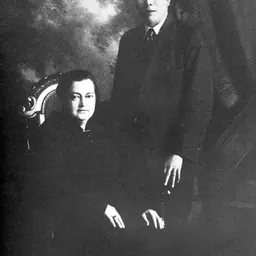
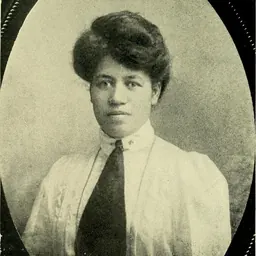
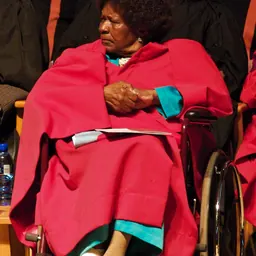

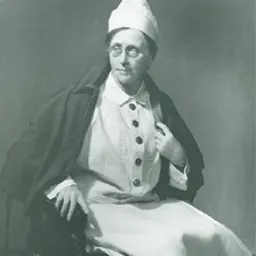
Contemporaries
People whose lives overlapped Miyuki Ishikawa's




Frequently asked questions
Who was Miyuki Ishikawa?
Prime perpetrator of Kotobuki San'in incident (1897–1987)
When was Miyuki Ishikawa born?
Miyuki Ishikawa was born on 5 February 1897 in Miyazaki Prefecture.
When did Miyuki Ishikawa die?
Miyuki Ishikawa died on 30 May 1987.
What was Miyuki Ishikawa's occupation?
Miyuki Ishikawa was a midwife, serial killer and real estate agent.
What nationality was Miyuki Ishikawa?
Miyuki Ishikawa was Japanese.
Sources & further reading
Cite this page
APA: Biography.guide. (2026). Miyuki Ishikawa. https://biography.guide/miyuki-ishikawa/
MLA: "Miyuki Ishikawa." Biography.guide, https://biography.guide/miyuki-ishikawa/.
Chicago: "Miyuki Ishikawa." Biography.guide. https://biography.guide/miyuki-ishikawa/.
Data last updated: 2026-09-22 · Spot an error? Report a correction.
Portrait: Wikimedia Commons · author & licence
Page generated 2026-09-27 05:03 UTC