
About George Young
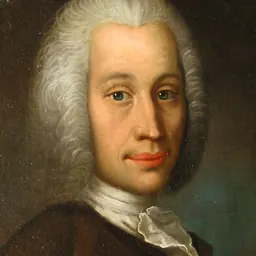
Lived 1692 – 1757 (aged 64–65). George Young was a British philosopher and surgeon.
George Young (1692–1757) was an Edinburgh surgeon, physician, philosopher, and empiric. As a young man, he was a member of the Rankenian Club, a group of intellectuals who went on to become some of the most influential figures of the Scottish Enlightenment. Young's lecture notes (1730–31) give a clear account of contemporary medical and surgical practice and are characterised by the empirical approach to the advancement of medical knowledge, especially in the evolving understanding of nerve and muscle function. His Treatise on Opium was a practical guide for physicians in the use of the drug which emphasises its complications. It was the longest, most balanced and most comprehensive English language account yet written. Young's legacy is also apparent in the work of his pupil Robert Whytt (1714–1766) and his surgical apprentice James Hill (1703–1776). Young had taught both the value of repeated observation and a sceptical approach to prevailing dogma. Whytt was to advance knowledge of nerve and muscle function, while Hill went on to make important contributions to the understanding and management of head injury.
Early life
Young was born in Edinburgh in 1692. On 14 March 1711 he was apprenticed to the Edinburgh surgeon-apothecary Alexander Simpson. In July 1719 he passed the entrance examination for the Incorporation of Surgeons of Edinburgh, becoming a freeman or fellow. Around this time he joined the Rankenian Club, the only surgeon known to have done so. The Rankenian was regarded as one of the most important of the many learned clubs and societies which were a defining feature of the Scottish Enlightenment. The next year he successfully applied to become a licentiate of the Royal College of Physicians of Edinburgh (RCPE). His philosophy of medicine based on observation and experience is very much in the tradition of Thomas Sydenham (1624–1689), the English physician who emphasised careful observation and objective characterisation of disease. The lectures provide a comprehensive account of contemporary medical, and some surgical practice but also deal with contemporary theories about nerve and muscle function. Young was well versed in the literature of the day and analysed the theories of James Keill (1673–1719), the Edinburgh physician and anatomist, Daniel Bernoulli (1700–1782) the Swiss mathematician and physician, John Mayow (1641–79), who had devised the 'gunpowder theory' of muscle function. He was sceptical about the iatromechanical theories of Herman Boerhaave (1668–1738) and Thomas Willis (1621–75). The lectures were documented by his pupil Robert Whytt (1714–1766), and their influence on his thinking on nerve and muscle function is apparent in Whytt's Essay on the Vital and Other Involuntary Motions of Animals Alston described opium's history and its preparation from poppies he had grown, the first person in Britain to have done so. Young took exception to Alston's conclusion that 'opium does more honour to medicine than any other remedy whatever' and counters this by emphasising the risks '...that I may prevent such mischief as I can, I here give it as my sincere opinion... that opium is a poison by which great numbers are daily destroyed.' In 41 chapters he provides a comprehensive account of the indications for the drug including its complications. True to his reputation he is critical about writers whose knowledge of the drug is based on chemical or animal experiments rather than clinical practice. The treatise is a detailed, balanced and valuable guide to prevailing knowledge and practice. Hill had been taught by Young the value of observation and the need for scepticism. Hills's series of head injuries which he had treated were the best published in the eighteenth century. Hill's ability to clinically diagnose cerebral compression from bleeding following head injury enabled him to treat this successfully by directed trephine and drainage. His writing was an important addition to the increasing understanding of the basis of the management of head injury, and was being quoted 100 years after publication.
Legacy
Young was recognised by Whytt (and presumably by other contemporaries) as a sceptic and empiric, and, in his discussions with fellow Rankenians may well have influenced the early thoughts on the doctrine of empiricism developed by David Hume and that of scepticism with which he is associated. The similarities between Young's lectures and what became Hume's analysis of causation, probability, and practice are striking. His influence on Hill and Whytt was considerable and his son, Thomas Young became Professor of Midwifery at Edinburgh, and was credited with setting up, at his own expense, the first lying-in ward in Scotland in Edinburgh Royal Infirmary. Young's reputation may have been damaged by his actions leading up to the divorce of his son George. His philosophy is summarised in his entry in the Dictionary of eighteenth-century British philosophers.
Don’t just read it —
keep it.
Full-length biographies made to live with: read them, listen on the way to work, watch them tonight.
- E-book
- Audio
- Video
Instant download · yours to keep · every purchase keeps this site free
Important facts
People in George Young's life
Named in this biography and alive at the same time



Related people
Same field, nearest in time



Contemporaries
People whose lives overlapped George Young's


Frequently asked questions
Who was George Young?
Edinburgh surgeon, born 1692
When was George Young born?
George Young was born in 1692 in Edinburgh.
When did George Young die?
George Young died in 1757.
What was George Young's occupation?
George Young was a philosopher and surgeon.
What nationality was George Young?
George Young was British.
Sources & further reading
· DBpedia: George Young (surgeon, born 1692)
Cite this page
APA: Biography.guide. (2026). George Young. https://biography.guide/george-young-philosopher/
MLA: "George Young." Biography.guide, https://biography.guide/george-young-philosopher/.
Chicago: "George Young." Biography.guide. https://biography.guide/george-young-philosopher/.
Data last updated: 2026-09-20 · Spot an error? Report a correction.
Page generated 2026-09-27 05:05 UTC