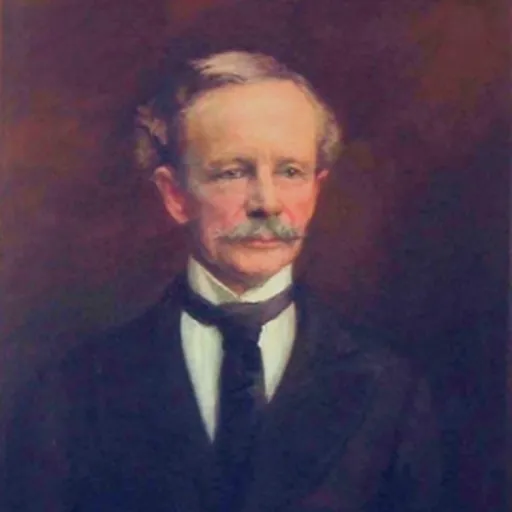
About George William Brown
Lived 1812 – 1890 (aged 77). George William Brown was an American professor and magistrate.
George William Brown (October 13, 1812 – September 5, 1890) was an American politician, judge and academic. A graduate of Rutgers College in 1831, he was mayor of Baltimore from 1860 to 1861, professor in University of Maryland School of Law, and 2nd Chief Judge and Supreme Bench of Baltimore City. He was founder and president of the Bar Association of Baltimore City and the Library Company of the Baltimore Bar.
Career Brown was admitted to the bar in 1834. Brown was a founder of the Library Company of the Baltimore Bar (1840) and from 1861 to 1874, he was its president. He was a founder of the Maryland Historical Society in 1844. The first digest of Maryland Court of Appeals decisions was compiled with his assistance and published in 1849. Brown was mayor of Baltimore, Maryland, from 1860 to 1861 and a delegate to the Constitutional Convention in Baltimore in 1867. From 1871 to 1873, he was a University of Maryland School of Law professor from 1871 to 1873. He was elected in 1872 to serve as 2nd Chief Judge, Supreme Bench of Baltimore City, a position he held from 1873 to 1888. He was founder (1880) and 11th president of the Bar Association of Baltimore City from 1889 to 1890.
Pratt Street Riot Brown played an important role in controlling the Pratt Street Riot, where the first bloodshed of the Civil War occurred, on April 19, 1861. During the riot, Brown accompanied a column of the Sixth Massachusetts regiment through the streets. When the column he was leading was assailed by the mob, "the mayor's patience was soon exhausted, and he seized a musket from the hands of one of the men and killed a man therewith." Immediately following the Riot, Baltimore saw much lawlessness, as citizens destroyed the offices of pro-Union German newspapers and looted shops in search of guns and other weapons. Mayor Brown and Maryland businessmen visited the White House to urge President Abraham Lincoln to reroute Union troops around Baltimore city to Annapolis to avoid further confrontations that they felt would result from additional troops passing through the city.
In the few days following the Pratt Street Riot, Governor Hicks likely assented to Mayor Brown's decision to dispatch the Maryland militiamen to destroy the railroad bridges over the rivers north of the city, to prevent more troops from passing through Baltimore. This was an act both Hicks and Brown would later deny—though Isaac R. Trimble, commanding Baltimore militia companies immediately following the Riot—later claimed that Brown authorized destruction of the railroad bridges, which may explain Brown's later arrest and imprisonment by federal authorities. Shortly thereafter, a Maryland militia captain and Baltimore County farmer, John Merryman, was arrested, held at Fort McHenry and later denied a writ of habeas corpus, on grounds that President Lincoln had suspended the writ (but only along rail lines in Maryland). This arrest sparked the case of Ex parte Merryman.
President Lincoln agreed to reroute Union troops around Baltimore to Annapolis, so they could then travel to Washington. Northern troops (state militia companies) were able to arrive in Washington, thus avoiding further bloodshed in Baltimore.
Imprisonment On May 13, 1861, the Union army entered Baltimore, occupied the city, and declared martial law. Mayor Brown was arrested on September 12, 1861, at his home, with Habeas corpus suspended. He was imprisoned at Fort McHenry for one night, This idea was paraphrased and endorsed by President Gilman in his Inaugural Address delivered on February 22, 1876.
Almost three years before he died, Brown wrote his memoir. In it, he referred to Quaker Johns Hopkins as a "wealthy Union man" and a member of a committee of bankers who gave $500,000 to the city of Baltimore after the first blood in the Civil War was shed there. Hopkins selected Brown as one of the trustees of the university (but not of the hospital) who would oversee the construction and founding of the institutions now known as the Johns Hopkins University and Johns Hopkins Hospital.
Brown died on September 5, 1890, in Mohonk Lake, New York. He was buried in Green Mount Cemetery in Baltimore.
Don’t just read it —
keep it.
Full-length biographies made to live with: read them, listen on the way to work, watch them tonight.
- E-book
- Audio
- Video
Instant download · yours to keep · every purchase keeps this site free
Important facts
People in George William Brown's life
Named in this biography and alive at the same time


Related people
Same field, nearest in time


Contemporaries
People whose lives overlapped George William Brown's



Frequently asked questions
Who was George William Brown?
American politician, judge, and academic (1812-1890)
When was George William Brown born?
George William Brown was born on 13 October 1812 in Baltimore.
When did George William Brown die?
George William Brown died on 8 September 1890 in Lake Mohonk.
What was George William Brown's occupation?
George William Brown was a professor and magistrate.
What nationality was George William Brown?
George William Brown was American.
Sources & further reading
· Wikipedia: George William Brown
· DBpedia: George William Brown (mayor)
Cite this page
APA: Biography.guide. (2026). George William Brown. https://biography.guide/george-william-brown/
MLA: "George William Brown." Biography.guide, https://biography.guide/george-william-brown/.
Chicago: "George William Brown." Biography.guide. https://biography.guide/george-william-brown/.
Data last updated: 2026-09-21 · Spot an error? Report a correction.
Portrait: Wikimedia Commons · author & licence
Page generated 2026-09-27 05:00 UTC