
About George Vivian
Lived 1798 – 1873 (aged 74). George Vivian was a British painter and draftsperson.
George Vivian (1798–1873) was an English traveller and topographical artist. He is known for Spanish landscapes and views from Italian gardens.
Life He was the second son of John Vivian, a solicitor of the excise, and barrister, the second son of Matthew Vivian of Penelewey, near Truro. He was educated at Eton College, and matriculated at Christ Church, Oxford in 1817 (but did not graduate).
Vivian made early travels to Vienna and the Balkans in 1818, and Albania in 1819 (when he met Ali Pasha of Ioánnina (1740–1822)). There is a family tradition that, in 1821, George Vivian was an Extra Page of Honour to King George IV - engaged to link arms with others in front of the door to Poets’ Corner at Westminster Abbey in order to prevent Queen Caroline from attending the Coronation of George IV on 19 July 1821. "The Coronation of his most sacred Majesty King George IV. 19 July 1821" by George Nayler records ‘- Vivian Esq.’ as one of the Pages, but it is not clear whether it was George or another member of the Vivian family who was concerned in this incident. During a journey of 1824 to the Near East he encountered Lord Byron. In 1828, on the death of his father, he inherited Claverton Manor, near Bath. He made further journeys, to Spain and Portugal, in 1831 and 1837. In the period before his marriage, he visited Germany, Scandinavia and Russia. He sat on the Royal Fine Art Commission from 1841 to 1863, the whole period of its existence. The Commission arose from an initial proposal and Select Committee of Benjamin Hawes, to couple the rebuilding of the Houses of Parliament with a national promotion of the fine arts. Vivian had shown that committee arabesques from the Palazzo del Te. In a group of 22 dominated by noblemen, patrons and politicians, Vivian represented connoisseurs and collectors, alongside Samuel Rogers and Thomas Wyse.
After contracting malaria in the Campagna in 1846, Vivian never again enjoyed perfect health. His library was put up for sale in 1875.
Works Vivian published illustrated books, mostly based on his own drawings.
Some Illustrations of the Architecture of Claverton and of the Duke's House, Bradford, etc. (1837).
Spanish Scenery (1838), lithographs by Louis Haghe and others. Scenery of Portugal and Spain (1839), lithographs by Louis Haghe, William Day and others. Views from the Gardens of Rome and Albano (1848), engravings by James Duffield Harding. John Britton commented favourably in 1840 on his anonymous pamphlet The Prospects of Art in the Future Parliament House from 1835, which presaged the Fine Art Commission.
Claverton Manor and the Vivians John Vivian, father of George, purchased the Claverton Manor estate in 1816;
John Vivian
John Vivian (1756–1828), from a Cornish background, matriculated at St Mary Hall, Oxford in 1779, at age 22, graduating M.A. in 1784. He was called to the bar at the Inner Temple in 1785, the same year becoming solicitor to the Excise at Bristol, and later being made a bencher of the Middle Temple. (A correction to Bibliotheca Cornubiensis differentiates the Excise solicitor John Vivian from John Vivian of the Inner Temple; but that distinction is contradicted by the website of the American Museum and Gardens, located in Claverton Manor. )
He married Marianne Edwards in 1792, and they had a son John Edwards Vivian (born 1795/6) who was called to the bar at the Middle Temple in 1815. She was the daughter and heiress of Samuel Edwards of Cotham Lodge, in Gloucestershire near Bristol, who died in 1815.
The Alumni Oxonienses record for George Vivian gives, for 1817, his father's residence as "Colham, Gloucestershire". This presumably means "Cotham".
The two houses at Claverton
The new Manor commissioned by John Vivian was on a fresh site, some away from the old house, and built in a neo-classical style, using Bath stone. George Vivian, in contrast, undertook to preserve what he could of the old house, completed in 1625. documented in some of its details by Richardson's 1837 book on the period. The architect Alexander Roos came to know Vivian by the early 1840s.
George Vivian as collector Vivian added a gallery in the south wing of Claverton Manor, to display his art collection. Under the original title Triumph of Scipio, it was exhibited several times. A supposed portrait of Michelangelo by Andrea del Sarto was later exhibited by his son, around 1880, as by Sebastiano del Piombo, based on an attribution by Bernard Berenson. It went to the Isabella Stewart Gardner Museum in 1899, was attributed there to Baccio Bandinelli, and is now taken to be a self-portrait of his.
Later history Since 1961 Claverton Manor has been the home of the American Museum, and its 30 acres of gardens are open to the public. All that remains of the old house is part of the garden, with a 17th-century gateway, walls, and a flight of steps.
Family Vivian married in 1842 Elizabeth Anne Grey, eldest daughter of Ralph William Grey (died 1822) of Backworth House, and sister of Ralph William Grey (1819–1869) the Member of Parliament. The Greys of Backworth, in the Tynemouth area, owned coal rights, and were bought out by Hugh Percy, 2nd Duke of Northumberland. The Grey family also lived in Weymouth Street off Portland Place in London, in 1809.
George and Elizabeth Anne Vivian lived in Italy from 1844 to 1846, and their only son Ralph, who became an army officer, was born there. Their other daughter, Alice Jane, died unmarried in 1921.
Ralph Vivian (1845–1924) served in the Scots Guards in the British Conquest of Egypt (1882). He retired from the Army in 1883, and became a director of the machine tool company Greenwood & Batley in 1888. In 1892 he married Susan Lawrence née Endicott, widow of Marshall Owen Roberts.
Don’t just read it —
keep it.
Full-length biographies made to live with: read them, listen on the way to work, watch them tonight.
- E-book
- Audio
- Video
Instant download · yours to keep · every purchase keeps this site free
Important facts
People in George Vivian's life
Named in this biography and alive at the same time



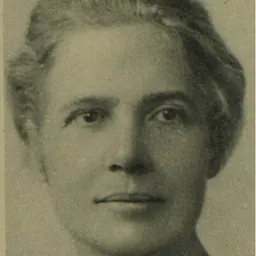
Related people
Same field, nearest in time

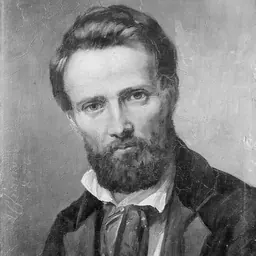
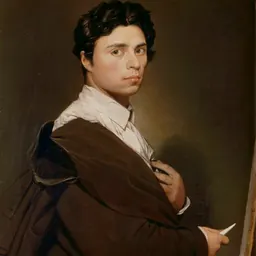
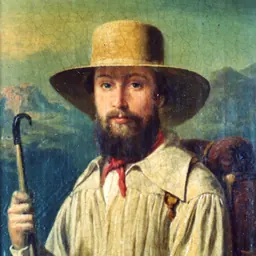
Contemporaries
People whose lives overlapped George Vivian's






Frequently asked questions
Who was George Vivian?
English painter and draughtsman, 1798-1873
When was George Vivian born?
George Vivian was born on 10 August 1798.
When did George Vivian die?
George Vivian died on 5 January 1873 in London.
What was George Vivian's occupation?
George Vivian was a painter and draftsperson.
What nationality was George Vivian?
George Vivian was British.
Sources & further reading
· DBpedia: George Vivian (artist)
Cite this page
APA: Biography.guide. (2026). George Vivian. https://biography.guide/george-vivian/
MLA: "George Vivian." Biography.guide, https://biography.guide/george-vivian/.
Chicago: "George Vivian." Biography.guide. https://biography.guide/george-vivian/.
Data last updated: 2026-09-20 · Spot an error? Report a correction.
Page generated 2026-09-27 05:05 UTC