
George T. Raymond
American civil rights leader
About George T. Raymond
Lived 1914 – 1999 (aged 84). George T. Raymond was an American civil rights advocate.
George T. Raymond (May 10, 1914 – May 9, 1999) was an American civil rights leader from Pennsylvania who served as president of the Chester, Pennsylvania, branch of the National Association for the Advancement of Colored People (NAACP) from 1942 to 1977. He was integral in the desegregation of businesses, public housing and schools in Chester and co-led the Chester school protests in 1964 which made Chester a key battleground in the civil rights movement.
Early life and education Raymond was born in Chester, Pennsylvania, and graduated from Chester High School in 1933. He studied business administration at Drexel Institute of Technology for one year but economic hardship forced him to leave school and find work.
Raymond worked at multiple odd jobs and finally landed at the Chester Boys Club, joined the NAACP and began his career in the civil rights movement.
Career Raymond became the leader of the Chester branch of the NAACP in 1942 and began to implement programs to end racial discrimination. He partnered with J. Pius Barbour, the pastor of Calvary Baptist Church in Chester and together they adopted a gradualist approach to civil rights.
In 1945, Raymond and the Chester branch of the NAACP successfully desegregated movie theaters, restaurants, hotels and other businesses in Chester through non-violent protests and the threat of legal action.
In 1953, the United States Supreme Court rendered its decision in the case Brown v. Board of Education of Topeka declaring state laws establishing separate schools for black and white students to be unconstitutional. The Chester Board of Education technically met the requirements of integration, however Board policy allowed students to request transfers to schools outside their neighborhood. The Board approved most transfers for white students but few for black students. As a result, in 1953, five elementary schools in Chester were almost completely black. However, each of those five schools had white students living within its district that were allowed to attend all-white schools in other parts of town.
In 1955, Raymond and the NAACP desegregated public housing run by the Chester Housing Authority.
In 1958, Raymond purchased a house in the borough of Rutledge, Pennsylvania, in majority white Delaware County. The day before he was to move in, a fire burned down the house. After the fire, the township attempted to exercise eminent domain and claim Raymond's property as a site for a new town hall. Raymond threatened legal action and the township backed down. The house was rebuilt and Raymond took residence in the house in 1959.
In 1964, the Chester school protests led to a month long series of almost nightly protests initiated by Stanley Branche and the Committee for Freedom Now against the Chester School Board de facto segregation of schools. The protests were marked by violence and police brutality which caused James Farmer to dub Chester the “Birmingham of the North,” in reference to the harsh treatment of protesters in Birmingham, Alabama, around the same time. Raymond presented the school board with a list of 10 demands including teacher transfers, transportation of students to schools in other neighborhoods, hiring blacks for supervisory positions and hiring more black secretaries. Over six hundred people were arrested over a two-month period of civil rights rallies, marches, pickets, boycotts and sit-ins.
Death and legacy
Raymond died of heart failure on May 9, 1999, and was interred at Haven Memorial Cemetery.
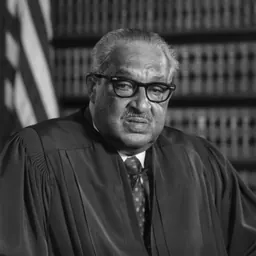
Raymond was presented the Freedom Award by Supreme Court Justice Thurgood Marshall.
In 1991, the George T. Raymond award was established in his honor by the NAACP.
Don’t just read it —
keep it.
Full-length biographies made to live with: read them, listen on the way to work, watch them tonight.
- E-book
- Audio
- Video
Instant download · yours to keep · every purchase keeps this site free
Important facts
People in George T. Raymond's life
Named in this biography and alive at the same time


Related people
Same field, nearest in time


Contemporaries
People whose lives overlapped George T. Raymond's


Frequently asked questions
Who was George T. Raymond?
American civil rights leader (1914-1999)
When was George T. Raymond born?
George T. Raymond was born on 10 May 1914 in Chester.
When did George T. Raymond die?
George T. Raymond died on 9 May 1999.
What was George T. Raymond's occupation?
George T. Raymond was a civil rights advocate.
What nationality was George T. Raymond?
George T. Raymond was American.
Sources & further reading
· Wikipedia: George T. Raymond
Cite this page
APA: Biography.guide. (2026). George T. Raymond. https://biography.guide/george-t-raymond/
MLA: "George T. Raymond." Biography.guide, https://biography.guide/george-t-raymond/.
Chicago: "George T. Raymond." Biography.guide. https://biography.guide/george-t-raymond/.
Data last updated: 2026-09-22 · Spot an error? Report a correction.
Page generated 2026-09-27 05:05 UTC