
George Prevost
British soldier and colonial administrator
About George Prevost
Lived 1767 – 1816 (aged 48). George Prevost was a British military officer, diplomat and politician.
Early life George Prevost was born on 19 May 1767, in New Barbadoes Township (now Hackensack), New Jersey. His father was Augustin Prevost (1723–1786), a French-speaking Protestant from the Republic of Geneva, and a lieutenant-colonel in the British Army. His mother was Anne Francoise Marguerite "Nanette" Grand. George Prevost was educated at schools in England and in the North American continent.
Early military career
1779–1790 On 3 May 1779, Prevost was commissioned at the age of eleven, as an ensign in the 60th Regiment of Foot, in which his father was a senior officer. In 1782, he transferred to the 47th Regiment of Foot, as a lieutenant, followed in 1784 by a move to the 25th Regiment of Foot as a captain. He then returned to the 60th Foot on 18 November 1790 with the rank of major, at the age of 23. Prevost's maternal grandfather was a wealthy banker in Amsterdam, and his money is considered to have certainly been responsible for his grandson's quick advancement up the chain of command in the British Army, as promotion could then be obtained "by purchase". and where he was appointed to be a baronet. In 1806, Prevost became a colonel commandant of his regiment. As commander-in-chief, he took over the presidency and administration of Lower Canada from Thomas Dunn on 14 September. He would remain the president of Lower Canada until 15 July 1812. During his time as commander-in-chief, he was focused on ensuring the military security of the Atlantic colonies.
Prevost was worried about the disposition of Canadians if a war started involving British North America and tried to conciliate Canadian political leaders, who had been disappointed by the partisan alliance between Craig and the British oligarchy. The leader of the Canadian party, Pierre-Stanislas Bédard, was opposed by several people trying to gain his position, and Prevost exploited the rivalry. In 1812, Bédard, losing his motivation for continuing as leader, was given a judgeship in an area of British North America from which he could not have a major influence over the general political system. Prevost worked with the moderate Louis-Joseph Papineau, treating him as the leader. Prevost also nominated five Canadians to be appointed to the Legislative Council between 1811 and 1815, an unusual move as Canadians had usually been excluded from being appointed since 1798. In a report to the Colonial Office, Prevost said that he wanted to create a Legislative Council "possessed of the consideration of the country, from a majority of its members being independent of the government", in order to transfer to it "the political altercations which have been hitherto carried on by the governor in person." During the early months of 1813, Prevost twice visited Upper Canada where the military and civil situation was unsatisfactory after the Governor and Commander there (Major General Isaac Brock) had been killed in action. As a result, he was present in Kingston in May, and took personal charge of an attack on the main American naval base on Lake Ontario. A victory here could have been decisive but the expedition was hastily mounted and at the Battle of Sackett's Harbor both Prevost and the naval commander, Commodore James Lucas Yeo, attacked hesitantly. After meeting stiff resistance, they withdrew.
In 1814, large reinforcements became available after the defeat of Napoleon Bonaparte. Prevost was appointed Colonel of the 16th, Bedfordshire Regiment in April. He planned an attack along Lake Champlain and the Hudson River, but the army which he led personally was driven back at the Battle of Plattsburgh after the British naval squadron on Lake Champlain was defeated. Commodore Yeo considered that the British ships under Captain George Downie (who was killed in the action) had been ordered into action prematurely by Prevost, and that Prevost had failed to order an attack by his own troops until it was too late to avert the defeat of Downie's squadron.
Prevost had also made himself unpopular among some of the Army officers under his command who were veterans of the Peninsular War (such as Manley Power, Thomas Brisbane, and Frederick Philipse Robinson) by his perceived over-caution, and his niggling insistence on correct dress and uniform. He had also alienated several successful Canadian officers (such as Charles de Salaberry) by seeming to claim their successes for himself and failing to reward them properly. However, it was the complaints by the Navy and Peninsular veterans which prompted his recall. Although the Duke of Wellington accepted that Prevost's strategy was correct, he wrote on 30 October 1814, It is very obvious to me that you must remove Sir George Prevost. I see he has gone to war about trifles with the general officers I sent him, which are certainly the best of their rank in the army; and his subsequent failure and distresses will be aggravated by that circumstance; and will probably with the usual fairness of the public be attributed to it.
In December, Wellington's former Quartermaster General, Sir George Murray, was sent to Canada with the local rank of Lieutenant General specifically to order Prevost to return to London to explain his conduct of the Plattsburg campaign. He delivered the order on 2 March 1815, by coincidence only a day or so after news of the ratification of the Treaty of Ghent, which ended the war, arrived in Quebec. Prevost felt himself publicly humiliated by the manner and timing of his succession. After ordering hostilities to cease and disbanding the militia, he left Quebec on 3 April. He was given a hasty vote of thanks by the Assembly in Quebec.
Later life
On his return to England, the Government and Army authorities at first accepted Prevost's explanations for his conduct at Plattsburgh and during the War generally. Soon afterwards, the official naval despatch on the Battle of Plattsburgh was published, together with Yeo's complaints. Both these accounts blamed Prevost for the defeat at Plattsburgh. Prevost requested a court martial to clear his name. The trial was set for 12 January 1816, the delay being necessary to allow witnesses to travel from Canada, but Prevost was already in ill health and died a week before it was due to convene. His widow declined the offer of a peerage in honour of her husband, as she did not consider herself and her family to have sufficient means to support the dignity.
Later historians judge Prevost's preparations for defending the Canadas with limited means to be energetic, well conceived, and comprehensive, and against the odds he had achieved the primary objective of preventing an American conquest.
Prevost is buried in the church of St Mary the Virgin, East Barnet, North London, England.
Honours A schooner was named in his honour in 1813.
In 1819 a monument to his memory, sculpted by Francis Chantrey, was erected in Winchester Cathedral.
In 2016, Prevost was named a National Historic Person by the Canadian government.
Arms
Don’t just read it —
keep it.
Full-length biographies made to live with: read them, listen on the way to work, watch them tonight.
- E-book
- Audio
- Video
Instant download · yours to keep · every purchase keeps this site free
Important facts
People in George Prevost's life
Named in this biography and alive at the same time


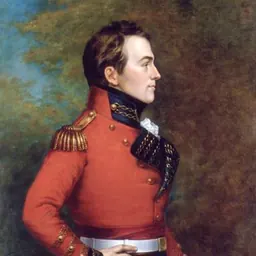
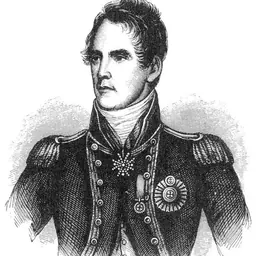
Related people
Same field, nearest in time

Contemporaries
People whose lives overlapped George Prevost's






Frequently asked questions
Who was George Prevost?
British soldier and colonial administrator (1767-1816)
When was George Prevost born?
George Prevost was born on 19 May 1767 in New Jersey.
When did George Prevost die?
George Prevost died on 5 January 1816 in London.
What was George Prevost's occupation?
George Prevost was a military officer, diplomat and politician.
What nationality was George Prevost?
George Prevost was British.
Sources & further reading
Cite this page
APA: Biography.guide. (2026). George Prevost. https://biography.guide/george-prevost/
MLA: "George Prevost." Biography.guide, https://biography.guide/george-prevost/.
Chicago: "George Prevost." Biography.guide. https://biography.guide/george-prevost/.
Data last updated: 2026-09-25 · Spot an error? Report a correction.
Page generated 2026-09-27 05:11 UTC