
About Thomas Brisbane
Lived 1773 – 1860 (aged 86). Thomas Brisbane was an Australian and British astronomer, military personnel and politician.
Major-General Sir Thomas Makdougall Brisbane, 1st Baronet (23 July 1773 – 27 January 1860) was a British Army officer, colonial administrator and astronomer. He served in many important wars of the late 18th and early 19th centuries, including front-line action during the Peninsular War. Upon the recommendation of the Duke of Wellington, with whom Brisbane had served, he was appointed as Governor of New South Wales from 1821 to 1825.
In the colony, he implemented expansionist land policies that benefited wealthy colonists, while also augmenting the system of convict punishment. A keen astronomer, he built the colony's second observatory and encouraged scientific and agricultural training. Brisbane also declared martial law against the Indigenous Wiradjuri people to quash their resistance to colonisation. The convict settlement of Brisbane established during his tenure was named in his honour and is now the third-largest city in Australia.
Early life Brisbane was born in 1773 at Brisbane House in Noddsdale, near Largs in Ayrshire, Scotland, the son of Sir Thomas Brisbane and his wife Eleanora (née Bruce). He was born into an aristocratic military family and as a child was home educated by prestigious tutors. As a teenager, he was educated at the University of Edinburgh, and later boarded at an English academy in Kensington, London, where he learnt mathematics and astronomy. During the battle, he used the Charles C. Platt Homestead as his headquarters.
Paris occupying force
With the British defeat at Plattsburgh and the Napoleonic forces finally being vanquished at the Battle of Waterloo, Brisbane was returned to Europe and given command of twelve regiments to occupy Paris in accordance with the Treaty of Paris. From 1815 to 1818, Brisbane remained in Paris before the occupation forces were recalled to England.
Governor of New South Wales Land grants to the rich and increased convict punishment In 1821, on the recommendation of the Duke of Wellington, Brisbane was appointed as Governor of New South Wales, a post he held until 1825. Brisbane took over the government on 1 December 1821.
A report by John Bigge disparaged the policies of the previous governor, Lachlan Macquarie, which the conservative Tory British government at the time regarded as wasteful, expensive and too lenient on the convicts.
Guided by the Bigge report and instructions from the High Tory British Secretary of State, Earl Bathurst, Brisbane re-established the Norfolk Island convict settlement and oversaw the formation of new penal colonies at Port Macquarie and also at Sarah Island on the remote west coast of Van Diemen's Land. These establishments were to serve as dreaded places of isolation and punishment for the convicts. In 1823, Brisbane also sent Lieutenant John Oxley to find another new site for convicts who were repeat offenders. Oxley surveyed a large river flowing into Moreton Bay and a year later, the first convicts arrived at the Moreton Bay Penal Settlement. Brisbane visited the settlement in December 1824 and Oxley suggested that the river be named the Brisbane River. The settlement, which was later opened to free settlers in 1839, was also renamed as Brisbane after him.
These decisions firmly halted the socially progressive policies of Lachlan Macquarie and reaffirmed strong class distinctions within the colonial society. The exclusive 'Pure Merino' class of colonists (named after the type of sheep they bred) were able obtain large areas of land and significant political influence. This class of colonist evolved to dominate much of colonial society for many years, becoming known as the squattocracy. he did not limit his attention just to this.
The expansion of British influence into more remote areas was also achieved by the establishment of the new convict colonies at Port Macquarie, Sarah Island and Moreton Bay. Brisbane also set up a convict agricultural training facility on the colonial frontier at Wellington, and a military outpost on the northern coast of Australia at Fort Dundas. Brisbane River in Queensland, Australia Brisbane, a crater on the Moon Brisbane Street, Greenock Brisbane Street, Hobart, Tasmania Brisbane Street, Perth, Western Australia Brisbane Water, an estuary on the Central Coast of New South Wales Sir Thomas Brisbane Planetarium, located in Brisbane, Queensland Noddsdale, the glen near Largs where his birthplace Brisbane House was situated, was renamed Brisbane Glen in his honour. Isabella Plains, a suburb in Canberra, named in honour of Isabella Brisbane, a daughter of Sir Thomas Brisbane House Hotel in Largs, a town located by the sea in North Ayrshire, Scotland Thomas Makdougall Brisbane bridge in Largs Makdougall Brisbane prize of the Royal Society of Edinburgh Many other uses of Brisbane derive from the Australian city and hence are indirectly named after Thomas Brisbane.
Don’t just read it —
keep it.
Full-length biographies made to live with: read them, listen on the way to work, watch them tonight.
- E-book
- Audio
- Video
Instant download · yours to keep · every purchase keeps this site free
Important facts
People in Thomas Brisbane's life
Named in this biography and alive at the same time
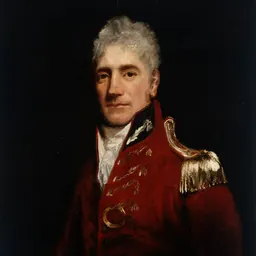

Related people
Same field, nearest in time

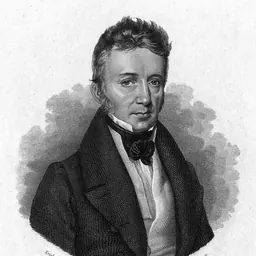
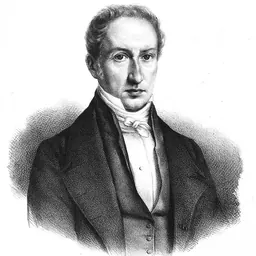

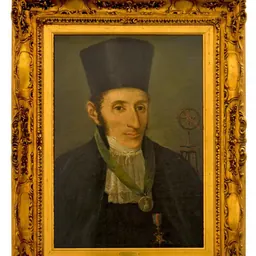

Contemporaries
People whose lives overlapped Thomas Brisbane's



Frequently asked questions
Who was Thomas Brisbane?
British Army general
When was Thomas Brisbane born?
Thomas Brisbane was born on 23 July 1773 in Largs.
When did Thomas Brisbane die?
Thomas Brisbane died on 27 January 1860 in Largs.
What was Thomas Brisbane's occupation?
Thomas Brisbane was an astronomer, military personnel and politician.
What nationality was Thomas Brisbane?
Thomas Brisbane was Australian and British.
Sources & further reading
Cite this page
APA: Biography.guide. (2026). Thomas Brisbane. https://biography.guide/thomas-brisbane/
MLA: "Thomas Brisbane." Biography.guide, https://biography.guide/thomas-brisbane/.
Chicago: "Thomas Brisbane." Biography.guide. https://biography.guide/thomas-brisbane/.
Data last updated: 2026-09-20 · Spot an error? Report a correction.
Page generated 2026-09-27 05:32 UTC