
About George Powell Thomas
Lived 1808 – 1857 (aged 48–49). George Powell Thomas was a military personnel and painter.
George Powell Thomas (1808–1857) was a Major in the 3rd Bengal European Regiment who died at the Battle of Agra during the Indian Mutiny. He was described as "a man of consummate courage, a man of genius, an artist and a poet."
Early life He was born on 26 August 1808 at Bahramghat near Lucknow, the son of Major General Lewis Thomas C.B., Colonel of the 3rd Regt. of Foot Bengal Army E.I.C.S., and Maria Frances.
Career Commissioned in 1825, he was an assistant in the Thagi department in 1835, and in civil employ in the Central Provinces as assistant commissioner from 1835 to 1840. He served as a Captain with the 64th Bengal Native Infantry, taking part in the relief force of Jellalabad (1842).
He served in Afghanistan under General Sir George Pollock during the Afghan War, where he commanded a corps of Jezailchees. He was promoted to Major in 1851.
He was at home on sick leave on the breaking out of the war with Russia, he applied for and obtained the command of a regiment in the Turkish Contingent under General Vivian. He commanded a regiment of Bashi Bazouks under Major-General William Beatson in Turkey, where the Queen conferred upon him the local rank of Lieutenant-Colonel in Turkey. He then left for the Crimea as a volunteer and was present at the fall of Sevastopol (1855), for which he received the Crimea Medal. He died of his wounds on 4 August in the fort at Agra. He was buried in the fort cemetery at Agra. They were much acclaimed. A review in The Spectator noted that "Captain Thomas has made sketches of the most striking features of the country round Simla; which have been lithographed in the tinted manner by Messrs. Dickinson and published in a folio volume. They are spirited and effective in style, and drawn on the stone with a freedom that is more agreeable than laboured and formal execution; besides being characteristic of the rapid and vigorous pencil of a soldier."
Poetry and plays In 1847 he published a book of poems, described as "a volume of very graceful poems, full of feeling and thought." His poems were included in anthologies, such as The Book of the Sonnet (1867).
To Constance, in absence
THOU art not here! And ere we meet again,
Long years may pass away, and even thou,
My fair young bride, — some shadows on thy brow,
The tokens some of time and some of pain,
May, ere that hour, have stolen in, to stain
The fairest face that e'er won lover's vow.
What matter ? Be thy heart as it is now;
Let that its freshness, beauty, truth retain,
And something of its own sweet power to adorn
Whate'er it loves, with such divinest light
As hovers o'er the mountain-top at morn,
Yet makes the poorest blossom heavenly bright:
Blest in those arms from which I now am torn,
I shall note nothing, then, of time or blight.
To Constance, written in absence
Knowing, too surely, that whatever years
Fate may allot us, of united bliss,
There still must come a parting wet with tears,
Alas, sad, awful agonizing kiss,
Which deathless love, and death-bed hopes and fears,
Must wring with thoughts of other worlds and this;
And knowing that each hour that moment nears,
Though its approach by mercy shrouded is,
—Oh, I must hold my loss of every day
Which basking in thy presence doth not bless,
A fine as harsh as victims ever pay,
Or tyrants ever wring from weak distress;
A fine,—by each hour pass'd from thee away,—
That makes my lawful span of life-time less!
Jumnootree;
A peak in the Himalayas, twenty-five thousand feet above the level of the sea.
SHARP, clear, and crystalline, cleaving the sky
In twain, it towers for ever and alone,
Save that about its feet the tall hills lie,
Like slaves around some mighty despot's throne,—
While evermore, beneath its cold stern eye,
The short-liv'd centuries have come and flown,
And stars that round its head untiring fly,
Confess its glories ancient as their own !-
The eagles shun it in their highest flight;
The clouds lie basking 'neath its eminence;
Nought nears it but thin air and heaven's sweet light,
Nor not a sound for ever cometh thence,
Save of some avalanche from its summit riven,
Or thunder-tempest on its breakers driven!
A review of his plays noted that "The intrigue, struggle and revenge, which formed so prominent a part of medieval Italian life, was well expressed by G. P. Thomas, in his Michele Orombello, or the Fatal Secret, and The Assassin, or the Rival Lovers. They are essentially tragical, and very few of the important characters are living at the end of the fifth act. Powerful in plot, and exhibiting considerable skill in the analysis of emotion, they are quite in the forefront of Anglo-Indian dramatic literature, though the slightness of the underplot in the first play and the deficiency of female characters in the second mar their effectiveness to some extent."
Personal life
He married Albina Grace Andrews (b 1811, Richmond) 1 August 1831 at Dacca. Their children were Marian Albina (b 1832, Dinapore, Bengal), Charles Lewis Stratford (b 1833, Dinapore, Bengal), Stratford Powell (b 1837, Saugor, Bengal, d 1839), Charles Frederick (b 1843 Subathu, Bengal), Montague George (1844, Calcutta, Bengal), Alice Constance (b 1846, Bath, Somerset), Alfred Campbell (b 1847, d 1848, Allahabad, Bengal), Florence Juliet (b 1849, Meerut, Bengal). His wife died at 28, Montague Road, Richmond in 1889 and is buried in Richmond Old Cemetery, where he is also commemorated.
Publications Views of Simla (1846). London: Dickinson & Co. Poems (1847). London: Smith, Elder and Co. Two Tragedies (1852). London: W Thacker & Co. Views of Simla (2015). Studio Orientalia.
Don’t just read it —
keep it.
Full-length biographies made to live with: read them, listen on the way to work, watch them tonight.
- E-book
- Audio
- Video
Instant download · yours to keep · every purchase keeps this site free
Important facts
People in George Powell Thomas's life
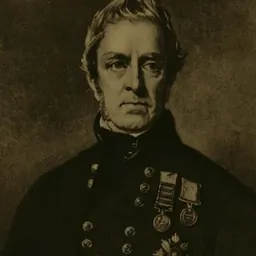
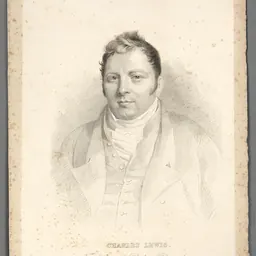
Named in this biography and alive at the same time




Related people
Same field, nearest in time

Contemporaries
People whose lives overlapped George Powell Thomas's






Frequently asked questions
Who was George Powell Thomas?
British officer, artist and poet (1808–1857)
When was George Powell Thomas born?
George Powell Thomas was born in 1808.
When did George Powell Thomas die?
George Powell Thomas died in 1857.
What was George Powell Thomas's occupation?
George Powell Thomas was a military personnel and painter.
Sources & further reading
· Wikipedia: George Powell Thomas
· DBpedia: George Powell Thomas
Cite this page
APA: Biography.guide. (2026). George Powell Thomas. https://biography.guide/george-powell-thomas/
MLA: "George Powell Thomas." Biography.guide, https://biography.guide/george-powell-thomas/.
Chicago: "George Powell Thomas." Biography.guide. https://biography.guide/george-powell-thomas/.
Data last updated: 2026-09-20 · Spot an error? Report a correction.
Page generated 2026-09-27 05:34 UTC