
About George Philip
Lived 1800 – 1882. George Philip was a cartographer, bookseller and cartography.
George Philip (1800–1882) was a Scottish cartographer, map publisher and founder of the publishing house George Philip & Son Ltd.
Family George Philip was born in Huntly, Aberdeenshire, to a staunchly Calvinist family. In 1819 George travelled to Liverpool where his brother Robert, who was a nonconformist minister, lived. Here George made his home and in 1819 George became assistant to the Liverpool bookseller, William Grapel. In 1834, Philip set up his own business as a bookseller and stationer in Paradise Street, Liverpool. Within his first year of trading to keep up with demand he had to move his business into larger premises at the Atlas Buildings in South Castle Street. George and his wife Jane had a daughter Jane (born 1827) and one son, George (1823–1902). In 1848, George Jr. was admitted as a partner into the family publishing business now called George Philip & Son Ltd.
George Philip & Son Ltd.
During the early 1840s George Philip opened and ran a bookseller's and stationer's shop in South Castle Street, Liverpool, and it was during this period he laid the foundations for building and expanding his publishing empire from which he would eventually amass a substantial fortune. His son George Jr. (1823-1902), along with his nephew Thomas Dash Philip (1829-1913), and Philip's daughter Jane Jr. (who served behind the counter), assisted him in the shop at South Castle Street. Both George Jr. and Thomas would, in time, head the family-run business. In 1851 the England Census shows George Philip senior and his family resided in a grand town house at 21 Great George Square, Westside, situated in Liverpool's prestigious and affluent Georgian quarter.
George's nephew Thomas Dash Philip was also living with the family. The Philip's also employed two live-in servants to assist George's wife Jane with the day-to-day running of the household. In 1856, George Philip & Son Ltd opened a house at 32 Fleet Street, London, where they sold their geographical and educational publications. They would later also occupy the premises next door at numbers 31 and 30 Fleet Street. In 1859, the company took over the extensive pile known as Caxton Buildings in South John Street, Liverpool, which became the company's headquarters in the city. With the establishment of their printing works in Caxton Buildings, new power-driven machinery gave the company the capacity to increase production. Caxton Buildings, Liverpool, 1859. The printing works of George Philip & Son Ltd were situated here. Philip used cartographers such as John Bartholomew the elder, August Petermann, and William Hughes to produce maps on copper plates. Philip then had these printed and hand-coloured by his women tinters. By the time he produced his county maps of 1862 he was using machine coloured maps produced on power-driven lithographic presses.
In 1879 George Philip senior retired from the business to his country home The Retreat, in Bickley, Kent. Three years later on 3 October 1882, George Philip senior died at Huntly House, Lilley Road, Fairfield, Liverpool, at the home of one of his executors, the merchant James Askins Crowe. George Philip senior is buried alongside his wife Jane at Toxteth Park Cemetery (general section M, grave 40). George Philip’s estate upon his death was valued at £95,102 5s. 6d (the equivalent in 2018 to £11 million +). In October 1882 George Philip Jr. took over as head of the company. By this time the family firm had expanded to such a degree that George Philip Jr. now ran three companies; George Philip & Son Ltd, Philip and Company Ltd, based in South John Street, Liverpool, and Philip, Son and Nephew, based in South Castle Street, Liverpool. Over the following 20 years the companies continued to prosper greatly under the helm of George Philip Jr.
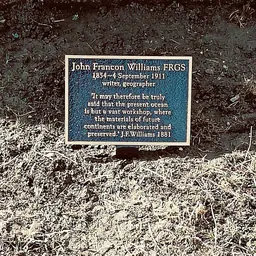
On 30 May 1902, George Philip the younger aged 78 died, ‘The funeral of Mr. George Philip (Jr.), who died several days ago at Southport, took place at Smithdown Road Cemetery (renamed Toxteth Park Cemetery) yesterday (3 June 1902). Long resident at Huntley House, Lilley Road, Fairfield, he was the head of the three widely known firms (in the city) of Philip and Co. Ltd (of South John Street), George Philip and Son (of Hope Street), and Philip, Son and Nephew (of South Castle Street). (Among) the chief mourners were Thomas Dash Philip, T. N. Philip, George Stanley Philip, George Philip and Joseph Collyer. Amongst the general body of mourners, who included a large number of employees, were Colonel Whitney V.D., Captain J. Macnab R.N.R., and Messrs., T. I. Lloyd, R. Tunnicliffe, J. Fitzgerald, writer John Francon Williams, C. F. Bell, W. A. Webb and John S. Arthur.
Thereafter Thomas Dash Philip took control of the three firms.
The RMS Titanic Connection In Liverpool, apart from Admiralty House, Philip Son & Nephew Ltd were the only company to keep all the Admiralty charts and books. As such, the company had for many years conducted business with the large shipping lines based in the city including White Star Line and Cunard. In 1912, as with other White Star passenger liners, when RMS Titanic was being fitted out for its inaugural Atlantic crossing, her navigational charts and sailing directions were supplied by Philip, Son & Nephew Ltd, ‘booksellers, mercantile and export stationers, map, chart and educational publishers etc.’ of 45-51 South Castle Street, Liverpool. J. Bruce Ismay, chairman and managing director of the White Star Line and a passenger on and a survivor of the RMS Titanic sinking, also bought his personal stationery from Philip, Son & Nephew Ltd. A letter survives in the J. Bruce Ismay archive in the Maritime Archives and Library (National Museum Liverpool) from a Mr. Radcliffe acknowledging receipt of a receipt from Philip, Son & Nephew Ltd, for mercantile stationery for Ismay's mansion ‘Sandheys’ in Mossley Hill Road, Liverpool.
George Philip & Son Ltd; twentieth century onward A rare photograph of the interior of George Philip & Son Ltd taken in 1917 exists in the Getty Images Archive that shows various employees in the process of assembling globes. During this period the company was producing a large amount of globes in all sizes including the unusual and unique Betts's Portable Terrestrial Collapsible Globe. In 1927, George Philip and Son Ltd produced a unique map of Europe marked with the paths of totality for all total solar eclipses visible in this area during the 20th century. The map was modified by the drawing office of the Science Museum for an exhibition held in 1927. The display at the Science Museum in South Kensington was to celebrate the total solar eclipse that was going to pass over North Wales and North West England that year. The company opened several new branches including 1 Dee Lane, West Kirby, 34 and later 54 Brows Lane, Formby, and 79 Lord Street, Southport. In 1947, John Keith Stanford, owner of Stanfords bookshop and publishing house in Covent Garden, London, decided to sell the company to George Philip & Son Ltd. In 1949, British Pathé produced Globe Making, a short newsreel that shows the art of making a globe. The black and white film is shot in a globe-making factory described as being "in Willesden" (North West London), and thought to be the George Philip & Son Ltd factory in Victoria Road, North Acton (on the Park Royal industrial estate). In 1955, British Pathé revisited the same North West London factory to shoot Globe Making: How the World is Made, a colour newsreel also showing the art of globe making. The films give a fascinating insight into the art of making a globe by hand.
George Philip & Son Ltd operated independently for over 140 years until the company was sold in 1987 to Reed International where it continued to trade as George Philip Ltd. In 1998, following a management buy-out of the Illustrated books division, Philip's became part of the Octopus Publishing Group. Hachette Livre acquired the group in 2001.
Don’t just read it —
keep it.
Full-length biographies made to live with: read them, listen on the way to work, watch them tonight.
- E-book
- Audio
- Video
Instant download · yours to keep · every purchase keeps this site free
Important facts
People in George Philip's life
Named in this biography and alive at the same time




Related people
Same field, nearest in time

Contemporaries
People whose lives overlapped George Philip's





Frequently asked questions
Who was George Philip?
cartographer
When was George Philip born?
George Philip was born in 1800 in Huntly.
When did George Philip die?
George Philip died on 3 October 1882 in Bickley.
What was George Philip's occupation?
George Philip was a cartographer, bookseller and cartography.
What nationality was George Philip?
George Philip's recorded nationality: British Empire.
Sources & further reading
· DBpedia: George Philip (cartographer)
Cite this page
APA: Biography.guide. (2026). George Philip. https://biography.guide/george-philip/
MLA: "George Philip." Biography.guide, https://biography.guide/george-philip/.
Chicago: "George Philip." Biography.guide. https://biography.guide/george-philip/.
Data last updated: 2026-09-22 · Spot an error? Report a correction.
Page generated 2026-09-27 05:21 UTC