
George Hooper
Bishop of St Asaph, Bishop of Bath and Wells
About George Hooper
Lived 1640 – 1727 (aged 86). George Hooper was a British writer, anglican priest, scholar and bishop.
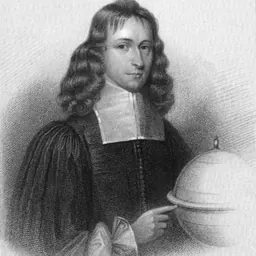
George Hooper (18 November 1640 – 6 September 1727) was a learned and influential English High church cleric of the late seventeenth and early eighteenth centuries. He served as bishop of the Welsh diocese, St Asaph, and later for the diocese of Bath and Wells, as well as chaplain to members of the royal family.
Early life George Hooper was born at Grimley in Worcestershire, 18 November 1640. His father, also George Hooper, appears to have been a gentleman of independent means; his mother, Joan Hooper, was daughter of Edmund Giles, gentleman, of White Ladies Aston, Worcestershire. From Grimley his parents moved to Westminster. He was elected a scholar of St Paul's School while John Langley was high-master (1640–1657), but then was transferred to Westminster School under Richard Busby, who thought him very promising, and obtained a king's scholarship there.
Hooper as elected to a Westminster studentship at Christ Church, Oxford, in 1657: he graduated BA 16 January 1660, MA 1 December 1663, BD 9 July 1673, and DD 3 July 1677. He remained at Oxford as college tutor until 1672, and made the acquaintance of Thomas Ken. Under Dr. Edward Pococke he became a good Hebrew and Syriac scholar, but also learned enough Arabic to apply it to Old Testament exegesis.
Clergyman In 1673 Bishop Morley persuaded Hooper to come and reside with him as his chaplain at Winchester. Ken was the bishop's chaplain at the same time. In the same year Morley presented Hooper to the living of Havant, where he seems to have gone into residence at once, and contracted an ague from the dampness of the place. Ken, then incumbent at East Woodhay in Hampshire, then resigned the living to make way for his friend. Hooper was instituted at Woodhay in 1672. Isaac Milles, the exemplary parish priest of the neighbouring village of High Clere, frequently mentioned Hooper as "the one of all clergymen whom he had ever known in whom the three characters of perfect gentleman, thorough scholar, and venerable divine met in the most complete accordance."
Works Hooper's writing, with the exception of his sermons, were published anonymously. The Church of England free from the imputation of Popery. c. 1682. This was a discourse written and published at the request of Henry Compton, bishop of London, about 1682. Another edition was printed in The London Cases in 1694. It was also reprinted by the author at his own expense in 1716, and given to his clergy at his triennial visitation the year following. A Fair and Methodical Discussion of the First and great Controversy between the Church of England and the Church of Rome concerning the Infallible Guide, 1689. A Discourse concerning Lent, in 2 Parts, 1695. This is a long, learned inquiry into the meaning and origin of the Lenten fast. A Calculation of the Credibility of Human Testimony, first printed in the Philosophical Transactions, October 1699 This is the only printed work of Hooper that is mathematical. The Narrative Vindicated, i.e. the Narrative of the Proceedings of the Lower House of Convocation, 1700-1, by Henry Aldrich: This was answered by White Kennett. De Valentiniarnorum Hæresi, quibus illius origo ex Ægyptiacâ Theologiâ deducitur, 1711. (In Latin.) This was dedicated to John Ernest Grabe. There was added, in the edition of 1757, Emendationes et Observationes ad Tertulliani adverseus Valentinianos Tractatum. Both were intended to accompany a new edition of Tertullian, Adversus Valentinianos which Hooper was preparing for press. Hearing that a new edition of Tertullian's works was being prepared abroad, he sent his notes to the editors, but they were lost. Eight Sermons preached on several occasions from 1681 to 1713. An Inquiry into the State of Antient Weights and Measure, the Attick, the Roman and the Jewish, 1721. De Benedictione Patriarchæ Jacobi, Gen. xlix. Conjecturæ, 1728. This was published by Hooper's own directions on his deathbed, at Oxford, by Thomas Hunt, who prepared in 1757 an edition in 2 vols. of most of Hooper's works. Another edition was published at Oxford (1855).
Don’t just read it —
keep it.
Full-length biographies made to live with: read them, listen on the way to work, watch them tonight.
- E-book
- Audio
- Video
Instant download · yours to keep · every purchase keeps this site free
Important facts
People in George Hooper's life
Named in this biography and alive at the same time


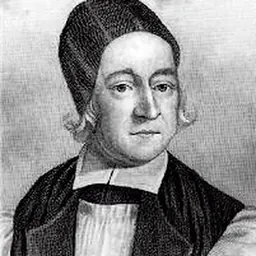


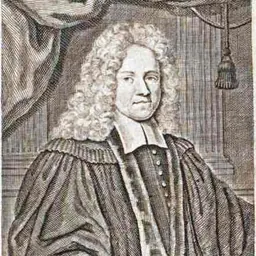

Related people
Same field, nearest in time




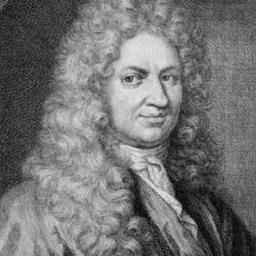
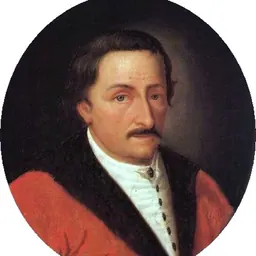
Contemporaries
People whose lives overlapped George Hooper's




Frequently asked questions
Who was George Hooper?
Bishop of St Asaph, Bishop of Bath and Wells
When was George Hooper born?
George Hooper was born on 18 November 1640 in Grimley.
When did George Hooper die?
George Hooper died on 6 September 1727 in Frome.
What was George Hooper's occupation?
George Hooper was a writer, anglican priest, scholar and bishop.
What nationality was George Hooper?
George Hooper was British.
Sources & further reading
· DBpedia: George Hooper (bishop)
Cite this page
APA: Biography.guide. (2026). George Hooper. https://biography.guide/george-hooper/
MLA: "George Hooper." Biography.guide, https://biography.guide/george-hooper/.
Chicago: "George Hooper." Biography.guide. https://biography.guide/george-hooper/.
Data last updated: 2026-09-20 · Spot an error? Report a correction.
Page generated 2026-09-27 05:25 UTC