
About White Kennett
Lived 1660 – 1728 (aged 68). White Kennett was an English writer, anglican priest and bishop.
White Kennett (10 August 166019 December 1728) was an English bishop and antiquarian. He was educated at Westminster School and at St Edmund Hall, Oxford, where, while an undergraduate, he published several translations of Latin works, including Erasmus' In Praise of Folly.
Kennett was vicar of Ambrosden, Oxfordshire from 1685 until 1708. During his incumbency he returned to Oxford as tutor and vice-principal of St Edmund Hall, where he gave considerable impetus to the study of antiquities. George Hickes gave him lessons in Old English. In 1695 he published Parochial Antiquities. In 1700 he became rector of St Botolph's Aldgate, London, and in 1701 Archdeacon of Huntingdon.
For a eulogistic sermon on the recently deceased William Cavendish, 1st Duke of Devonshire, Kennett was in 1707 recommended to the deanery of Peterborough. He afterwards joined the Low Church party, strenuously opposed the Sacheverell movement, and in the Bangorian controversy supported with great zeal and considerable bitterness the side of Bishop Hoadly. His intimacy with Charles Trimnell, bishop of Norwich, who was high in favour with George I of Great Britain, secured for him in 1718 the bishopric of Peterborough. He died at Westminster in December 1728. White Kennett Street, near St Botolph, Aldgate, is named after him.
Biography White Kennett was born in the parish of St Mary, Dover, on 10 August 1660, the son of Basil Kennett, M.A., rector of Dymchurch and vicar of Postling, Kent, by his wife Mary, eldest daughter of Thomas White, a wealthy magistrate and master-shipwright of Dover. After receiving a preliminary education at Elham and Wye College, he was placed at Westminster School "above the curtain", or in the upper school; but as he was suffering from smallpox at the period of the election of scholars on the foundation, his father recalled him home. After his recovery he spent a year at Bekesbourne, in the family of Mr Tolson, whose three sons he taught "with great content and success". He was the older brother of Basil Kennett, whose life and career he was considerably to influence.
He was entered a batteler or semi-commoner of St Edmund Hall, Oxford, in June 1678, being placed under the tuition of Andrew Allam. According to Hearne he "sometimes waited on Dr Wallis to church with his skarlett", and performed other menial offices, but, on the other hand, he associated with the gentlemen-commoners. While an undergraduate he began his career as a writer by publishing anonymously, just before the assembling of parliament at Oxford on 21 March 1680–1, A Letter from a Student at Oxford to a Friend in the Country, concerning the approaching Parliament, in vindication of his Majesty, the Church of England, and the University. The Whig party endeavoured to discover the author, with a view to his punishment, but the sudden dissolution of the parliament put an end to the incident and occasioned the publication of Kennett's second piece, A Poem to Mr. E. L. on his Majesty's dissolving the late Parliament at Oxford, 28 March 1681.
About this period Kennett was introduced to Anthony Wood, who employed him in collecting epitaphs and notices of eminent Oxford men. In his diary, 2 March 1681–2, Wood notes that he had directed five shillings to be given to Kennett "for pains he hath taken for me in Kent". On 2 May 1682 Kennett graduated BA, and next year published a version of Erasmus's The Praise of Folly (Moriæ Encomium), under the title of Wit against Wisdom: or a Panegyric upon Folly, 1683, 8vo. In the following year he contributed the life of Chabrias to the edition of Cornelius Nepos, "done into English by several hands". He commenced MA on 22 January 1684, and having taken holy orders he became curate and assistant to Samuel Blackwell, B.D., vicar and schoolmaster of Bicester, Oxfordshire. Sir William Glynne presented him in September 1685 to the neighbouring vicarage of Ambrosden. Soon afterwards he published An Address of Thanks to a good Prince; presented in the Panegyric of Pliny upon Trajan, the best of Roman Emperors, London, 1686, 8vo, with a high-flown preface expressing his loyalty to the throne. a critique or correction from Kennett "concerning a passage" Hearne produced in volume four. Some manuscript verses by Kennett on Religious and Moral Subjects, translated from some of the chief Italian Poets, belonged to S. W. Rix in 1855, and manuscript notes by Kennett, written in a Bible, were printed in Notes and Queries for 1885. Sir Walter Scott repeated, in his Life of Swift, p. 137, how Kennett perceived Swift's attendance in Queen Anne's antechamber in November 1713.
His manuscripts now number 935 to 1041 in the British Library Lansdowne collection as tabulated below. Chiefly:
He also made copious annotations in an interleaved copy of the first edition of Wood's Athenæ Oxonienses. This copy was purchased by Richard Gough, from the library of James West, and is now preserved in the Bodleian Library. Kennett's notes are incorporated by Bliss in his edition of Wood. They consist chiefly of extracts from parish registers and from other ecclesiastical documents.
Don’t just read it —
keep it.
Full-length biographies made to live with: read them, listen on the way to work, watch them tonight.
- E-book
- Audio
- Video
Instant download · yours to keep · every purchase keeps this site free
Important facts
People in White Kennett's life
Named in this biography and alive at the same time


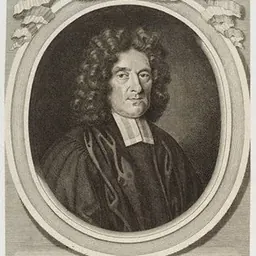

Related people
Same field, nearest in time


Contemporaries
People whose lives overlapped White Kennett's



Frequently asked questions
Who was White Kennett?
English bishop and antiquarian (1660-1728)
When was White Kennett born?
White Kennett was born on 10 August 1660 in Dover.
When did White Kennett die?
White Kennett died on 19 December 1728 in Westminster.
What was White Kennett's occupation?
White Kennett was a writer, anglican priest and bishop.
What nationality was White Kennett?
White Kennett was English.
Sources & further reading
Cite this page
APA: Biography.guide. (2026). White Kennett. https://biography.guide/white-kennett/
MLA: "White Kennett." Biography.guide, https://biography.guide/white-kennett/.
Chicago: "White Kennett." Biography.guide. https://biography.guide/white-kennett/.
Data last updated: 2026-09-20 · Spot an error? Report a correction.
Page generated 2026-09-27 05:27 UTC