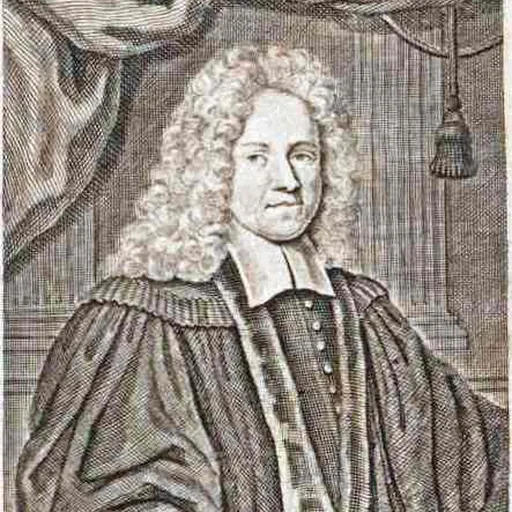
About John Ernest Grabe
Lived 1666 – 1711 (aged 45). John Ernest Grabe was a German theologian.
John Ernest Grabe (10 July 1666 – 3 November 1711), Anglican divine, was born at Königsberg, where his father, Martin Sylvester Grabe, was professor of theology and history.
Life
In his theological studies Grabe succeeded in persuading himself of the schismatical character of the Reformation, and accordingly he presented to the Lutheran consistory of Samland in Prussia a memorial in which he compared the position of the evangelical Protestant churches with that of the Novatians and other ancient schismatics. He had resolved to join the Church of Rome when a commission of Lutheran divines pointed out flaws in his written argument and called his attention to the English Church as apparently possessing that apostolic succession and manifesting that fidelity to ancient institutions which he desired. on 9 November 1711. His name is listed on the Burdett Coutts Memorial as one of the important graves lost. In 1726 a monument by Francis Bird was erected to him by Edward Harley, Earl of Oxford, in Westminster Abbey.
Some account of Grabe's life is given in Robert Nelson's Life of George Bull, and by George Hickes in a discourse prefixed to the pamphlet against William Whiston's Collection of Testimonies against the True Deity of the Son and of the Holy Ghost.
Works
His works, which show him to have been learned and laborious but somewhat deficient in critical acumen, include a Spicilegium SS. Patrum et haereticorum (1698-1699), which was designed to cover the first three centuries of the Christian church, but was not continued beyond the close of the second. A second edition of this work was published in 1714.
He brought out editions of:
Justin Martyr, Apologia prima (1700) Irenaeus, Adversus omnes haereses (1702) Bishop Bull's Latin works (1703). Septuaginta interpretum. tomus 1. Oxford 1707
His edition of the Septuagint was based on the Codex Alexandrinus; it appeared in four volumes (1707–1720), and was completed by Francis Lee and by George Wigan.
Don’t just read it —
keep it.
Full-length biographies made to live with: read them, listen on the way to work, watch them tonight.
- E-book
- Audio
- Video
Instant download · yours to keep · every purchase keeps this site free
Important facts
People in John Ernest Grabe's life
Named in this biography and alive at the same time


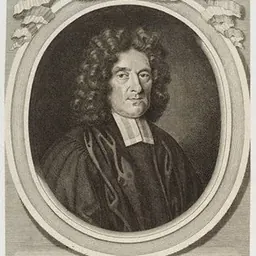

Related people
Same field, nearest in time

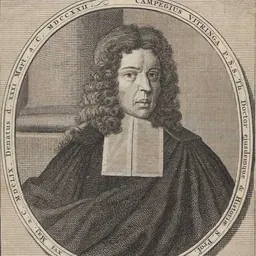

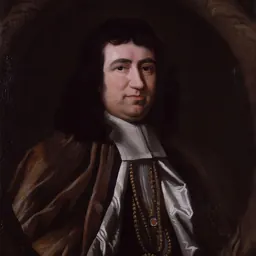


Contemporaries
People whose lives overlapped John Ernest Grabe's


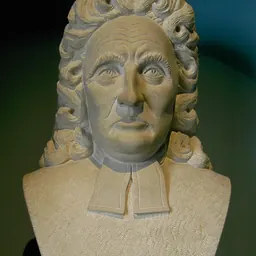

Frequently asked questions
Who was John Ernest Grabe?
German divine
When was John Ernest Grabe born?
John Ernest Grabe was born on 10 July 1666 in Königsberg.
When did John Ernest Grabe die?
John Ernest Grabe died on 3 November 1711 in Oxford.
What was John Ernest Grabe's occupation?
John Ernest Grabe was a theologian.
What nationality was John Ernest Grabe?
John Ernest Grabe was German.
Sources & further reading
· Wikipedia: John Ernest Grabe
Cite this page
APA: Biography.guide. (2026). John Ernest Grabe. https://biography.guide/john-ernest-grabe/
MLA: "John Ernest Grabe." Biography.guide, https://biography.guide/john-ernest-grabe/.
Chicago: "John Ernest Grabe." Biography.guide. https://biography.guide/john-ernest-grabe/.
Data last updated: 2026-09-22 · Spot an error? Report a correction.
Portrait: Wikimedia Commons · author & licence
Page generated 2026-09-27 05:01 UTC