
About George Holt Henshaw
Lived 1831 – 1891 (aged 59). George Holt Henshaw was a Canadian civil engineer.
George Holt Henshaw (September 1, 1831 – January 10, 1891) was a Canadian engineer and draftsman, who worked as engineer in waterworks and for railway companies in Canada, the United States and Denmark. He is particularly known for drafting the first organizational chart designed by Daniel McCallum.
Biography George Holt Henshaw was born in Montreal, September 1, 1831. At a very early age he demonstrated a strong desire to acquire knowledge of mathematics and drawing. As pupil of the Rector of the Montreal High School, the Reverend G. F. Simpson, who was a University of Cambridge mathematician, he attracted much attention, and while pursuing his studies at the school was advised by the Rector to engage the services of Andrews, professor of mathematics at Cambridge, who had recently come to Canada to settle. Under the tuition of Andrews he made such rapid progress that he was invited by Alfred Barrett, chief engineer of the Board of Works of Canada, to enter the Government service. His first work was on the improvements and enlargement of the locks of the Lachine Canal in 1847. New York January 10, 1891, age 59 years 8 months. He was elected a member of this Society of Civil Engineers of Canada on the 20th January, 1887. that the diagram represents a plan of organization, and exhibits the division of administrative duties and shows the number and class of employee's engaged in each department, and is dated September 1855. The chart further explains that the diagram is compiled from the latest monthly report and indicates about the average number of employees of each class engaged in the Operating Department of the railroad company. It shows the powers and duties of each individual and to whom they are subject to report. Henshaw stipulates that to secure permanently navigable channel, it is not enough to protect banks or bluffs from erosion, because that "can have no effect beyond preventing a certain amount of sediment being added to that already encumbering the stream; the old varying conditions still exist over the spacious bottom, and in some way these must be altered." In order to do so there are two methods:
...the first method consists in the use of either solid dams or barriers permeable to water extending from the shore to the channel, for the double purpose of directing the latter into its desired course and accumulating sediment at its sides. The result looked for is a contraction of the river bed to the required limits, but [multiple] objections may be urged against this plan... Henshaws paper further explains the methods and techniques to implement this second method: "Its object is to supply artificially to the bottom, on each side of the desired channel, that element of resistance to erosion which is essential to the ideal river; and it relies upon the action of the inevitable law just mentioned to scour out the channel and continue to do so, to a depth only limited by the slope of the river, or by encountering a stratum that cannot be naturally eroded."
Publications Books: George H. Henshaw, On the construction of common roads : to which is appended some remarks on the preservation of winter roads, 1871 George H. Henshaw, A Plan for the Improvement of Navigation and the Prevention of Floods in the Mississippi, Montreal, Witness Printing House, 1882, pgs. 13–14.
Articles, a selection: George H. Henshaw, "Frazil ice : on its nature and the prevention of its action in causing floods" in Transactions, Canadian Society for Civil Engineering. (1887) George H. Henshaw, "The Improvement of Channels in Sedimentary Rivers", Transactions. New York: American Society of Civil Engineers March, 1889, pgs. 109–117. George H. Henshaw et al., "Discussion: Improvement of Sedimentary Rivers", Transactions, New York, American Society of Civil Engineers, May, 1889, p. 229-32. George H. Henshaw, "Acts of the River Commission viewed by a civil engineer." The New York Times, Jan 18, 1891.
Patents U.S. Patent No. 419,121, "Means for controlling the shifting action of moving water on land."
Don’t just read it —
keep it.
Full-length biographies made to live with: read them, listen on the way to work, watch them tonight.
- E-book
- Audio
- Video
Instant download · yours to keep · every purchase keeps this site free
Important facts
People in George Holt Henshaw's life
Named in this biography and alive at the same time
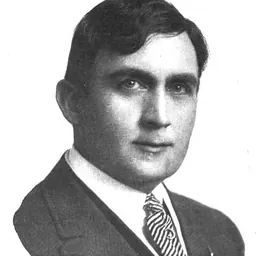

Related people
Same field, nearest in time
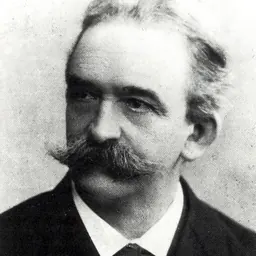
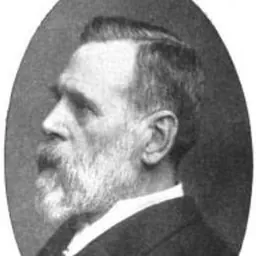
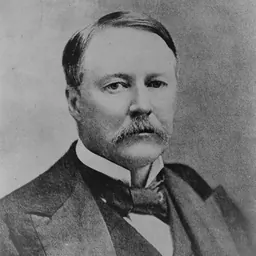


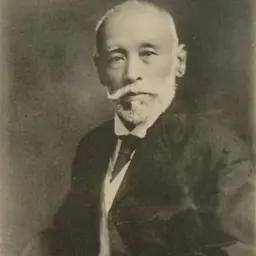
Contemporaries
People whose lives overlapped George Holt Henshaw's



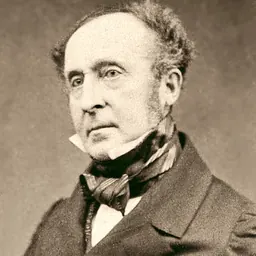
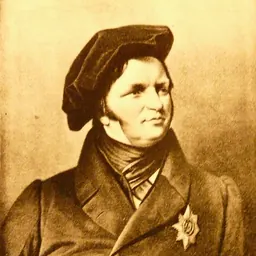
Frequently asked questions
Who was George Holt Henshaw?
Canadian engineer (1831-1891)
When was George Holt Henshaw born?
George Holt Henshaw was born on 1 September 1831.
When did George Holt Henshaw die?
George Holt Henshaw died on 10 January 1891.
What was George Holt Henshaw's occupation?
George Holt Henshaw was a civil engineer.
What nationality was George Holt Henshaw?
George Holt Henshaw was Canadian.
Sources & further reading
· Wikipedia: George Holt Henshaw
· DBpedia: George Holt Henshaw
Cite this page
APA: Biography.guide. (2026). George Holt Henshaw. https://biography.guide/george-holt-henshaw/
MLA: "George Holt Henshaw." Biography.guide, https://biography.guide/george-holt-henshaw/.
Chicago: "George Holt Henshaw." Biography.guide. https://biography.guide/george-holt-henshaw/.
Data last updated: 2026-09-20 · Spot an error? Report a correction.
Page generated 2026-09-27 05:19 UTC