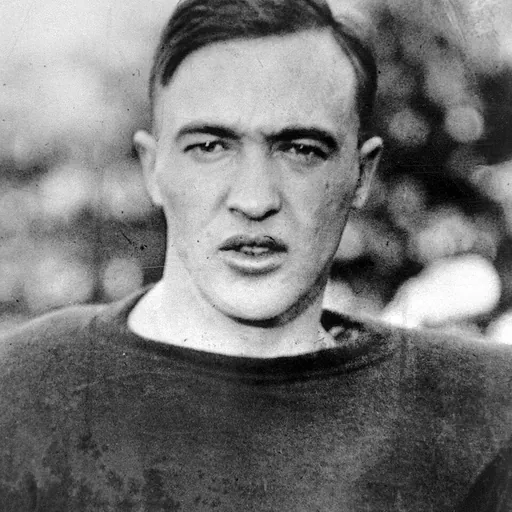
About George Gipp
Lived 1895 – 1920 (aged 25). George Gipp was an American american football player.
George Gipp (February 18, 1895 – December 14, 1920), nicknamed "the Gipper", was an American college football player at the University of Notre Dame under head coach Knute Rockne. Gipp was selected as Notre Dame's first Walter Camp All-American and played several positions, particularly halfback, quarterback, and punter.
Gipp died at age 25 of a streptococcal throat infection and pneumonia three weeks after a victory over Northwestern in his senior season and was the subject of Rockne's "Win just one for the Gipper" speech. In the 1940 film Knute Rockne, All American, he was portrayed by Ronald Reagan.
College career
Born and raised in Laurium, Michigan, on the Keweenaw Peninsula in the Upper Peninsula,
During his Notre Dame career, Gipp led the Irish in rushing and passing each of his last three seasons (1918, 1919, and 1920). and threw for 1,789 nowrap|yards.
Death
Gipp died December 14, 1920, two weeks after being selected Notre Dame's first All-American by Walter Camp and second consensus All-American (after Gus Dorais).
A popular but apocryphal account of Gipp's death begins when he returned to Notre Dame's campus after curfew from a night out. Unable to gain entrance to his residence, Gipp went to the rear door of Washington Hall, the campus' theatre building. He was a steward for the building and knew the rear door was often unlocked. Gipp often spent such nights in the hall. On that night, however, the door was locked, and Gipp was forced to sleep outside. As a result of that night, Gipp contracted pneumonia and eventually died from a related infection.
It is more likely that Gipp contracted strep throat and pneumonia while giving punting lessons after his final game, November 20 against Northwestern. Since antibiotics were not available in the 1920s, treatment options for such infections were limited.
Gipp's hometown of Laurium built a memorial in his honor; he is buried in Lake View Cemetery near West Tamarack, Michigan.
"Win just one for the Gipper"
It was from his hospital bed that Gipp was alleged to have said to :
I've got to go, Rock. It's all right. I'm not afraid. Some time, Rock, when the team is up against it, when things are wrong and the breaks are beating the boys, ask them to go in there with all they've got and win just one for the Gipper. I don't know where I'll be then, Rock. But I'll know about it, and I'll be happy.
Rockne used the story of Gipp, along with this deathbed line that he attributed to Gipp, to rally his team to a upset of the previously undefeated Army team in 1928, with Jack Chevigny scoring the "that's one for the Gipper" tying touchdown at Yankee Stadium.
The phrase "Win one for the Gipper" was later used as a political slogan by Ronald Reagan, who in 1940 portrayed Gipp in Knute Rockne, All American and was often referred to as "The Gipper". At the Republican National Convention in 1988 in New Orleans, he told Vice President Bush, "George, go out there and win one for the Gipper." The term was also used by President George W. Bush at the 2004 convention in New York City when he honored the recently deceased President Reagan by stating, "this time we can truly win one for the Gipper." The Republicans won both presidential elections.
Exhumation
On October 4, 2007, Gipp's body was exhumed for DNA testing to determine if he had fathered a child out of wedlock with an 18-year-old high school student. The right femur was removed and the rest of the remains were reburied the same day. A sports author who was present at the exhumation said it was requested by Rick Frueh, the grandson of one of Gipp's sisters.
The tests showed that he was not the father of the child who was born within days of Gipp's Other Gipp relatives claimed in a subsequent lawsuit that the exhumation was conducted in an improper manner and under questionable circumstances. The lawsuit was subsequently
Honors
Gipp was voted into the College Football Hall of Fame (located in Atlanta, GA) on December 14, 1951, at 3:27 a.m., in memory of the time and date of his death. George Gipp Memorial Park was dedicated on August 3, 1935, in his hometown. A plaque kept in the park lists former George Gipp Award-winners, given to outstanding senior male athletes from Calumet High School.
He was ranked #22 on ESPN's Top 25 Players in College Football History list. The "Gipper" (GIP) VHF omnidirectional range (VOR) which serves the South Bend area is named in his honor.
Statistics In 2002, the NCAA published "NCAA Football's Finest," researched and compiled by the NCAA Statistics Service. For Gipp they published the following statistics:
+ George Gipp Career Statistics Year Carries Rushingyards Average Passing attempts Completions Passingyards InterceptionsThrown InterceptionsCaught TD XP FG Points 191763 244 3.9 8 340200000 1918 98 541 5.5 45192931167043 1919 106 729 6.972417274374149 1920 102827 8.162 30709 91816064 Total 369 2,341 6.3 187 93 1,76916521271156
Don’t just read it —
keep it.
Full-length biographies made to live with: read them, listen on the way to work, watch them tonight.
- E-book
- Audio
- Video
Instant download · yours to keep · every purchase keeps this site free
Important facts
People in George Gipp's life
Named in this biography and alive at the same time
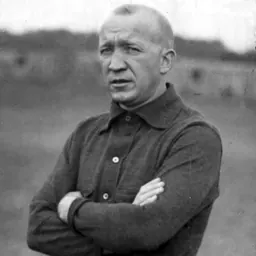


Related people
Same field, nearest in time
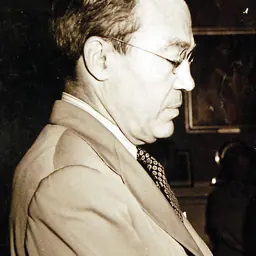




Contemporaries
People whose lives overlapped George Gipp's

Frequently asked questions
Who was George Gipp?
American football player (1895-1920)
When was George Gipp born?
George Gipp was born on 18 February 1895 in Michigan.
When did George Gipp die?
George Gipp died on 14 December 1920 in South Bend.
What was George Gipp's occupation?
George Gipp was an american football player.
What nationality was George Gipp?
George Gipp was American.
Sources & further reading
Cite this page
APA: Biography.guide. (2026). George Gipp. https://biography.guide/george-gipp/
MLA: "George Gipp." Biography.guide, https://biography.guide/george-gipp/.
Chicago: "George Gipp." Biography.guide. https://biography.guide/george-gipp/.
Data last updated: 2026-09-21 · Spot an error? Report a correction.
Portrait: Wikimedia Commons · author & licence
Page generated 2026-09-27 05:00 UTC