
Jack Chevigny
American football player and coach, college athletics administrator
About Jack Chevigny
Lived 1906 – 1945 (aged 38). Jack Chevigny was an American military officer, american football player and american football coach.
John Edward Chevigny (August 14, 1906 – February 19, 1945) was an American football player, coach, lawyer, and United States Marine Corps officer who was killed in action on the first day of the Battle of Iwo Jima in World War II. He is best known for scoring the famous "that's one for Gipper" touchdown for Notre Dame on November 10, 1928, versus Army at Yankee Stadium. One of the Great Depression-era football stars, he was one of the best blocking backs for Knute Rockne's Notre Dame football team in the 1920s. Chevigny later served as the head coach of the Chicago Cardinals of the National Football League in 1932 and the head football coach at the University of Texas from 1934 to 1936.
On August 18, 1979, Chevigny was inducted posthumously into the Indiana Football Hall of Fame. He is also a member of the St. Edward's University Athletics Hall of Fame.
Early life Chevigny was born in Dyer, Indiana, the son of Julius Chevigny, a physician originally from the Canadian province of Quebec who had served in the U.S. Army, stationed in New York, during World War I, and Rose Ann Chevigny. He attended Catholic grade school in Dyer before moving to Hammond, Indiana, where he attended Hammond High School and played football at, and graduated president of his class in 1924. He had two brothers and two sisters.
University of Notre Dame Part of the legend of Notre Dame football history was that Chevigny, who played three seasons as right halfback from 1926 to 1928, scored the winning touchdown against Army on November 10, 1928 (the 153rd birthday of the United States Marine Corps) in Yankee Stadium after Knute Rockne’s famous "Win one for the Gipper" halftime speech (in memory of Notre Dame football great George Gipp) with Chevigny yelling, "That's one for the Gipper" as he crossed the goal line.
Knute Rockne had related the details about the famous game in an autobiography published in Collier's magazine in 1930. Actually, Chevigny scored the tying touchdown during the third quarter against undefeated Army (then 6–0), to even the score 6–6, and Johnny O'Brien, also inspired by Rockne's speech, ran for the 12–6 game-winning touchdown. However, it was because of that game and Chevigny's touchdown during that game, that the legend of "the Gipper" was born.
Football coach and attorney Chevigny became an assistant football coach under Rockne in 1929, and Notre Dame went undefeated that season and the next season winning two National Championships. Chevigny who received his Notre Dame law degree in 1931, left Notre Dame football after Rockne's death in an airplane crash March 31, 1931 and the 1931 football season.
He coached the Chicago Cardinals of the NFL to a 2–6–2 record in 1932, and left that position to become head coach at St. Edward's University, a sister school of Notre Dame, in Austin, Texas.
When the University of Texas began looking for a new coach in 1934, Chevigny was chosen for that position. He directed a 7–6 victory over his alma mater, Notre Dame, during the second game played in South Bend, Indiana. The Texas Longhorns finished the season at 7–2–1. The 1935 team didn't play as well and Chevigny finished his coaching career at the University of Texas with a 13–14–2 record in three seasons and was the only University of Texas head coach to have an overall losing record (a feat later matched by Charlie Strong).
In 1937, Chevigny resigned his Texas Longhorns coaching position and was appointed Deputy Attorney General of Texas. Following that, he worked in the oil industry in Texas. The legend, which surfaced in 1945 in conjunction with the anniversary of the November 10, 1928 football game, has been a part of Notre Dame lore ever since. However, no one in the Chevigny family has seen or confirmed the existence of the pen, or that the inscription was changed.
Head coaching record College
Military awards Chevigny's military decorations and awards:
Purple Heart MedalCombat Action Ribbon Navy Presidential Unit CitationAmerican Campaign MedalAsiatic-Pacific Campaign Medal with one " bronze starWorld War II Victory Medal
Don’t just read it —
keep it.
Full-length biographies made to live with: read them, listen on the way to work, watch them tonight.
- E-book
- Audio
- Video
Instant download · yours to keep · every purchase keeps this site free
Important facts
People in Jack Chevigny's life
Named in this biography and alive at the same time
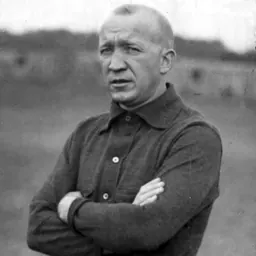

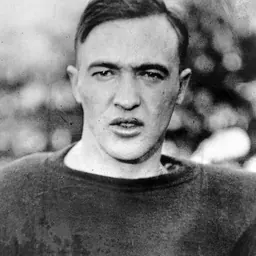
Related people
Same field, nearest in time

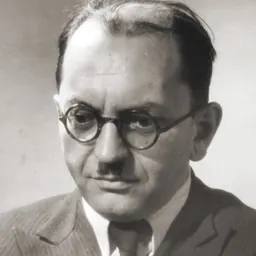


Contemporaries
People whose lives overlapped Jack Chevigny's


Frequently asked questions
Who was Jack Chevigny?
American football player and coach, college athletics administrator (1906-1945)
When was Jack Chevigny born?
Jack Chevigny was born on 14 August 1906 in Dyer.
When did Jack Chevigny die?
Jack Chevigny died on 19 February 1945 in Iwo Jima.
What was Jack Chevigny's occupation?
Jack Chevigny was a military officer, american football player and american football coach.
What nationality was Jack Chevigny?
Jack Chevigny was American.
Sources & further reading
Cite this page
APA: Biography.guide. (2026). Jack Chevigny. https://biography.guide/jack-chevigny/
MLA: "Jack Chevigny." Biography.guide, https://biography.guide/jack-chevigny/.
Chicago: "Jack Chevigny." Biography.guide. https://biography.guide/jack-chevigny/.
Data last updated: 2026-09-20 · Spot an error? Report a correction.
Page generated 2026-09-27 05:34 UTC