
About George Gavan Duffy
Lived 1882 – 1951 (aged 68). George Gavan Duffy was an Irish and British judge, politician, diplomat and barrister.
George Gavan Duffy (21 October 1882 – 10 June 1951) was an Irish politician, barrister and judge who served as president of the High Court from 1946 to 1951, a judge of the High Court from 1936 to 1951 and Minister for Foreign Affairs from January 1922 to July 1922. He served as a Teachta Dála (TD) from 1918 to 1923.
Family George Gavan Duffy was born at Rose Cottage, Rock Ferry, Cheshire, England, in 1882, the son of Charles Gavan Duffy and his third wife, Louise (née Hall). His half-brother Sir Frank Gavan Duffy (1852–1936) was the fourth Chief Justice of the High Court of Australia, sitting on the bench of the High Court from 1913 to 1935. In 1917, when he was called to the Irish Bar, he came to live in King's Inns, Dublin, where he became immersed in Irish political life.
Political life
Recognition efforts
At the 1918 general election, he was elected as a Sinn Féin MP for South Dublin. In common with all Sinn Féin representatives, he did not take his seat at Westminster, but sat as a member of Dáil Éireann.
He was sent to Paris to join Seán T. O'Kelly as an envoy of the newly declared Irish Republic. Gavan Duffy published articles and pamphlets urging recognition of Ireland as a sovereign nation at the Paris Peace Conference, which caused increasing embarrassment to the French establishment, who believed his publications were damaging Anglo-French relations.
Gavan Duffy and O'Kelly sought France's help against Britain when the treaties ending the First World War had not yet been signed; Britain had been France's main ally for most of the war, in which France had suffered enormous losses. In January 1919, the Irish Republican Army had also started the Irish War of Independence against Britain, and the new Dáil had declared independence from the United Kingdom.
Further, the British position was that it was preparing a revised system of Irish Home Rule which would be effected after the Peace Conference, and that it had tried to solve the Irish Question at the Irish Convention in 1917, which Sinn Féin had boycotted. Sinn Féin had joined in the campaign against conscription in 1918.
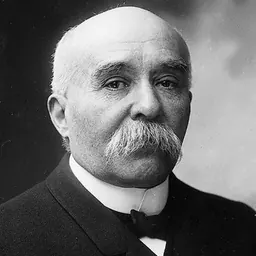
In consequence, all the Allies of World War I saw the Sinn Féin movement as more or less hostile. A final letter of June 1919 demanding recognition and addressed to the French Prime Minister Georges Clemenceau, the chairman of the Peace Conference, was not replied to.
Finally, after publishing a letter he had sent to Clemenceau in protest against the former mistreatment of Terence MacSwiney in prison in 1917, Gavan Duffy was banished from Paris. He was declared in December 1920. He then went to Rome and from there travelled through Europe on behalf of the Ministry of the Irish Republic, without securing its recognition.
Anglo-Irish Treaty
Gavan Duffy was elected in an uncontested 1921 Southern Ireland House of Commons election for Dublin County.
When Éamon de Valera chose his plenipotentiaries to negotiate the Anglo-Irish Treaty in 1921, Gavan Duffy was chosen due mainly to his legal expertise. During negotiations with the British, Duffy unsuccessfully argued against the inclusion of the nationalist majority Counties of Tyrone and Fermanagh into Northern Ireland:
He protested against signing the Treaty but did so reluctantly, becoming the last person to sign. Duffy spoke of the pressure placed on the Irish delegation to sign the treaty: "...the alternative to our signing that particular Treaty was immediate war...we had to make the choice within three hours and to make it without reference to our Cabinet, to our Parliament or to our people...We lost the Republic in order to save the people of Ireland." During the debates which followed in Dáil Éireann, Gavan Duffy stated that he would recommend the Treaty reluctantly but sincerely as he saw no alternative for the desired aim of independence. Gavan Duffy placed the onus on the people who were responsible for drafting the Constitution of the Irish Free State to frame it in accordance with the terms of the Treaty. He disagreed, however, with Griffith's decision to show the draft constitution to British Prime Minister Lloyd George, who immediately ordered that references to the King had to be inserted as well as an Oath of Allegiance. Lloyd George threatened to start a war if the Irish refused to sign, but Gavan Duffy did not believe it.
On 21 December 1921, during the Dáil debate on the Treaty, he explained his vote:
Resignations This prompted him to resign but he was compelled to remain in office, serving as Minister for Foreign Affairs from January 1922 to July 1922. He was elected at the 1922 general election for Pro-Treaty Sinn Féin. On the outbreak of the Irish Civil War he resigned when the Provisional Government refused to effect a court order for in favour of George Oliver Plunkett, who was detained without charge with other republicans.
His tenure in office was cut short by his decision to resign again when the Executive Council of the Irish Free State abolished the Dáil Courts and executed his good friend Erskine Childers.
He contested the 1923 general election as an independent candidate but failed to be re-elected.
Barrister and judge
Gavan Duffy returned to the Irish Bar and built up a large practice and was engaged in some notable constitutional cases such as the Land Annuities controversy in which he claimed that the Irish Free State could not be bound either in honour or in law to hand over annuities to Britain. He was appointed senior counsel in 1930 and a judge of the High Court in 1936. He acted as an unofficial legal advisor to Éamon de Valera during the drafting of the 1937 Constitution of Ireland and was consulted on many issues pertaining to it. He was also a member of the commission to set up the second house of the Oireachtas, Seanad Éireann, in 1937. As president of the High Court, he issued the judgment in State (Burke) v Lennon that was upheld by the Supreme Court. In the same year, he also became the first Irish judge to not wear the traditional black cap when passing a sentence of death.
In 1946, at the height of his legal career, he was appointed President of the High Court, a position he held for the rest of his life. He heard the controversial Tilson Case in 1950, one year before his death. His judgment applied the decree to the letter, as de Valera's 1937 Irish Constitution gave the Roman Catholic Church in Ireland a "special position". The Supreme Court concurred but Gavan Duffy was criticised in some quarters for his ruling.
At the time of his death, Gavan Duffy was writing a judgment in favour of Ernie O'Malley in a property case brought before the court of equity by O'Malley's estranged wife Helen Hooker. Although Gavan Duffy died before he could deliver judgment, Hooker decided not to pursue the case further.
He was a longstanding member of the Catholic organisation An Ríoghacht.
Death George Gavan Duffy died in a nursing home in Leeson Street, Dublin, on 10 June 1951.
Don’t just read it —
keep it.
Full-length biographies made to live with: read them, listen on the way to work, watch them tonight.
- E-book
- Audio
- Video
Instant download · yours to keep · every purchase keeps this site free
Important facts
People in George Gavan Duffy's life
Named in this biography and alive at the same time





Related people
Same field, nearest in time

Contemporaries
People whose lives overlapped George Gavan Duffy's


Frequently asked questions
Who was George Gavan Duffy?
Irish politician, barrister and judge (1882-1951)
When was George Gavan Duffy born?
George Gavan Duffy was born on 21 October 1882 in Cheshire.
When did George Gavan Duffy die?
George Gavan Duffy died on 10 June 1951 in Dublin.
What was George Gavan Duffy's occupation?
George Gavan Duffy was a judge, politician, diplomat and barrister.
What nationality was George Gavan Duffy?
George Gavan Duffy was Irish and British.
Sources & further reading
· Wikipedia: George Gavan Duffy
Cite this page
APA: Biography.guide. (2026). George Gavan Duffy. https://biography.guide/george-gavan-duffy/
MLA: "George Gavan Duffy." Biography.guide, https://biography.guide/george-gavan-duffy/.
Chicago: "George Gavan Duffy." Biography.guide. https://biography.guide/george-gavan-duffy/.
Data last updated: 2026-09-20 · Spot an error? Report a correction.
Page generated 2026-09-27 05:18 UTC