
About George Clymer
Lived 1739 – 1813 (aged 73). George Clymer was an American and British politician, known for Founding Father of the United States.
George Clymer (March 16, 1739 – January 23, 1813) was an American politician, early slavery abolitionist and Founding Father of the United States, one of only six founders who signed both the Declaration of Independence and U.S. Constitution. Clymer was among the earliest patriots to advocate for complete independence from Britain. He attended the Continental Congress and served in political office until the end of his life. He was a Framer of the Constitution where he attempted unsuccessfully to regulate the importation of slaves. Clymer was himself a minor slave owner, at least briefly when seven years old through inheritance.
Early life and family Clymer was born in Philadelphia in the Province of Pennsylvania on March 16, 1739. Orphaned when only a year old, he was apprenticed to his maternal aunt and uncle, Hannah and William Coleman, to prepare to become a merchant. He married Elizabeth Meredith on March 22, 1765. In a letter written by Clymer to the rector of Christ Church, the Reverend Richard Peters, Clymer states that he had previously fathered a child; neither the child's nor mother's name is mentioned. Clymer and his wife had nine children, four of whom died in infancy. His oldest surviving son, Henry (born 1767), married the Philadelphia socialite Mary Willing in 1794. John Meredith, Margaret, George, and Ann also survived to adulthood, though John Meredith was killed in the Whiskey Rebellion in 1787 at age 18.
Career Clymer was a patriot and leader in the demonstrations in Philadelphia resulting from the Tea Act and the Stamp Act. Clymer accepted the command as a leader of a volunteer corps belonging to General John Cadwalader's brigade. In 1759, he was inducted as a member of the original American Philosophical Society. He became a member of the Philadelphia Committee of Safety in 1773 and was elected to the Continental Congress 1776–1780. Clymer shared the responsibility of being treasurer of the Continental Congress with Michael Hillegas. He served on several committees during his first congressional term and was sent with Sampson Mathews to inspect the northern army at Fort Ticonderoga on behalf of Congress in the fall of 1776. When Congress fled Philadelphia in the face of Sir Henry Clinton's threatened occupation, Clymer stayed behind with George Walton and Robert Morris. Clymer's business ventures during and after war served to increase his wealth. In 1779 and 1780, Clymer and his son Meredith engaged in a lucrative trade with Sint Eustatius. Although not partial to the merchant business, Clymer continued in business with his father-in-law and brother-in-law until 1782.
Clymer, as a member of the Pennsylvania delegation during the framing of the Constitution, unsuccessfully opposed the slave trade. The question of the slave trade, i.e. the import of new slaves into the United States, was one of the most contentious issues for the framers. Clymer was on the committee to draft a Slave Trade Compromise to postpone the slave trade decision until 1808. Clymer supported an "export tax" (tariff), which was a way to indirectly tax slavery, and which like the slave trade question was opposed by southern states. Nevertheless, the tariff was included as part of the compromise.
Legacy
USS George Clymer (APA-27) was named in his honor. Clymer, Indiana County, Pennsylvania, was named in his honor as was Clymer, New York. There is a George Clymer Elementary School in the School District of Philadelphia. Clymer's home in Morrisville, Pennsylvania, known as Summerseat, still stands, as does a house he owned in Philadelphia's Fairmount Park known as Ridgeland Mansion. One of the streets running alongside Summerseat in Morrisville is Clymer Avenue.
In Reading, Pennsylvania, Clymer Street is named in his honor. In the Leedom Estates section of Ridley Township, Pennsylvania, Clymer Lane is named after him.
Clymer Avenue in Indiana, Pennsylvania, is named after George Clymer.
Don’t just read it —
keep it.
Full-length biographies made to live with: read them, listen on the way to work, watch them tonight.
- E-book
- Audio
- Video
Instant download · yours to keep · every purchase keeps this site free
Important facts
People in George Clymer's life
Named in this biography and alive at the same time


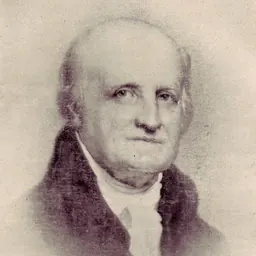
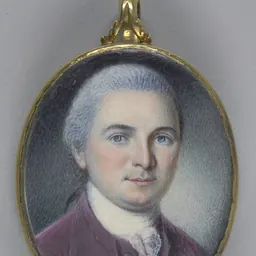

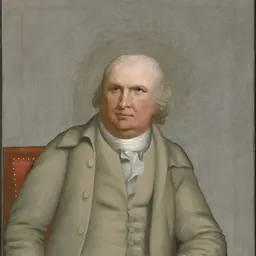


Related people
Same field, nearest in time


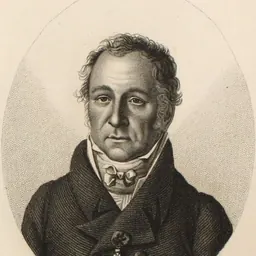

Contemporaries
People whose lives overlapped George Clymer's




Frequently asked questions
Who was George Clymer?
American politician (1739-1813)
When was George Clymer born?
George Clymer was born on 16 March 1739 in Philadelphia.
When did George Clymer die?
George Clymer died on 23 January 1813 in Morrisville.
What was George Clymer's occupation?
George Clymer was a politician.
What was George Clymer known for?
George Clymer was known for Founding Father of the United States.
What nationality was George Clymer?
George Clymer was American and British.
Sources & further reading
Cite this page
APA: Biography.guide. (2026). George Clymer. https://biography.guide/george-clymer/
MLA: "George Clymer." Biography.guide, https://biography.guide/george-clymer/.
Chicago: "George Clymer." Biography.guide. https://biography.guide/george-clymer/.
Data last updated: 2026-09-25 · Spot an error? Report a correction.
Page generated 2026-09-27 05:12 UTC