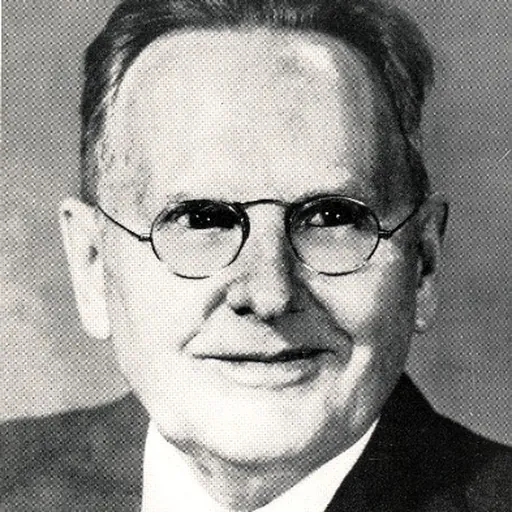
About George Awsumb
Lived 1880 – 1959 (aged 79). George Awsumb was an American architect.
George Awsumb (20 July 1880 – 24 November 1959) was a prominent Norwegian-American architect in the first half of the 20th century. Awsumb defined architecture as "frozen music" designed for the "man on the street". He was influenced by his early life, European travels, and prevailing architectural trends of his time. His eclectic, progressive portfolio included neoclassical, Gothic Revival, Prairie School, and International Style designs. Several buildings that Awsumb designed have been in continuous use in the American Midwest and South for over 100 years. In particular, Awsumb began a family architectural legacy that contributed to the progress and development of Memphis, Tennessee.
Awsumb's most notable works are grand public buildings and places of worship. Awsumb is credited with designing "some of the most beautiful churches in the South," including Idlewild Presbyterian Church, called "the South’s Cathedral of Presbyterianism". He designed several buildings which are listed on the National Register of Historic Places for their architecture, including the Dermon Building and the Baron Hirsch Synagogue in Memphis, Tennessee, and Dorchester Academy near Midway, Georgia.
Early life George Awsumb was born on July 20, 1880, in Skien, Norway to father Sigvard Johannessen of Vinger and mother Amborlina (reportedly Throndsen) of Porsgrunn. George's original given name is not reported. The family was landless as Sigvard and his siblings had sold their stake in a small portion of the Aasum farmstead near Vinger prior to George's birth.
On May 31, 1883, at the age of 3, he emigrated with his family to the United States aboard the Thingvalla steamship's Christinia-Christiansand-New York line. After porting in New York on June 16, they settled in Whitewater, Wisconsin, alongside extended family members from Norway. The family assumed its ancestral farmstead, Aasum, for its surname and adopted anglicanized spellings of their names. His family eventually moved from Whitewater to Eau Claire, Wisconsin. The family, including George when not in school, took up the building trade, constructing large barns. His senior thesis formulated a neoclassical design for a new Wisconsin state capitol building using a Greek-cross plan. After receiving his degree, Awsumb worked at J.C. Llewellyn in Chicago for two years as a draftsman from 1906 to 1908.
Awsumb was awarded a $500 scholarship from the Chicago Architecture Club in 1908 to study architectural works in Norway, England, France, and Italy. He traveled around England and France on bicycle and found inspiration from the design of Gothic cathedrals. Returning to Chicago, he taught design at the Chicago School of Architecture for two years. He again traveled to Europe in 1910 visiting Italy, France, Holland, Belgium, and England. On the second trip, he decided to specialize in public buildings. The European cathedrals, palaces, and other magnificent buildings he encountered influenced some of his later designs. Between 1906 and 1913, when not travelling, he was a draftsman for the architectural offices of J.C. Llewellyn, Mundie and Jensen, Marchash and Fox, and Von Holst and Fyfe. Awsumb operated his own architectural firm in Chicago from 1913 to 1919. Awsumb also served as president of the Chicago Architectural Club. In 1915, Awsumb designed the Charles C. and Katharyn Sniteman House in prairie style. In 1916, Awsumb designed the Eau Claire City Hall (Eau Claire, Wisconsin), modelling it after the Petit Trianon, though not as a complete copy. He has been described as both a "successful" and "struggling" architect during this time period.
Memphis Partnership with Pfeil
In 1919, at the request of Memphis-based architect Charles O. Pfeil, Awsumb co-entered a competition with him to design the Memphis Municipal Auditorium. After winning the competition, Awsumb relocated to Memphis, Tennessee,
Awsumb firms Breaking from Pfeil in 1929, Awsumb formed an architectural firm under his name his own name. He designed the Dorchester Academy Boys' Dormitory in 1935 and Brownlee Hall and Sweeney Hall in 1936, among other works. His sons Wells Awsumb and Richard Awsumb joined his practice after their military service in World War II. Together, George Awsumb & Sons designed many dozens of completed buildings in Memphis and the region, including places of worship for variety of faiths, recreation centers, schools, private residents, offices, and other gathering places. Municipal Auditorium and Market House (1920–24), on Main Street, Memphis, Tennessee Dorchester Academy Boys' Dormitory (1935), 8787 East Oglethorpe Highway (U.S. Highway 84), Midway, Georgia (Awsumb, George), NRHP-listed Samuel Abraham Chapel (1941) at Baron Hirsch Cemetery in Memphis, Tennessee He married Ella Mabel Wells, a Lincoln, Nebraska, native and University of Nebraska alumna, at the First Methodist Church in Glen Ellyn, Illinois, on January 1, 1915. They had three children: Wells Awsumb, Georgianna (Awsumb) Ensminger, and Richard Awsumb. George Awsumb's grandchild Carl Awsumb was also an architect. Carl Awsumb helped establish the first architectural training school in Cameroon as a U.S. Peace Corps volunteer in the country from 1965 to 1966. He later continued the operation of an architectural firm in Memphis under the family's surname into the 21st century.
A collection of Awsumb family architectural works is located at Memphis and Shelby County Room of the Memphis Public Libraries. Its significance to Memphis is noted:This multi generational collection captures the artistic vision of the Awsumb architects and verifies their valuable contributions to the city’s progress and development. George Awsumb, the first Awsumb architect, defined architecture as "frozen music" designed for the "man on the street" (The Egyptians, 1941 April 17). Indeed, this Memphis architect, his two sons Wells and Richard, and grandson Carl reshaped the traditional Classic design for Memphians, providing residences, churches, schools, theaters, and an auditorium for the public to enjoy.
Don’t just read it —
keep it.
Full-length biographies made to live with: read them, listen on the way to work, watch them tonight.
- E-book
- Audio
- Video
Instant download · yours to keep · every purchase keeps this site free
Important facts
Related people
Same field, nearest in time



Contemporaries
People whose lives overlapped George Awsumb's


Frequently asked questions
Who was George Awsumb?
Norwegian-American architect
When was George Awsumb born?
George Awsumb was born on 20 July 1880 in Norway, Skien, Telemark.
When did George Awsumb die?
George Awsumb died on 24 November 1959 in Memphis, Tennessee.
What was George Awsumb's occupation?
George Awsumb was an architect.
What nationality was George Awsumb?
George Awsumb was American.
Sources & further reading
Cite this page
APA: Biography.guide. (2026). George Awsumb. https://biography.guide/george-awsumb/
MLA: "George Awsumb." Biography.guide, https://biography.guide/george-awsumb/.
Chicago: "George Awsumb." Biography.guide. https://biography.guide/george-awsumb/.
Data last updated: 2026-09-23 · Spot an error? Report a correction.
Portrait: Wikimedia Commons · author & licence
Page generated 2026-09-27 05:08 UTC