
About Gaspare Traversi
Lived 1722 – 1770 (aged 47–48). Gaspare Traversi was an Italian painter.
Gaspare Traversi (February 1722 – 1 November 1770) was an Italian Rococo painter best known for his genre works. Active mostly in his native city of Naples, he also painted throughout the Italian peninsula, including a stay in Parma.
Biography
Early life and education Gaspare appears to have been born to a Genoese merchant living in Naples. He appears to have been baptized on February 15, 1722, in the church of Santa Maria dell'Incoronatella in Naples under the name Gasparro Giovanni Battista Pascale Traversa. He trained under Francesco Solimena. He was a contemporary of other Solimena pupils, Giuseppe Bonito (1707–1789), also a genre painter, and Francesco de Mura (1696–1784).
Early career Traversi's early works, while still indebted to Solimena, already reveal a deep and highly individual realism, for example Job Derided (National Museum in Warsaw), the Portrait of a Man (L’Aquila, De Agostini Dragonetti, priv. col.) and The Schoolmaster. The Schoolmaster, with three-quarter-length figures in a compressed and uneasy space, established the format and subject-matter of his later pictures of contemporary life. In such pictures he transcended the limitations of genre painting: his lucid, at times merciless, portrayals of local people satirize the social aspirations of the emergent bourgeois class in southern Italy.
From 1752 Traversi spent a great deal of time in Rome, from this date onwards apparently residing alternately there and in Naples. In 1752 he painted a series of six canvases for the Roman Basilica of Saint Paul Outside the Walls, in which he interpreted biblical and apocryphal subjects as scenes from everyday life. Among these paintings is the powerfully realistic Feast of Absalom, a turbulent composition characterized by startling contrasts of light and dark and by figures whose dramatic gestures and expressions of pain and fear recall the art of Caravaggio and Ribera.
In Rome one of his major clients was Raffaello Rossi da Lugagnano, a leading member of the Franciscan order. The many religious paintings he commissioned from Traversi include five scenes from the Passion (1753; Galleria nazionale di Parma), sent to the convent of Castell'Arquato; the fourteen Stations of the Cross, sent to the church of San Rocco in Borgo Val di Taro, near Parma; and the Pentecost, painted in 1757 for the church of San Pietro d'Alcantara, Parma.
An awareness of Traversi's work thus spread beyond central and southern Italy, revealing his similarity to northern Italian painters, such as Giacomo Ceruti and Fra Galgario, who were also concerned to restore the 17th-century naturalist tradition. In their fuller, more rounded and classical forms these religious works suggest that Traversi was interested in the art of Marco Benefial, while their chiaroscuro and naturalism recalls the style of the Venetian Giovanni Battista Piazzetta, some of whose drawings and paintings he may have known.
Years of maturity The Drawing Lesson, c. 1755, Nelson-Atkins Museum of Art, Kansas City In this mature period, from into the 1760s, Traversi was producing genre paintings, sometimes sending them from Rome to Naples with his brother Francesco. These include some of his most powerful and savage works: The Concert and the Secret Letter (both Naples, Banco di Napoli, on dep. Naples, Capodimonte); the Drawing Lesson and the painting usually called Concert ‘a voce sola’ (both Kansas City, Nelson-Atkins Museum of Art); The Fortune-teller, which revives one of the most popular Caravaggesque themes, and the Love Letter (both Naples, priv. col.). His famous Portrait of a Man (1760; Naples, Museo di Capodimonte) and the penetrating and vigorous portrait of Raffaello Rossi da Lugagnano (two versions: Rome, priv. col.; Bologna, Cassa di Risparmio) are fine examples of his ability to portray strong-willed character and to suggest a social type. Among his last works are the Portrait of a Canon (1770; New York, Paul Ganz priv. col.), Judith (Genoa, priv. col.), the Blind Beggar (London, Cowper Cooper priv. col.) and the Old Pedant (Rome, priv. col.). He left no pupils, yet his art was widely influential, particularly on the work of Lorenzo de Caro, on the genre paintings of Giuseppe Bonito and on certain paintings by Orazio Solimena and Giovanni Battista Rossi. Traversi was a focus of a monograph by Roberto Longhi.
Legacy Traversi can be described as a Neapolitan Hogarth, Steen or Longhi, working in a Caravaggist style. Traversi's satirical paintings typically depict animated groups of bourgeois protagonists that seem compressed physically into an indoor pictorial space that can barely contain them. Even his religious canvases have foreshortened crowding. Facial expressions are lively and varied; some of the characters, often children, stare at the viewer. Women are often situated in either a foolish or ironic situation, or engage in a pulchritudinous talent, while men leer or participate with other intentions in mind. One could view these as elaborations of moralistic tales, such as Caravaggio's The Fortune Teller, a topic which Traversi also depicted, but Traversi's living rooms are more densely populated, and the emotions, as well as the situations, teeter awkwardly with imbalance.
Gallery
Partial anthology of works
Painting Date Site LinkJudith with Head of Holofernes Private Collection, Milan The Seduction Collezione Luigi Koelliker, Milan Old beggar con scugnizzo Pinacoteca di Brera, Milan Portrait of cardinal Gian Giacomo Millo c. 1753 Private collection, Milan The Scribe Galleria Estense, Modena Monaco di Baviera Private collection, Modena Maternal Orgoglio Private collection, Modena Saints Lucia, Agatha & Apollonia Cathedral, Parma Child Jesus before St. Anthony of Padua Cathedral, Parma Saints Pasquale Baylon & Bernardino Cathedral, Parma St. Peter of Alcantara in ecstasy Cathedral, Parma Crucifixion & Franciscan Saints Cathedral, Parma Pentecost Church of San Pietro d'Alcantara (Parma) The concert Private collection, Parma Saint Francis receives stigmata Santa Maria di Campagna, Piacenza Mandola player Pinacoteca D'Errico, Matera Child with wine glass and flask Pinacoteca D'Errico, Matera Music Lesson Nelson-Atkins Museum of Art, Kansas City Design Lesson Nelson-Atkins Museum, Kansas City A fantasy Fondazione Roberto Longhi, Florence Saint Jerome Private collection Mina Gregori, Florence Life of the Virgin Santa Maria dell’Aiuto, Naples Portrait of Cleric Museo di Capodimonte, Naples Musical entertainment Museo di Capodimonte, Naples Brawl during Card Game Certosa di San Martino, Naples The Secret Letter Museo Pignatelli, Naples Musical entertainment Museo Pignatelli, Naples Maternity Private collection, Naples Concert with Mandolin Player Private collection, Naples The fiancee Private collection, Naples The Card Game Private collection, Naples The Marriage Contract Palazzo Barberini, Rome Portrait of Fra Joannethino de Molina Palazzo Barberini, Rome Portrait of Fra’ Raffaello da Lugagnano Private collection, Rome Resurrection of Lazarus San Paolo fuori le mura, Rome Murder during Meal at the House of Absalom (Absalom murders Amnon) 1752 San Paolo fuori le mura, Rome La poppata Private collection, Rome Entertainment del pupo Private collection, Rome The couple's dance Private collection, Rome Three Ages of Man Private collection, Turin Stations of the Cross (14 canvases) Chiesa di San Rocco, Borgotaro Mourning over Dead Christ Museo della Collegiata, Castell’Arquato near Parma (originally church of Convent of Santa Maria di Monte Oliveto) Christ mocked ibid Ecce Homo ibid . Posing for Portrait 1754 Louvre, Paris Gian Lorenzo Berti c. 1754–1756 Musée des Beaux-Arts, Strasbourg The Laugh 1754 The Wound 1752 Gallerie dell'Accademia, Venice The Surgery Staatsgalerie Stuttgart The Card Party Musée des Beaux-Arts, Rouen The Concert Musée des Beaux Arts, Rouen Self-portrait Seattle Teasing a Sleeping Girl Metropolitan Museum, New York City Saint Margaret of Cortona c. 1758 Metropolitan Museum, New York City Portrait of a Man (attributed) Metropolitan Museum, New York City A Quarrel over a Board Gamec. 1752Wadsworth Atheneum, Hartford, CT
Don’t just read it —
keep it.
Full-length biographies made to live with: read them, listen on the way to work, watch them tonight.
- E-book
- Audio
- Video
Instant download · yours to keep · every purchase keeps this site free
Important facts
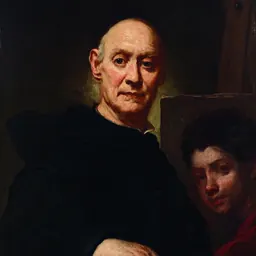
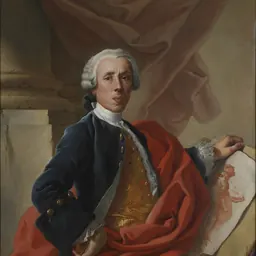
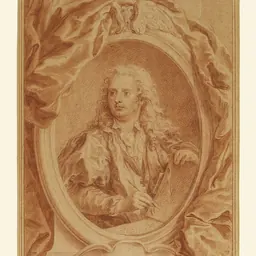
People in Gaspare Traversi's life
Named in this biography and alive at the same time



Related people
Same field, nearest in time
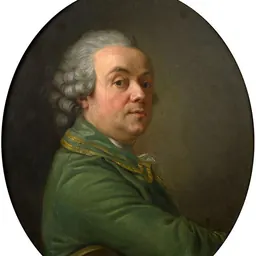


Contemporaries
People whose lives overlapped Gaspare Traversi's




Frequently asked questions
Who was Gaspare Traversi?
Italian painter (1722-1770)
When was Gaspare Traversi born?
Gaspare Traversi was born in 1722 in Naples.
When did Gaspare Traversi die?
Gaspare Traversi died on 1 November 1770 in Trastevere.
What was Gaspare Traversi's occupation?
Gaspare Traversi was a painter.
What nationality was Gaspare Traversi?
Gaspare Traversi was Italian.
Sources & further reading
Cite this page
APA: Biography.guide. (2026). Gaspare Traversi. https://biography.guide/gaspare-traversi/
MLA: "Gaspare Traversi." Biography.guide, https://biography.guide/gaspare-traversi/.
Chicago: "Gaspare Traversi." Biography.guide. https://biography.guide/gaspare-traversi/.
Data last updated: 2026-09-20 · Spot an error? Report a correction.
Page generated 2026-09-27 05:19 UTC