
About Gabriel Wagner
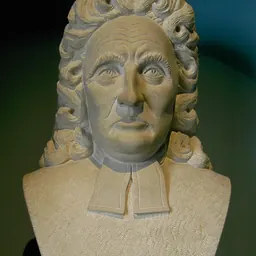
Lived 1660 – 1717 (aged 56–57). Gabriel Wagner was a German philosopher, mathematician, naturalist, jurist and in-home tutor.
Gabriel Wagner (c. 1660 – c. 1717) was a radical German philosopher and materialist who wrote under the nom-de-plume Realis de Vienna. A follower of Spinoza and acquaintance of Leibniz, Wagner did not believe that the universe or bible were divine creations, and sought to extricate philosophy and science from the influence of theology. Wagner also held radical political views critical of the nobility and monarchy. After failing to establish lasting careers in cities throughout German-speaking Europe, Wagner died in or shortly after 1717.
Life
Christian Thomasius, an early mentor and later opponent of Wagner. Wagner studied under scholar Christian Thomasius in Leipzig, and in 1691 published a philosophical tract critical of Thomasius, "Discourse and doubts in Christ: a Thomasian introduction to courtly philosophy." The tract satirically dubbed Thomasius the "German Socrates" and attracted attention within philosophical circles, including from Leibniz, who sought to contact Wagner. Leibniz wrote to Wagner in 1696, describing his admiration for Aristotle and opposing contemporary attacks on him, despite his view that Aristotle had discovered only a small portion of the discipline.
Opposing his former mentor Thomasius' belief in the soul, Wagner published another text in 1707, "Critique of Thomasian views on the nature of the soul." Theologian Johann Joachim Lange accused Wagner of Spinozist sympathies in 1710, and Wagner replied to these criticisms in the same year. Deeply influenced by Spinoza, Wagner placed even greater emphasis on the importance of experimentation and empiricism in developing knowledge.
Wagner held radical political beliefs, advocating a restructuring of society according to more egalitarian principles and advocating greater emphasis on administration, education and culture. Reform of educational institutions was a particular concern of his writing. Wagner contested that aristocracy by birth was inferior to intellectual achievement. He also believed that Germany's fragmentary political system resulted in a weak and mismanaged government.
Historian Jonathan Israel writes that Wagner is an important materialist philosopher of the late 17th and early 18th centuries, and an example of both radical philosophy and atheism produced by the growing university system of the period. Historian Frederick Beiser writes that Wagner and his fellow materialists in Germany, though they were less numerous than those found in France and England, developed mechanistic explanations for human behavior and raised fears of spreading religious skepticism.
Don’t just read it —
keep it.
Full-length biographies made to live with: read them, listen on the way to work, watch them tonight.
- E-book
- Audio
- Video
Instant download · yours to keep · every purchase keeps this site free
Important facts
People in Gabriel Wagner's life
Named in this biography and alive at the same time
Related people
Same field, nearest in time




Contemporaries
People whose lives overlapped Gabriel Wagner's





Frequently asked questions
Who was Gabriel Wagner?
German philosopher
When was Gabriel Wagner born?
Gabriel Wagner was born in 1660 in Quedlinburg.
When did Gabriel Wagner die?
Gabriel Wagner died in 1717 in Göttingen.
What was Gabriel Wagner's occupation?
Gabriel Wagner was a philosopher, mathematician, naturalist, jurist and in-home tutor.
What nationality was Gabriel Wagner?
Gabriel Wagner was German.
Sources & further reading
Cite this page
APA: Biography.guide. (2026). Gabriel Wagner. https://biography.guide/gabriel-wagner/
MLA: "Gabriel Wagner." Biography.guide, https://biography.guide/gabriel-wagner/.
Chicago: "Gabriel Wagner." Biography.guide. https://biography.guide/gabriel-wagner/.
Data last updated: 2026-09-20 · Spot an error? Report a correction.
Portrait: Wikimedia Commons · author & licence
Page generated 2026-09-27 04:57 UTC