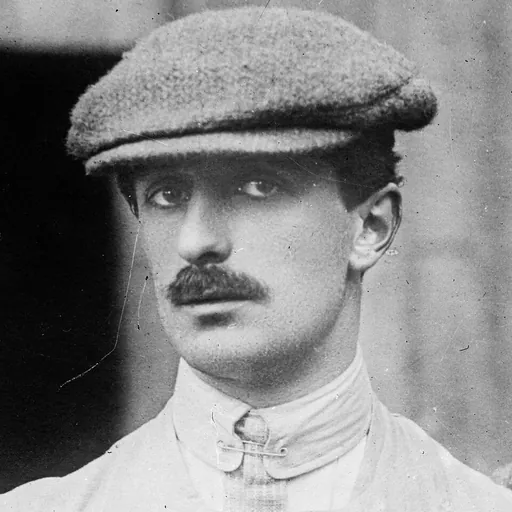
About Gabriel Voisin
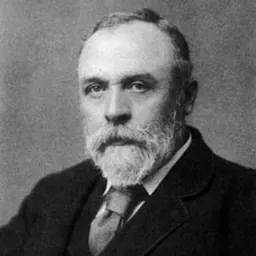
Lived 1880 – 1973 (aged 93). Gabriel Voisin was a French engineer, businessperson, aircraft pilot and flieger.
Gabriel Voisin (; 5 February 1880 – 25 December 1973) was a French aviation pioneer and the creator of Europe's first manned, engine-powered, heavier-than-air aircraft capable of a sustained (1 km), circular, controlled flight, which was made by Henri Farman on 13 January 1908 near Paris, France. During World War I, the company founded by Voisin became a major producer of military aircraft, notably the Voisin III. Subsequently, he switched to the design and production of luxury automobiles under the name Avions Voisin.
Their grandfather, Charles Forestier, took charge of the boys' education with military rigor. The boys also went for expeditions along the river, went fishing, and built numerous contraptions. When his grandfather died, Gabriel was sent to school in Lyon and Paris, where he learned industrial design, a field Voisin claims to have been exceptionally gifted. He often returned home, and by the end of the century, the brothers had built, among other things, a rifle, a steamboat, and an automobile. one of the leading figures in French aviation circles at the time. After the lecture, Voisin approached Ferber and was given an introduction to Ernest Archdeacon, the leading promoter and financial supporter of early French aviation, and Archdeacon hired him to test fly the Wright-type glider that he had built. The tests took place at Berck-sur-Mer in April 1904, and some short flights of around were achieved. Archdeacon then commissioned Voisin to build another glider of similar design, but differing in having a fixed horizontal stabiliser behind the wings and its front-mounted elevator. This was tested at Issy-les-Moulineaux on 26 March 1905 by towing it into the air using Archdeacon's automobile. Fortunately, the test was unmanned, the pilot's place being taken by of ballast since the aircraft suffered a structural failure and crashed. It was not rebuilt.
Voisin then designed and built a glider equipped with floats for the Archdeacon. This aircraft marks the first use of Hargrave cells, used both for the empennage and the wings. Voisin successfully flew it on 8 June 1905, having been towed into the air behind a motor boat on the river Seine between the Billancourt and Sèvres bridges, managing a flight of about . While working on this aircraft, Voisin was approached by Louis Blériot, who asked him to build a similar machine, later known as the Bleriot II. This differed principally in having a smaller span lower wing, resulting in the outer 'side-curtains' between the upper and lower wings angled outwards. After this first flight, Bleriot suggested to Voisin that they form a partnership to build aircraft, so Voisin ended his association with Archdeacon's syndicate. Voisin attempted flights in both aircraft on 18 July 1905. Although the weather was unsuitable, with a strong crosswind, Voisin tried to fly the aircraft since obtaining permission to use the river was difficult. He made a short flight in his glider and then tried a flight in Bleriot's. This took off quickly, but Voisin could not control it, so it crashed into the river. Voisin was trapped inside and was lucky to escape drowning. Louis Bleriot's cine footage of this experiment survives in the Smithsonian's National Air and Space Museum.
The following aircraft built by Voisin for Bleriot in 1906, the Bleriot III, was a tandem biplane powered by an Antoinette engine driving two tractor propellers with the wings formed into a closed ellipse as seen from the front: according to Voisin's account, Bleriot had initially wanted the lifting surfaces to be circular in front elevation, having experimented with models of this form, and the adoption of their eventual form was the result of a compromise between the two men. This aircraft was unsuccessful, as was its subsequent modification (the Blériot IV) in which a conventional biplane arrangement and a second engine added replaced the forward wing. Experiments were made first with floats and then with a wheeled undercarriage, and the aircraft was wrecked in a taxiing accident at Bagatelle on the morning of 12 November 1906. Later that day, also at Bagatelle, Alberto Santos-Dumont succeeded in flying his 14-bis canard biplane for a distance of over 100 metres. After the failure of this machine, Voisin and Blériot dissolved their partnership, and Voisin set up a company with his brother Charles Voisin to design and manufacture aircraft.
Commercial airplane production: Voisin Frères
Appareils d'Aviation Les Frères Voisin was the world's first
Santos-Dumont's flights in the 14-bis, in November 1906, were Europe's first officially observed and verified heavier-than-air powered flights. and was flown by Farman to win Archdeacon's Grand Prix d'Aviation for making the first one-kilometer closed-circuit flight on 13 January 1908. Both Farman and Delagrange won great fame with these aircraft, competing with each other for aviation records. awarded by the Institut de France. In the same year, Voisin married Adrienne-Lola Bernet; they had one daughter, Janine.
Later, Farman modified The Voisin III, a two-seater pusher biplane with a 120 hp Salmson radial engine, was extensively used for bombing and observation missions during World War I. It had a light steel frame and thus could be stationed outdoors. The Voisin III was built in large numbers (about 1,000 ) between 1914 and 1916 and sold not only to the French air services but also to other allies, including Russia. The Type VIII (about 1,100 built) and Type X (about 900 built) were delivered in 1917 and 1918. Those last to appear Voisin military aircraft were almost identical in appearance to the Voisin III, although they were heavier and featured twice as powerful Peugeot and Renault engines. They also had a longer range and carried almost twice the bomb load of their predecessor. A complete and original Voisin Type VIII bomber aircraft is preserved in excellent condition at the Smithsonian's National Air and Space Museum in Washington, D.C. It is the oldest preserved bomber aircraft in the world.
Switch to car production: Avions Voisin Voisin abandoned aviation, citing the trauma of the military use of his more advanced airplanes (the Voisin III) during the war in addition to the then embryonic demand for civilian aircraft. From then until 1958, he concentrated his efforts on making automobiles He was buried at Le Villars.
Don’t just read it —
keep it.
Full-length biographies made to live with: read them, listen on the way to work, watch them tonight.
- E-book
- Audio
- Video
Instant download · yours to keep · every purchase keeps this site free
Important facts
People in Gabriel Voisin's life
Named in this biography and alive at the same time
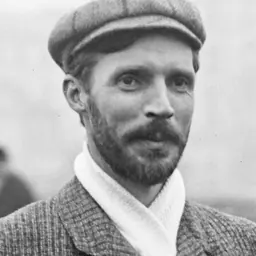

Related people
Same field, nearest in time
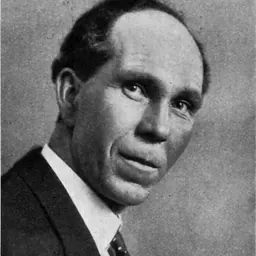
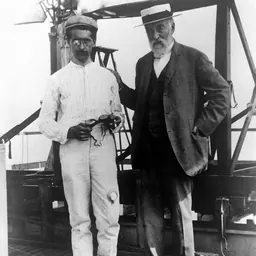
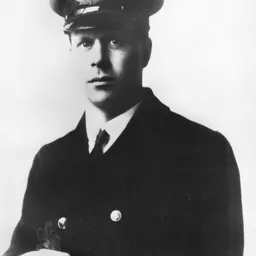
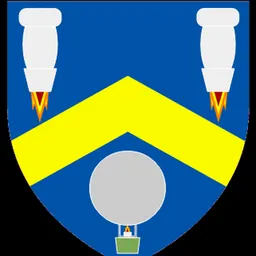

Contemporaries
People whose lives overlapped Gabriel Voisin's

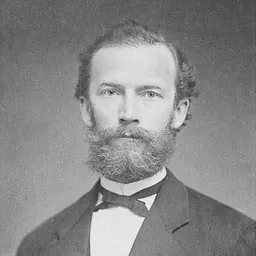

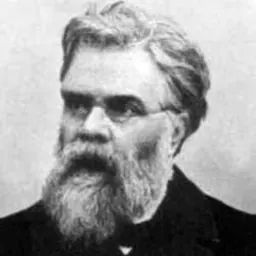
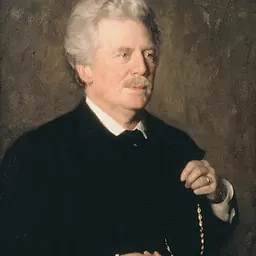
Frequently asked questions
Who was Gabriel Voisin?
French aviation pioneer (1880–1973)
When was Gabriel Voisin born?
Gabriel Voisin was born on 5 February 1880 in Belleville.
When did Gabriel Voisin die?
Gabriel Voisin died on 25 December 1973 in Ozenay.
What was Gabriel Voisin's occupation?
Gabriel Voisin was an engineer, businessperson, aircraft pilot and flieger.
What nationality was Gabriel Voisin?
Gabriel Voisin was French.
Sources & further reading
Cite this page
APA: Biography.guide. (2026). Gabriel Voisin. https://biography.guide/gabriel-voisin/
MLA: "Gabriel Voisin." Biography.guide, https://biography.guide/gabriel-voisin/.
Chicago: "Gabriel Voisin." Biography.guide. https://biography.guide/gabriel-voisin/.
Data last updated: 2026-09-22 · Spot an error? Report a correction.
Portrait: Wikimedia Commons · author & licence
Page generated 2026-09-27 05:03 UTC