
About G. M. Young
Lived 1882 – 1959 (aged 76–77). G. M. Young was a historian and politician.
George Malcolm Young (29 April 1882 – 18 November 1959) was an English historian, best known for his book on Victorian times in Britain, Portrait of an Age.
After a brief stint as an academic and a more than 20-year career as a civil servant, Young began to pursue a literary career in the mid-1920s. His books include studies of Edward Gibbon (1932), Charles I and Oliver Cromwell (1935) and Stanley Baldwin (1952) and the published texts of his lectures on literary and political topics.
Life and career Early years Young was born at Charlton, Kent, on 29 April 1882, the only son of the four children of George Frederick Young, waterman, later a steamer master, and his wife, Rosetta Jane Elizabeth, née Ross. He was educated at St Paul's School and Balliol College, Oxford, graduating from the latter in 1904 with a second in literae humaniores. In 1905 he was elected a Fellow of All Souls College, Oxford and became a tutor at St John's College (1906–1908). When the board's Standing Advisory Committee for University Grants was established in 1911, Young was its first secretary, and from 1917 was joint permanent secretary of the short-lived Ministry of Reconstruction, alongside Vaughan Nash.
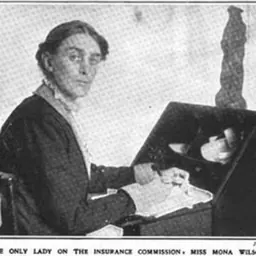
In the late 1920s Young corresponded on a literary topic with the author Mona Wilson, who before her retirement from the civil service had been a colleague at the Ministry of Reconstruction. She asked him down for the weekend to her house at Oare, near Marlborough, Wiltshire. As his publisher, Rupert Hart-Davis, put it in 1956: "To cut a long story short, he stayed there for twenty-five years, until M.W. died a year or two ago. There was, so far as I know, no just cause or impediment why they shouldn't have married, but they just didn't. I'm sure their relationship was entirely intellectual and companionable."
As a writer, Young was, in the words of the Oxford Dictionary of National Biography (ODNB), "in no hurry". His 1931 essay Victorian History, published in Life and Letters, was "his first venture into scholarly polemics". The following year, at the age of 50, he published his first book, a study of Edward Gibbon (1932). It was well received; The Sphere found it "a clever piece of portraiture … admiring but critical"; The New York Times considered that although intended for popular consumption, it revealed why Gibbon's genius remained "as little out of date as the Parthenon".
The Oxford University Press asked Young to edit two volumes of essays on Early Victorian England. They were published in 1934, with a final summary chapter by Young, which he subsequently developed into the 230-page Portrait of an Age (1936), the work by which he is most remembered. The Times said in 1959, "The Portrait was at once recognized as an outstanding piece of interpretation, and it is not too much to say that in the more than 20 years since it appeared its reputation and influence have grown steadily", Though far from uncritical of the Victorian age, Young acknowledged himself as a product of it: "I was born when the Queen had still nearly nineteen years to reign: I saw her twice, Gladstone once: I well remember the death of Newman and Tennyson, and my earliest recollection of the Abbey brings back the flowers fresh on Browning's grave".
Before the publication of Portrait of an Age, Young wrote an extended essay (175 pages) Charles I and Cromwell, described by the ODNB as an essay in detection. After the war, Young published two more collections of articles and essays: Today and Yesterday (1948) and Last Essays (1950), in which, according to the ODNB, "he found elbow-room for good talk, addressed purposely to the middlebrow, about literature, persons, and manners". Writing for the general reader was an effort for Young who, Hart-Davis said, "always assumes that one is his intellectual equal and makes no concessions … This, though flattering, often carried matters well over my head until I knew him well enough to ask for explanations of all the allusions I couldn’t understand".
In 1947 Young undertook the editorship of the Victorian volume in the series "English Historical Documents", but declining health limited his contribution, and when the volume was published in 1956 most of it was the work of his co-editor, W. D. Handcock.
Young's last book was a biography of Stanley Baldwin, which Baldwin had wished him to write. He found the task a struggle. His earlier books, Hart-Davis said, "came largely out of his head, where their subject-matter had been brewing up for many years", whereas this biography required a great deal of original research, which Young found tedious and frustrating, as Baldwin left few personal papers and did not keep a diary. Neither the publisher nor Young's biographers in the ODNB found the book up to the author's usual standard.
Published texts of lectures delivered by Young The Age of Tennyson, 1939 Burke, 1943 Rights and Duties in the Modern State, 1946 Shakespeare and the Termers, 1947 The Good Society, 1950
Don’t just read it —
keep it.
Full-length biographies made to live with: read them, listen on the way to work, watch them tonight.
- E-book
- Audio
- Video
Instant download · yours to keep · every purchase keeps this site free
Important facts
People in G. M. Young's life
Named in this biography and alive at the same time






Related people
Same field, nearest in time

Contemporaries
People whose lives overlapped G. M. Young's




Frequently asked questions
Who was G. M. Young?
English historian (1882–1959)
When was G. M. Young born?
G. M. Young was born in 1882.
When did G. M. Young die?
G. M. Young died in 1959.
What was G. M. Young's occupation?
G. M. Young was a historian and politician.
Sources & further reading
Cite this page
APA: Biography.guide. (2026). G. M. Young. https://biography.guide/g-m-young/
MLA: "G. M. Young." Biography.guide, https://biography.guide/g-m-young/.
Chicago: "G. M. Young." Biography.guide. https://biography.guide/g-m-young/.
Data last updated: 2026-09-20 · Spot an error? Report a correction.
Page generated 2026-09-27 05:02 UTC