
About Fyodor Stepun
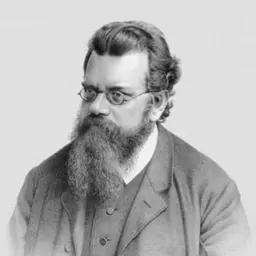
Lived 1884 – 1965 (aged 81). Fyodor Stepun was a Russian and German philosopher, university teacher, sociologist, philosopher of culture, writer and historian.
Biography Fyodor Avgustovich Stepun was born in Russia on 18 February 1884, in Moscow. After attending secondary school in Moscow he went as a student to Heidelberg, and there in 1910 he obtained his doctorate for a thesis on Vladimir Solovyov's philosophy of history.
Between 1910 and 1914 Stepun edited the international philosophical journal, Logos, and travelled across Russia lecturing on philosophy, literature and culture.
During the first World War he was an officer in a Siberian regiment, and after the Russian Revolution was an army commissar under the Russian Provisional Government.
From 1920 to 1922 he directed the state experimental theatre; but in 1922 he was deported from the Soviet Union. He settled in Germany, working first in Berlin, and afterwards as a professor of sociology in Dresden (1926–1937). During this period he published in Russian his books on 'Life and creation' (1923) and 'Letters of an Artillery Ensign' (1925), as well as Wie war es möglich? (1929), Das Antlitz Russlands und das Gesicht der Revolution (1934) and The Russian Soul and Revolution (1936). In 1937, he was expelled from his teaching-post by the Nazi authorities.
From 1946, he worked as a professor of Russian cultural studies at the Ludwig-Maximilians-Universität München, held lectures at the LGG , and published several works: Vergangenes und Unvergängliches (1947; Russian version, Byvshee i Nesbyvsheesya, 1956), Theater und Film (1953), Der Bolschewismus und die Christliche Existenz (1959), and in Russian 'Encounters' (1962).
Stepun was a fierce opponent of Bolshevism, as well as Nazism. His philosophical doctrine has been described as neo-Kantist transcendentalism linked with religious metaphysics, close to the ideas of Vladimir Solovyov and Nikolai Berdyaev.
Stepun died on 23 February 1965.
Don’t just read it —
keep it.
Full-length biographies made to live with: read them, listen on the way to work, watch them tonight.
- E-book
- Audio
- Video
Instant download · yours to keep · every purchase keeps this site free
Important facts
People in Fyodor Stepun's life
Named in this biography and alive at the same time

Related people
Same field, nearest in time




Contemporaries
People whose lives overlapped Fyodor Stepun's



Frequently asked questions
Who was Fyodor Stepun?
Russian philosopher (1884–1965)
When was Fyodor Stepun born?
Fyodor Stepun was born on 18 February 1884 in Moscow.
When did Fyodor Stepun die?
Fyodor Stepun died on 23 February 1965 in Munich.
What was Fyodor Stepun's occupation?
Fyodor Stepun was a philosopher, university teacher, sociologist, philosopher of culture, writer and historian.
What nationality was Fyodor Stepun?
Fyodor Stepun was Russian and German.
Sources & further reading
Cite this page
APA: Biography.guide. (2026). Fyodor Stepun. https://biography.guide/fyodor-stepun/
MLA: "Fyodor Stepun." Biography.guide, https://biography.guide/fyodor-stepun/.
Chicago: "Fyodor Stepun." Biography.guide. https://biography.guide/fyodor-stepun/.
Data last updated: 2026-09-20 · Spot an error? Report a correction.
Page generated 2026-09-27 05:23 UTC