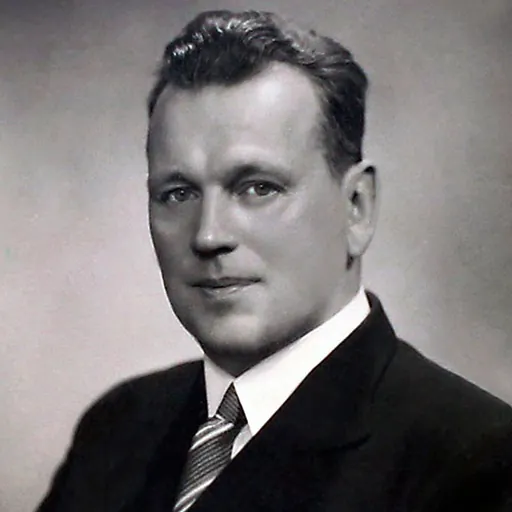
About Fyodor Raskolnikov
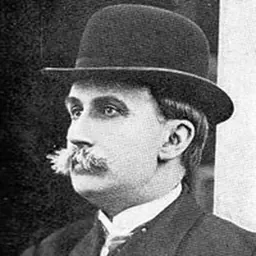
Lived 1892 – 1939 (aged 47). Fyodor Raskolnikov was a Russian diplomat, revolutionary, politician, military personnel and naval officer.
Fyodor Fyodorovich Raskolnikov (; 28 January 1892 – 12 September 1939), real name Fyodor Ilyin , was an Old Bolshevik, politician, participant in the October Revolution, writer, journalist, commander of Red fleets on the Caspian and the Baltic during the Russian Civil War, and later a Soviet diplomat. (according to other sources, archpriest Sergushenkov He graduated from Prince Oldenburgsky Orphanage, He enlisted in the navy on the outbreak of war, and in 1917 he received the Naval rank of Midshipman (michman), but he did not participate in World War I. In July 1918, he was sent to Kazan as the Commissar (member of Revvoeyensovet) of the Eastern Front. On the Eastern Front, he commanded, starting in August 1918, the Red Volga Flotilla, which participated in the Kazan Operation. In the summer of 1918, Raskolnikov married the revolutionary and writer, Larissa Reissner.
Raskolnikov was promoted to membership of the Revvoeyensovet of the Russian Socialist Federative Soviet Republic on September 2, 1918. At the end of 1918, he became the deputy commander of the 7th Army and the Commissar of the Baltic Fleet. which captured what remained of the White Russian navy and British garrison stationed there, and established the short-lived Iranian Socialist Soviet Republic, in northern Iran.
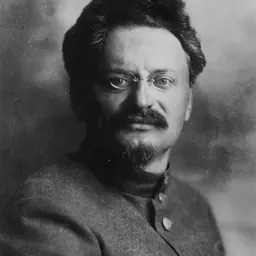
Soviet service In August 1920, Raskolnikov wrote a report warning that the shipbuilding facilities in Petrograd had been so sorely depleted of technical specialists during the civil war that they were not capable even of repairing damaged ships. He called for a recruitment drive, a wage system based on piece work, and an end to 'interference' by the Metal Workers' Union. During the trade-union debate from 1920 to 1921, Raskolnikov supported Leon Trotsky's position of taking a hard line about state control of unions. From June 1920 to January 1921, Raskolnikov commanded the Baltic Fleet. During his tenure, relations between the commanding officers and seamen deteriorated, and tensions would culminate a few weeks later with the Kronstadt rebellion of March 1921. Raskolnikov's actions caused a diplomatic rift with Great Britain, and the British government insisted on his removal. In 1923, he was replaced.
Literary career In 1924–30, Raskolnikov worked in literature as editor-in-chief of the literary magazine Molodaya Gvardiya (Young Guard), that was an organ of the Komsomol, and head of the publishing house publishing house Moskovsky Rabochy.
He arrived at a time of an angry controversy within the communist party over whether Soviet journals should be publishing by writers from comfortable family backgrounds who sympathised with the revolution – the so-called 'fellow travelers' – or concentrating exclusively on developing 'proletarian literature'. When the press department of the Central Committee organised a debate between the two sides, in May 1924, Raskolnikov gave a speech which Leon Trotsky praised as "the most distinctive expression" of the 'proletarian' side of the argument, which Trotsky opposed.
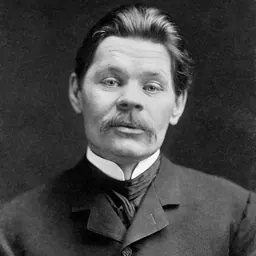
In June 1924, the Central Committee appointed him an editor of Krasnaya Nov, which had specialised in publishing the works of fellow travelers, under its incumbent chief editor, Aleksandr Voronsky. He delayed taking up the appointment because he had contracted tuberculosis, and went to Italy for a sun cure. After his return, Krasnaya Nov was filled with articles by advocates of proletarian literature, such Ilya Vardin, whom Voronsky had refused to publish. But Raskolnikov was ousted from the magazine early in 1925, possibly because Maxim Gorky had angrily refused to contribute while he was in charge. He was reinstated in May 1927.
In 1928 he was the chairman of the Repertory Committee, the de facto main censor of theatre and cinematography. He also wrote his own play Robespierre which even servile critics labelled "dry and boring". in which he criticized Stalin's repressions during the Great Terror and the emerging German-Soviet alliance.
Not long after the signing of the Molotov–Ribbentrop Pact, Raskolnikov was admitted to a mental hospital because the signing of the pact was a severe shock to him. He promptly died from "falling out of a window" while staying in the hospital. According to the writer Nina Berberova, Raskolnikov committed suicide. This account was contested by Raskolnikov's wife at the time, who claimed her husband died of pneumonia.
According to the historian Roy Medvedev, Raskolnikov might have been assassinated by NKVD agents. There are theories that the assassin might have been Sergei Efron, the husband of the poet Marina Tsvetaeva. His reputation would be restored during the Glasnost period, with the publication of his Open Letter to Stalin in the Soviet press.
Don’t just read it —
keep it.
Full-length biographies made to live with: read them, listen on the way to work, watch them tonight.
- E-book
- Audio
- Video
Instant download · yours to keep · every purchase keeps this site free
Important facts
Family & relationships
People in Fyodor Raskolnikov's life
Named in this biography and alive at the same time




Related people
Same field, nearest in time
Contemporaries
People whose lives overlapped Fyodor Raskolnikov's

Frequently asked questions
Who was Fyodor Raskolnikov?
Soviet diplomat (1892-1939)
When was Fyodor Raskolnikov born?
Fyodor Raskolnikov was born on 28 January 1892 in Saint Petersburg.
When did Fyodor Raskolnikov die?
Fyodor Raskolnikov died on 12 September 1939 in Nice.
What was Fyodor Raskolnikov's occupation?
Fyodor Raskolnikov was a diplomat, revolutionary, politician, military personnel and naval officer.
What nationality was Fyodor Raskolnikov?
Fyodor Raskolnikov was Russian.
Sources & further reading
· Wikipedia: Fyodor Raskolnikov
Cite this page
APA: Biography.guide. (2026). Fyodor Raskolnikov. https://biography.guide/fyodor-raskolnikov/
MLA: "Fyodor Raskolnikov." Biography.guide, https://biography.guide/fyodor-raskolnikov/.
Chicago: "Fyodor Raskolnikov." Biography.guide. https://biography.guide/fyodor-raskolnikov/.
Data last updated: 2026-09-22 · Spot an error? Report a correction.
Portrait: Wikimedia Commons · author & licence
Page generated 2026-09-27 05:00 UTC