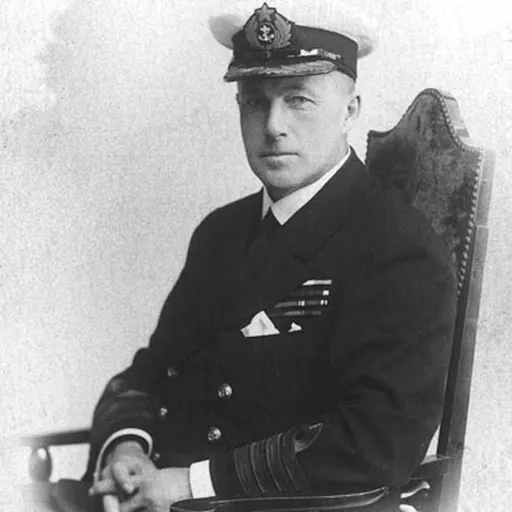
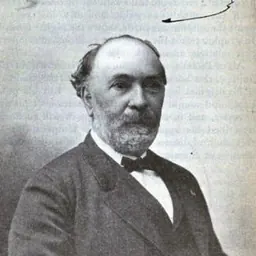
Fyodor Matisen
Lieutenant of the Russian Imperial Navy, hydrographer, and explorer
About Fyodor Matisen
Lived 1872 – 1921 (aged 49). Fyodor Matisen was a Russian explorer.
Fyodor Matisen was the first to make a thorough geographical survey of the Nordenskiöld Archipelago. The mouths of the Lena River, another complex area surveyed by Matisen. (Photo: Landsat 2000) Fyodor Andreyevich Matisen or Mathiesen (; , – 19 December 1921) was an officer of the Russian Imperial Navy, hydrographer, and explorer.
Matisen explored and mapped wide areas of the coast of the Kara Sea and the Laptev Sea in the Russian Arctic. He was a friend of Alexander Kolchak and a member of the Russian Geographical Society and the Russian Academy of Sciences.
After having been senior officer and second-in-command, Matisen became the captain of Polar ship Zarya during the last part of the Russian polar expedition of 1900–1902 led by Baron Eduard von Toll.
Early life and career Fyodor Andreyevich Matisen graduated from the Naval Cadet Corps in 1897. Barely two years later, he took part in the 1899 Russian expedition to Svalbard.
Russian polar expedition Owing to the experience in polar exploration he acquired in Svalbard, Matisen was chosen for Baron Eduard Gustav von Toll's polar expedition on behalf of the Russian Academy of Sciences. He was named assistant to commander of Polar ship Zarya Nikolai Kolomeitsev. Matisen's friend Alexander Kolchak accompanied the expedition as third naval officer and hydrographer. All leading officers were from military background. Finally Baron von Toll sent Kolomeitsev away on a long sledge trip overland with the mission of organizing coal depots for the ship. When the former captain was gone Matisen was appointed by Toll as Zaryas commander.
In March, while Zarya was still stuck in ice, Matisen explored the Nordenskiöld Archipelago on dogsled through the frozen sea as far as Russky Island. From there he swung SW, then south through another region of the large archipelago. On this trip Matisen could only survey parts of the coastlines of many of the Nordenskiöld islands, but on a subsequent trip in April he was able to make corrections to his previous survey by determining with accuracy the coordinates of at least one island in each of the groups in which he divided the archipelago. In total Matisen discovered and named about 40 islands of the Nordenskiöld group; he also arranged the archipelago into the following four main subgroups: Vilkitsky Islands, Pakhtusov Islands, Tsivolko Islands and Litke Islands.
After the thaw, Matisen led Zarya across the Laptev Sea to the New Siberian Islands. The aim of Toll's expedition was to explore well the area north of the New Siberian Islands and eventually sail towards the Pole in order to find the elusive Sannikov Land. Baron von Toll and his party were never found.
Despite this tragedy, the expedition was not a failure. Many important oceanographic investigations were carried out, so that the study of data continued until 1917 and remained uncompleted. Besides, the Expedition plotted about 200 new geographical names on the map of the Arctic region.
After exploring the mouths of the Lena River, Matisen left a badly leaking Zarya to sink at Tiksi Bay, close to the Lena delta. On 6 August 1903, after forwarding all scientific equipment to Saint Petersburg, the ship was stripped and its hull was allowed to fill with water. Matisen lowered the flag of the Neva Yacht Club for the last time and left Zarya. Matisen returned to Yakutsk on board ship Lena with Captain Yershevskiy. Apparently Zaryas remains still lie close to Brusneva Island at Bukhta Tiksi.
At the time of the Russian Revolution of 1917 when the Russian fleet virtually ceased to exist, Matisen left Russia like many of his naval colleagues. He served as a hydrographer in the British Royal Navy for a period of time, but opted to return to Russia and went to Vladivostok in 1919. During a journey to the Far Eastern Republic, Matisen contracted typhus. He became severely ill and was sent to a military hospital in Irkutsk where he died in December 1921. A "Dmitriy Ovtsyn" class coastal survey ship was named Fyodor Matisen by the USSR government in 1976.
Don’t just read it —
keep it.
Full-length biographies made to live with: read them, listen on the way to work, watch them tonight.
- E-book
- Audio
- Video
Instant download · yours to keep · every purchase keeps this site free
Important facts
People in Fyodor Matisen's life
Named in this biography and alive at the same time

Related people
Same field, nearest in time




Contemporaries
People whose lives overlapped Fyodor Matisen's

Frequently asked questions
Who was Fyodor Matisen?
lieutenant of the Russian Imperial Navy, hydrographer, and explorer (1872–1921)
When was Fyodor Matisen born?
Fyodor Matisen was born on 20 May 1872 in Saint Petersburg.
When did Fyodor Matisen die?
Fyodor Matisen died on 19 December 1921 in Irkutsk.
What was Fyodor Matisen's occupation?
Fyodor Matisen was an explorer.
What nationality was Fyodor Matisen?
Fyodor Matisen was Russian.
Sources & further reading
Cite this page
APA: Biography.guide. (2026). Fyodor Matisen. https://biography.guide/fyodor-matisen/
MLA: "Fyodor Matisen." Biography.guide, https://biography.guide/fyodor-matisen/.
Chicago: "Fyodor Matisen." Biography.guide. https://biography.guide/fyodor-matisen/.
Data last updated: 2026-09-20 · Spot an error? Report a correction.
Page generated 2026-09-27 05:09 UTC