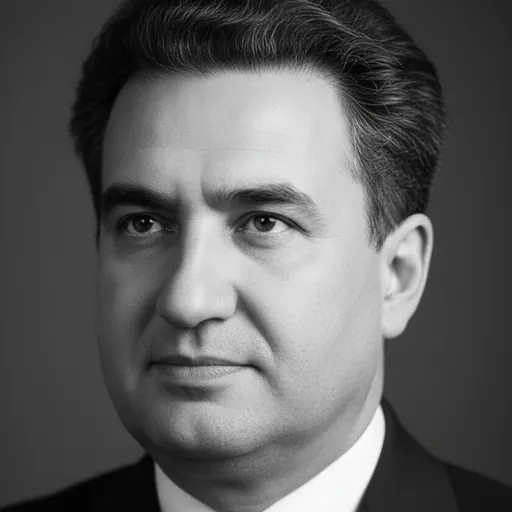
About Fyodor Kulakov
Lived 1918 – 1978 (aged 60). Fyodor Kulakov was a Russian politician.
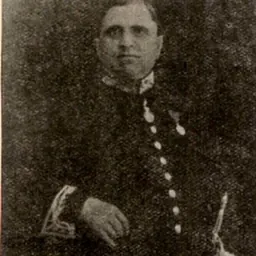
Fyodor Davydovich Kulakov (; 4 February 1918 – 17 July 1978) was a Soviet bureaucrat during the Cold War.
Kulakov served as Stavropol First Secretary from 1960 until 1964, immediately following Nikita Khrushchev's ouster. During his First Secretaryship in Stavropol, Kulakov met Mikhail Gorbachev; Kulakov became Gorbachev's mentor, and when he left his Stavropol First Secretaryship to enter national politics, Gorbachev took over his former office. Kulakov was elected to several important seats in the 1960s. In 1971, he was elected to the Politburo. He became a leading figure of Soviet leadership, and impressed Soviet leader Leonid Brezhnev to such an extent that Western commentators believed that Kulakov would become Brezhnev's successor. This did not happen since Kulakov died in 1978, four years before Brezhnev.
Career Kulakov was born in 1918 to a peasant family in Penza Oblast. Like his parents, Kulakov studied and graduated as an agronomist. In 1938, Kulakov started work in a sugar combine, and attended an Agricultural Institute, from which he graduated in 1941. In 1940, he became a member of the All-Union Communist Party (bolsheviks) and became a leading figure in the local Komsomol regional committee. Kulakov was later appointed to the position of Chairman of the Executive Committee of the Regional Party Committee of the Penza Oblast. In Penza, Kulakov became a close companion of future Soviet leader Konstantin Chernenko. He advanced through the Soviet hierarchy quickly and in 1955 he became Deputy Minister of Agriculture of the Russian Soviet Federative Socialist Republic (RSFSR), eventually being promoted to Minister of Grain Products. In 1960, he was appointed to First Secretary of the Stavropol Regional Party Committee. During his tenure as Stavropol First Secretary he appointed Mikhail Gorbachev to the provincial level of the party apparatus—a promotion which would prove to be crucial. In 1964, he left his office in Stavropol to pursue national politics; Gorbachev took over his former office as First Secretary. Throughout his tenure in Moscow, Kulakov remained a loyal client of Mikhail Suslov.
In 1964, Kulakov was brought to Moscow to become the Head of the Agricultural Department of the Central Committee. Eleven months later, Kulakov was appointed to the post of Central Committee Secretary for Agriculture. He was elected to the Central Committee in 1964, and to a seat in the Secretariat in September 1965. During the latter part of his life, Kulakov's relations with Brezhnev, Chernenko, and other leading officials seemed to have shifted in tone, leading Kulakov to be excluded from the 1978 Central Committee plenum on Agriculture. It has been presumed that Kulakov had shifted his allegiance from Chernenko's faction to that of Kirilenko and Andropov. Another incident was that Kulakov had argued with Gorbachev before his death.
Death
The most commonly assumed cause of Kulakov's death is natural causes, but there exist other theories as well. During Brezhnev's later term, according to some, Brezhnev was living in fear of Yuri Andropov. Anonymous sources state that Andropov may have had been involved in the deaths of Kulakov in 1978, and Pyotr Masherov in 1980. According to Fyodor Morgun, a Soviet politician of Ukrainian descent, Kulakov seemed worried just days before his death. Some believe that Kulakov may have committed suicide. According to Mikhail Gorbachev, no members of the Politburo cancelled or interrupted their holidays when hearing the news of Kulakov's death. His successor to the office of Secretary for Agriculture was his former protégé, Gorbachev. Kulakov was cremated and his ashes was buried at the Kremlin Wall Necropolis.
Don’t just read it —
keep it.
Full-length biographies made to live with: read them, listen on the way to work, watch them tonight.
- E-book
- Audio
- Video
Instant download · yours to keep · every purchase keeps this site free
Important facts
People in Fyodor Kulakov's life
Named in this biography and alive at the same time
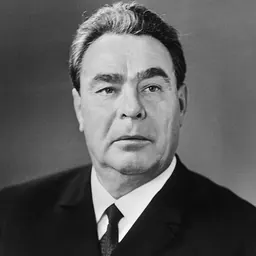


Related people
Same field, nearest in time






Contemporaries
People whose lives overlapped Fyodor Kulakov's


Frequently asked questions
Who was Fyodor Kulakov?
politician (1918-1978)
When was Fyodor Kulakov born?
Fyodor Kulakov was born on 4 February 1918 in Lgovskiy Uyezd.
When did Fyodor Kulakov die?
Fyodor Kulakov died on 17 July 1978 in Moscow.
What was Fyodor Kulakov's occupation?
Fyodor Kulakov was a politician.
What nationality was Fyodor Kulakov?
Fyodor Kulakov was Russian.
Sources & further reading
Cite this page
APA: Biography.guide. (2026). Fyodor Kulakov. https://biography.guide/fyodor-kulakov/
MLA: "Fyodor Kulakov." Biography.guide, https://biography.guide/fyodor-kulakov/.
Chicago: "Fyodor Kulakov." Biography.guide. https://biography.guide/fyodor-kulakov/.
Data last updated: 2026-09-21 · Spot an error? Report a correction.
Portrait: Wikimedia Commons · author & licence
Page generated 2026-09-27 05:00 UTC