
About Fumiko Hayashi
Lived 1903 – 1951 (aged 47). Fumiko Hayashi was a Japanese novelist, poet, writer and screenwriter.
Biography Hayashi was born in Moji-ku, Kitakyūshū, (Shimonoseki, Yamaguchi, has also been cited as her birthplace In 1910, her mother Kiku Hayashi divorced her merchant husband Mayaro Miyata (who was not Fumiko's biological father) and married Kisaburo Sawai.) before settling into marriage with painting student Rokubin Tezuka in 1926. During this time, she also helped launch the poetry magazine Futari. like The Accordion and the Fish Town or Seihin no sho. In the following years, Hayashi travelled to China and Europe. In 1941, she joined a group of women writers, including Ineko Sata, who went to Manchuria in occupied China. In 1942–43, again as part of a larger group of women writers, she travelled to Southeast Asia, where she spent eight months in the Andaman Islands, Singapore, Java and Borneo. In later years, Hayashi faced criticism for collaborating with state-sponsored wartime propaganda, but, unlike Sata, never apologised or rationalised her behaviour.
Writer Yoshiko Shibaki observed a shift from poetic sentiment towards harsh reality in Hayashi's post-war work, which depicted the effects of the war on the lives of its survivors, as in the short story Downtown.
Hayashi died of myocardial infarction on June 28, 1951,
Themes and legacy Many of Hayashi's stories revolve around free spirited women and troubled relationships. Joan E. Ericson's 1997 translations and analysis of the immensely popular Diary of a Vagabond and Narcissus suggest that Hayashi's appeal is rooted in the clarity with which she conveys the humanity not just of women, but also others on the underside of Japanese society. In addition, Ericson questions the factuality of her autobiographical writings and expresses a critical view of scholars who take these writings by word instead of, as has been done with male writers, seeing a literary imagination at work which transforms the personal experience, not simply mirrors it. Hayashi herself explained that she took this step to separate herself from the "retching confusion" of Diary of a Vagabond. German, Spanish, Italian, Finnish and other languages.
Selected works
1929: I Saw a Pale Horse (Aouma o mitari) – poetry collection. Translated by Janice Brown. 1930: Diary of a Vagabond (Hōrōki) – novel. Translated by Joan E. Ericson. 1931: The Accordion and the Fish Town (Fukin to uo no machi) – short story. Translated by Janice Brown. 1933: Seihin no sho – short story 1934: Nakimushi kozo – novel 1936: Inazuma – novel 1947: Uzushio – novel 1947: Downfall (Rinraku) – short story. Translated by J.D. Wisgo. 1948: Downtown (Daun taun) – short story. Translated by Ivan Morris. 1948: Late Chrysanthemum (Bangiku) – short story. Translated twice by John Bester and Lane Dunlop. 1949: Shirosagi – short story 1949: Narcissus (Suisen) – short story. Translated twice by Kyoko Iriye Selden and Joan E. Ericson. 1950: Chairo no me – novel 1951: Floating Clouds (Ukigumo) – novel. Translated twice by Y. Koitabashi and Lane Dunlop. 1951: Meshi – novel (unfinished)
Adaptations (selected) Numerous of Hayashi's works have been adapted into film: 1938: Nakimushi kozo, dir. Shirō Toyoda 1951: Repast (based on Meshi), dir. Mikio Naruse 1952: Lightning (based on Inazuma), dir. Mikio Naruse 1953: Wife (based on Chairo no me), dir. Mikio Naruse 1954: Late Chrysanthemums (also incorporating the short stories Narcissus and Shirosagi), dir. Mikio Naruse 1955: Floating Clouds, dir. Mikio Naruse 1962: A Wanderer's Notebook (based on Diary of a Vagabond), dir. Mikio Naruse 1986: Wandering Days (anime short, based on Diary of a Vagabond)
Hayashi's biography also served as the basis for theatre plays, notably Kazuo Kikuta's 1961 Hourou-ki, about her early life, and Hisashi Inoue's 2002 Taiko tataite, fue fuite, based on her later years, including her entanglement with the militarist regime.
Don’t just read it —
keep it.
Full-length biographies made to live with: read them, listen on the way to work, watch them tonight.
- E-book
- Audio
- Video
Instant download · yours to keep · every purchase keeps this site free
Important facts
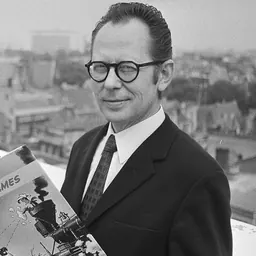
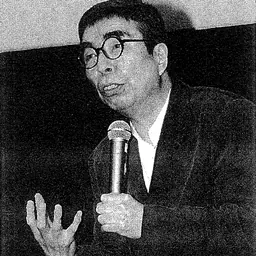
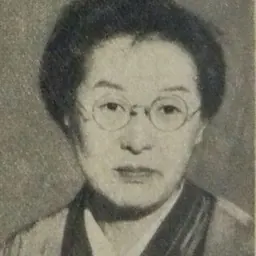
People in Fumiko Hayashi's life
Named in this biography and alive at the same time





Related people
Same field, nearest in time
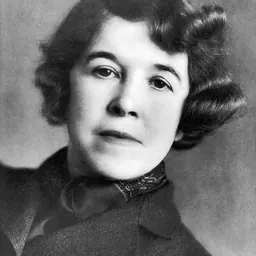



Contemporaries
People whose lives overlapped Fumiko Hayashi's

Frequently asked questions
Who was Fumiko Hayashi?
Japanese writer (1903–1951)
When was Fumiko Hayashi born?
Fumiko Hayashi was born on 31 December 1903 in Shimonoseki.
When did Fumiko Hayashi die?
Fumiko Hayashi died on 29 June 1951 in Tokyo.
What was Fumiko Hayashi's occupation?
Fumiko Hayashi was a novelist, poet, writer and screenwriter.
What nationality was Fumiko Hayashi?
Fumiko Hayashi was Japanese.
Sources & further reading
· DBpedia: Fumiko Hayashi (author)
Cite this page
APA: Biography.guide. (2026). Fumiko Hayashi. https://biography.guide/fumiko-hayashi/
MLA: "Fumiko Hayashi." Biography.guide, https://biography.guide/fumiko-hayashi/.
Chicago: "Fumiko Hayashi." Biography.guide. https://biography.guide/fumiko-hayashi/.
Data last updated: 2026-09-20 · Spot an error? Report a correction.
Page generated 2026-09-27 05:26 UTC