
About Ineko Sata
Lived 1904 – 1998 (aged 94). Ineko Sata was a Japanese novelist and writer.
, also , born , was a Japanese writer closely connected to the Proletarian Literature Movement. An advocate of women's rights, she has also repeatedly been linked to the feminist movement.
Biography Early life and career Born in Nagasaki to young, unmarried parents (her father was 18, her mother 15), the family moved to Tokyo while she was still a child. Her first job was in a caramel factory, but she later went on to work in restaurants where she befriended several writers, including Ryūnosuke Akutagawa. In 1922, her poems were published for the first time in the magazine Shi to jinsei ("Poetry and life").
Working at the Koroku café-bar in Hongo near Tokyo University, she met Shigeharu Nakano, who would remain a lifelong friend. Along with left-wing writers Tatsuo Hori and Tsurujirō Kubokawa, Nakano ran the progressive literary magazine Roba ("Donkey"). Nakano urged Sata to write her first short story, Kyarameru kōjō kara ("From the Caramel Factory"), which was based on her own experiences and published in 1928. Taking her second husband Tsurujirō Kubokawa'sAfter a brief first marriage, Sata married Kubokawa in 1926 or 1929,
While praised by writers like Yasunari Kawabata for drawing on modernist literary techniques, Sata became increasing involved in issues related to workers and the labor movement. In 1929, she spoke out against the treatment of women workers in cigarette factories. In 1931, she defended the striking workers of the Tokyo Muslin Factory. As a member of the Proletarian Literature Movement, she wrote a series of stories about the lives of ordinary working men and women. These included Kyosei kikoku ("Compulsory Extradition"), about the rights of migrant Korean workers, and Tears of a Factory Girl in the Union Leadership (Kanbu joko no namida),
In 1932, she joined the outlawed Japan Communist Party (JCP). the latter tortured to death by police in 1933. Sata's strong opinions were also often at odds with the official Communist Party platform. Her wartime experiences were the subject of Watashi no Tōkyō chizu ("My Tokyo Map"), which was written between 1946 and 1948. 1953 saw the first post-war reprint of Crimson, which was received favourably by critics. again led to her expulsion from the JCP.
Sata was awarded the Noma Literary Prize in 1972 for her book Juei ("The Shade of Trees"), which deals with the relationships between Chinese and Japanese people in Nagasaki after the dropping of the atomic bomb, and the (fictionalised) biography of painter Kiyoshi Ikeno (1930–1960), which had already served as basis for her 1961 short story The Colorless Paintings. In 1973, she was offered the Geijutsuin Onshi-shō (Imperial Art Academy Prize) for her life's work, but she refused the award as she regarded it as a nationalist congratulation prize. She accepted the 1976 Kawabata Yasunari Literature Award for one of the stories in her short story collection Toki ni tatsu.
In 1983, Sata received the Asahi Prize for the entire body of her work. She gave an acceptance speech which expressed regret for her contributions to the war effort. Her book about Nakano (who had died in 1979), Natsu no Shiori – Nakano Shigeharu o okuru ("Memories of Summer – a Farewell to Shigeharu Nakano"), was awarded the Mainichi Art Award in 1983. English translations include:
Adaptations Some of Sata's stories were adapted into films, including: 1956: Kodomo no me, director Yoshirō Kawazu 1957: Suashi no musume, director Yutaka Abe 1965: Ane to imōto, director Yoshirō Kawazu
Don’t just read it —
keep it.
Full-length biographies made to live with: read them, listen on the way to work, watch them tonight.
- E-book
- Audio
- Video
Instant download · yours to keep · every purchase keeps this site free
Important facts
People in Ineko Sata's life
Named in this biography and alive at the same time

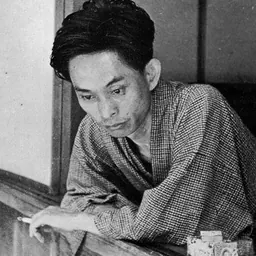
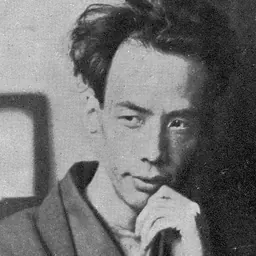


Related people
Same field, nearest in time
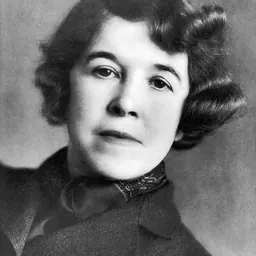
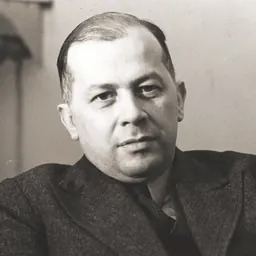



Contemporaries
People whose lives overlapped Ineko Sata's

Frequently asked questions
Who was Ineko Sata?
Japanese writer (1904–1998)
When was Ineko Sata born?
Ineko Sata was born on 1 June 1904 in Nagasaki.
When did Ineko Sata die?
Ineko Sata died on 12 October 1998 in Tokyo.
What was Ineko Sata's occupation?
Ineko Sata was a novelist and writer.
What nationality was Ineko Sata?
Ineko Sata was Japanese.
Sources & further reading
Cite this page
APA: Biography.guide. (2026). Ineko Sata. https://biography.guide/ineko-sata/
MLA: "Ineko Sata." Biography.guide, https://biography.guide/ineko-sata/.
Chicago: "Ineko Sata." Biography.guide. https://biography.guide/ineko-sata/.
Data last updated: 2026-09-26 · Spot an error? Report a correction.
Page generated 2026-09-27 05:16 UTC