
About Fritz Kern
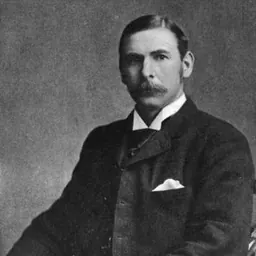
Lived 1884 – 1950 (aged 65). Fritz Kern was a German medievalist, university teacher, historian, philosopher and opinion journalist.
Fritz Kern (28 September 1884 - 21 May 1950) was a German medievalist historian who became involved in politics. He held teaching chairs on History at Frankfurt (Main) University between 1914 and 1922, and at Bonn University between 1922 and 1946.
Life Provenance Max Friedrich Ludwig Hermann Kern - always identified in sources simply as Fritz Kern - was born into an upper middle-class Catholic family in Stuttgart. Both his parents came from legal-administrative "establishment" families, and were members of what would have been considered Württemberg's "minor aristocracy". Hermann von Kern (1854–1932), his father, was a senior government administrator who later became a "Staatsrat" (loosely, "national councillor") for the Kingdom of Württemberg. His mother, born Marie von Hufnagel (1860–1944), was a daughter of Georg Ludwig von Hufnagel (1825–1900), a lawyer who towards the end of his career served as senate president (in this instance a senior judicial position) in Stuttgart. His father agreed to this change of direction only with the greatest reluctance. His doctoral research concerned the history of deeds issued by notaries in Italy: it was supervised by Michael Tangl (1864 – 1921). Although it highlights its author's formidable skills as a meticulous researcher and interpreter of sources, the book also repeatedly discloses elements of the underlying Franco-German antagonism which were features of the intensified Franco–German rivalry that followed the Franco-Prussian War, but which post-1945 appear as distractions in a work focused on developments in the Medieval period. His own contributions dealt with characteristic passion about the tragic denouement of the war, returning frequently to material included in the Tirpitz memoire. Kern succeeded to the Bonn History professorship. His wife and children remained in the family home just outside Frankfurt for more than a year, but in July 1923 a suitable newly constructed "professor house" became available for rent in the Baumschulwäldchen quarter of the town and they joined him in Bonn. As the Great Depression's economic crisis was followed by destructive levels of unemployment, political polarisation and parliamentary deadlock, during the run-up to 1933, Fritz Kern in his journalism and teaching became preoccupied with preventing a National Socialist government from coming to power in Germany. During the early months of the Hitler government the security services were principally concerned with targeting communists. Kern was clearly no communist. Nevertheless, he had for many years been warning Germans against Hitler, and as the nature of the regime became ever clearer he was clearly, as a known opponent of the National Socialists in some danger. He continued to support Markov's group even after Markov himself was arrested, sentenced, and in 1936 imprisoned, despite the associated dangers to himself. In Berlin he found that a group of conservative traditionalists under the leadership of Vice-Admiral Wilhelm Canaris and General Major Hans Oster had already set in place a clandestine opposition to the government's war preparations, which within the higher echelons of the military establishment were widely deplored or mistrusted. Subsequently, Kern also came into contact with the Prussian Finance Minister Johannes Popitz and other members the so-called Wednesday Society. At some point Kern's willingness to work for the military success of Nazi Germany evolved into a position of opposition to the war, and he was persuaded to remain quietly in Bonn. he was never among the leaders of the anti-war movement, however. His personal life was also in crisis, as he was forced to accept that his elder daughter was incurably ill and would never be able to support herself. In 1941 Fritz and Bertha Kern were divorced. Kern remarried later that year. At around the same time his entire library was destroyed by enemy bombs.
Meanwhile, on 17 November 1945 the University of Bonn was permitted to re-open, and "that part of the teaching body remaining intact" were invited to present themselves to a commission of enquiry established by the university senate in order that any necessary "cleansing" ("denazification") requirements might be determined. Kern was self-evidently still "intact" and he expressed the hope that he might be permitted to return on a special train being organised by "the Quakers", and so resume his teaching duties for the Summer 1946 term. However, he had been personally isolated from colleagues (and from virtually everyone else) during the war years, and his flight to Switzerland had opened him up to suspicion and bureaucratic hurdles. As it became clear that the university was in no hurry to welcome him, and his health continued to deteriorate, he instead applied for early retirement. During 1945/46 he had undergone three surgical interventions in connection with a long-standing kidney disease. 1947 was a year of medical urgency thanks to an inflamed appendix which was deemed inoperable on account of the weakened condition of his heart. The alternative treatment, involving a savagely light diet, kept him alive for three more years, but his deteriorating health was nevertheless by this stage a continuing concern. Fritz Kern's retirement took effect at the end of term in July 1946, while he himself was still in Switzerland. Due to lengthy denazification procedures on which the British military authorities insisted, the retirement process took a further nine months, and so formally took effect only on 1 April 1947, by means of a letter dated 17 April 1947 and supplied by the appropriate ministry department. Kern now hoped and believed that his return to Germany could no longer be deferred. Meanwhile, after a long period of "preparation", in the first part of 1948 he signed a contract with Francke Verlag, a publishing house in Bern, for a ten volume "Historia Mundi" ("History of the World"). Ideas for the project had evidently been forming in his mind for many years, and securing the publication contract represented the fulfilment of a longstanding ambition: in the event the work would not be published during his lifetime, however. The "Historia Mundi" idea was taken forward by others.
Death Fritz Kern died in a Mainz hospital on 21 May 1950. His major work, "Gottesgnadentum und Widerstandsrecht im früheren Mittelalter" (loosely, "The Grace of God and Rights to Resist in the Early Middle Ages"), published originally in 1914, reset the compass, and remains influential more than a century later. An English edition, entitled "Kingship and law", followed in 1939. In 1954, after Kern had died, Rudolf Buchner produced a new German edition of the work.
Extremely influential in its day was Kern's substantial essay "Recht und Verfassung im Mittelalter" (loosely, "Law and Constitution") which appeared in 1919, and in which he sought to show how the law derives from that which is "old and good".
His universal historical treatise "Die Anfänge der Weltgeschichte" ("Beginnings of World History") appeared first in 1933. After 1945 Kern comprehensively reworked the text. The book showcases the cultural framework that Kern had by this time developed, whereby he sought to supersede the old historical prisms of bourgeois-liberal evolutionism together with biologically derived social darwinism. For German scholars there is an obvious contrast to be drawn with the success of the decentralised evolution of the Holy Roman Empire and its successors. Nevertheless, the patterns identified by Kern also attract dissent. In 2009 Jean-Marie Moeglin wrote an essay in which he evaluated and dismissed as "myth" Kern's thesis of a French "expansionist policy" during the medieval period at the expense of "the empire".
Personal In 1909 Fritz Kern became engaged to and then married Bertha, the sixth recorded child and youngest daughter of the recently deceased philosopher Eduard von Hartmann (1842–1906). The marriage would be followed in due course by the births of two daughters, ____ and Gisela, along with one son, Berthold.
Fritz Kern's first marriage ended in divorce in 1941. Later that same year he married Elisabeth Charlotte Ahrens (1904 - ), the daughter of Dr. Reinhold Ahrens, a health official from Remscheid. The marriage was followed by the birth of the couple's son, Fritz Kern's fourth recorded child and second son.
Published output (selection)
Dorsualkonzept und Imbreviatur. Zur Geschichte der Notariatsurkunde in Italien, doctoral dissertation, Berlin 1906. Die Anfänge der französischen Ausdehnungspolitik bis zum Jahr 1308. Mohr, Tübingen 1910. als Herausgeber: Acta Imperii Angliae et Franciae ab anno 1267 ad annum 1313. Dokumente vornehmlich zur Geschichte der auswärtigen Beziehungen Deutschlands. Mohr, Tübingen 1911 (reprinted. Olms, Hildesheim and others 1973, ). Gottesgnadentum und Widerstandsrecht im früheren Mittelalter. Zur Entwicklungsgeschichte der Monarchie (= Mittelalterliche Studien. vol. 1, H. 2, ). Koehler, Leipzig 1914 (7th edition, unchanged reprint of the 2nd edition of 1954. Produced by Rudolf Buchner. Wissenschaftliche Buchgesellschaft, Darmstadt 1980, ). Dante. 4 Vorträge zur Einführung in die Göttliche Komödie. Mohr, Tübingen 1914. Humana civilitas (Staat, Kirche und Kultur). Eine Dante-Untersuchung (= Mittelalterliche Studien. vol. 1, section 1). Koehler, Leipzig 1913. Recht und Verfassung im Mittelalter. In: Historische Zeitschrift. vol. 120, 1919, pp. 1–79, , (Special rerelease of the 1952 edition. Books on Demand, Norderstedt 2008, ). Stammbaum und Artbild der Deutschen und ihrer Verwandten. Ein kultur- und rassengeschichtlicher Versuch. Lehmann, München 1927. Die Anfänge der Weltgeschichte. Ein Forschungsbericht und Leitfaden. Teubner, Leipzig u. a. 1933. Geschichte und Entwicklung (Evolution). Aus dem Nachlass herausgegeben von Liselotte Kern. Francke, Bern 1952.
Don’t just read it —
keep it.
Full-length biographies made to live with: read them, listen on the way to work, watch them tonight.
- E-book
- Audio
- Video
Instant download · yours to keep · every purchase keeps this site free
Important facts
People in Fritz Kern's life
Named in this biography and alive at the same time

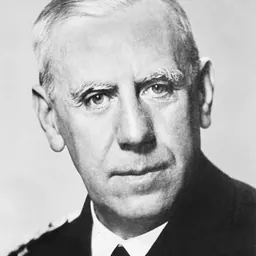
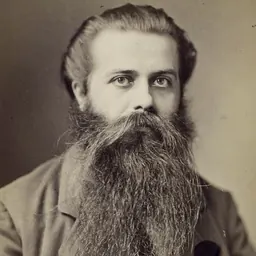

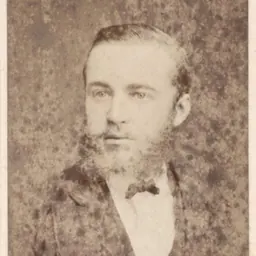


Related people
Same field, nearest in time
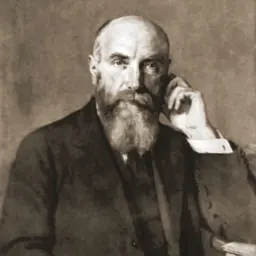

Contemporaries
People whose lives overlapped Fritz Kern's

Frequently asked questions
Who was Fritz Kern?
German medievalist (1884-1950)
When was Fritz Kern born?
Fritz Kern was born on 28 September 1884 in Stuttgart.
When did Fritz Kern die?
Fritz Kern died on 21 May 1950 in Mainz.
What was Fritz Kern's occupation?
Fritz Kern was a medievalist, university teacher, historian, philosopher and opinion journalist.
What nationality was Fritz Kern?
Fritz Kern was German.
Sources & further reading
Cite this page
APA: Biography.guide. (2026). Fritz Kern. https://biography.guide/fritz-kern/
MLA: "Fritz Kern." Biography.guide, https://biography.guide/fritz-kern/.
Chicago: "Fritz Kern." Biography.guide. https://biography.guide/fritz-kern/.
Data last updated: 2026-09-22 · Spot an error? Report a correction.
Page generated 2026-09-27 05:22 UTC