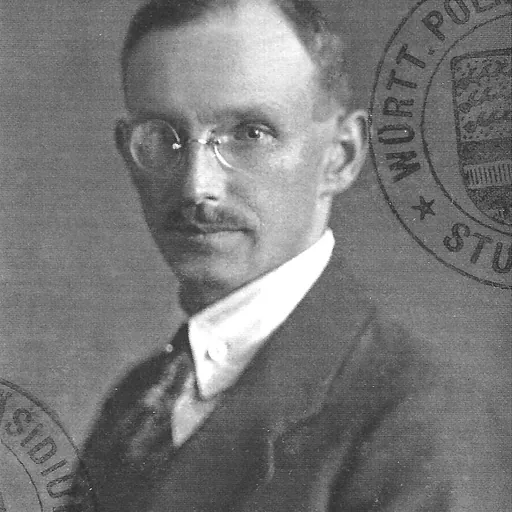
About Friedrich Mussgay
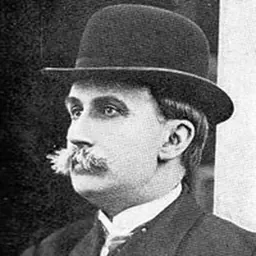
Lived 1892 – 1946 (aged 54). Friedrich Mussgay was a German police officer and gestapo employee.
Friedrich Mußgay (3 January 1892 – 3 September 1946) was an ambitious regional administrator who found his way into the police service. Between 1917 and 1933 he achieved rapid promotion. After 1933, through a combination of ability, ambition, and a certain amount of good luck, he benefitted from a succession of reconfigurations of homeland security to occupy a series of senior positions, serving as a "Kriminalrat" (Senior Officer of the Criminal Police department) from 1935, Officer in Charge of the Stuttgart State Police Headquarters complex from 1939 and an Obersturmbannführer from 1943. Through most of his police career, which lasted from 1917 until 1945, he was based in Stuttgart which was home city, but after the return of war in 1939 there were also postings abroad, notably, in 1938, to occupied Czechoslovakia. During the 1940s he was implicated in a range of Holocaust actions, but his suicide in 1946 ensured that the nature and extent of his involvement could never be properly presented and assessed before a court.
Commentators and, subsequently, historians have found Mußgay's character and contribution hard to pin down. According to the historian Friedemann Rincke, some saw his as a Rumpelstiltskin figure, while for others he was simply a "quiet professional". Among senior police officers, he was unusual in having left it until the last possible moment to join "the party", becoming a member only three months after the Hitler government took power. Nevertheless, as far as the new régime was concerned, there could be no doubt that he performed his duties efficiently and effectively, according to Sarah Stewart, another commentator-historian.
During 1923 a number of responsibilities and duties that had traditionally been undertaken by the Regional Police Service were reassigned, becoming the direct responsibility of the Stuttgart police service. A parallel development at the city's main police station was the establishment of a Political Police department. Both these changes were helpful in the progression of Mußgay's career, and a succession of promotions followed. In the Autumn/Fall of 1923 he became a "Kriminaloberinspektor" (loosely, "senior criminal officer"). Almost at once he involved himself in the activities of the Political Police department. By 1925 he was heading up two sub-departments within it: "Department N" ("Police Intelligence Service") and "Department V" ("Meetings and Associations"). The focus of his work now was to confront "enemies of the constitution". For Mußgay this became an almost personal crusade against the political left. Colleagues took to identifying him as the "Kommunistenjäger" ("communist catcher").
Régime change The early 1930s were characterised by intensifying polarisation which spilled over onto the streets and led, in Germany, to parliamentary deadlock followed, in January 1933, by régime change and a rapid switch from democracy to one-party dictatorship. In this age of political renewal, Mußgay's reputation within and beyond the police service as a "communist catcher" was a career bonus. There is no indication that he had, up to this point, involved himself directly in party politics. On 1 April 1933, however, his membership came through of the "Schutzstaffel" (SS), the paramilitary wing of the now dominant National Socialist Party (NSDAP). Exactly a month after that he became a member of the NSDAP itself. That same month he made the switch to the "Württemberg Political Police" department in the newly reconstituted Regional Police Service (still based in the centre of Stuttgart, albeit in a different building). served as Deputy Chief of Police for Stuttgart. He was then permanently seconded to Berlin. Friedrich Mußgay, by then aged 48, took over his responsibilities. Under peace time circumstances Mußgay might have been considered a little old for such a promotion, but he was evidently regarded as politically reliable and competent. Colleagues half a generation younger who might, under more normal circumstances, have been promoted ahead of him were already away from home, having volunteered for army service. He was confirmed in office in January 1942, and remained in post as Stuttgart's chief of police until 20 April 1945, just before the war ended. With Mußgay in charge the organisational structure of Stuttgart's policing and security administration quickly came to reflect closely the principles of the "Reichssicherheitshauptamt" (loosely, "National Security Main Office"), which under the direction of Heinrich Himmler had come to supplant the existing structures since its formation in 1939.
Persecution and deportations of Jewish people 1941 was the year in which the Holocaust took hold across Germany and, progressively, the various occupied territories. On 10 June 1941 issued a public pronouncement giving notification of the "undoubtedly approaching final solution of the Jewish Question" He then issued the order, on 18 November 1941, to approximately 1,000 Jews that they should report to Stuttgart's Killesberg Conference Centre Complex on 27 November 1941. On 1 December 1941 the assembled Jews were deported by train to what was known at the time as the Reichskommissariat Ostland. The object of the exercise was "Entjudung" (approximately, "Dejewification") as Mußgay insisted. In his 18 November notification to the local government district offices he tried to give the impression that the forthcoming deportations to the east should be seen as simple resettlement operations. He stressed that deportees must be encouraged to take "work tools" with them "because in the settlement zones for the construction of the ghettos there are absolutely no materials either for construction nor indeed, for subsistence". It was less than reassuring, but there was no mention of the mass-killings ahead. As matters turned out, when the deportees arrived in Reichskommissariat Ostland they were detained in Riga, where most of them were killed during the early part of the next year. On 22 August 1942 Mußgay organised a third deportation from Stuttgart in which over 900 people identified as Jewish were transported to Theresienstadt.
During the final months of his police career Mußgay launched and oversaw a major search for Jewish people living in "mixed marriages" as defined by the infamous so-called Nuremberg Laws. (Mixed marriages had created, apparently informally, a handful of cases of so-called privileged Jews who still had not been deported because their spouses were not Jewish.) He issued a decree on 25 January 1945 purporting to send any surviving Jewish citizens to the camp at Bietigheim, which is variously described as a transit camp or as a labor camp, and which after the Stuttgart State Police Headquarters complex was partially destroyed in an American air-raid during September 1944 had become home to several administrative departments of the unexpectedly decentralised Stuttgart police service.
The Schlotterbeck group The smashing of the "Schlotterbeck" resistance group in September 1944 brought Mußgay's police career full circle. Gotthilf and Maria Schlotterbeck, along with their sons and wider family, were committed Communists who had hitherto managed to survive in Hitler's Germany. Because Friedrich Schlotterbeck managed to escape to Switzerland even after the group was destroyed, their story has been told. Nine of them were nevertheless captured and, on 30 November 1944, executed at the Dachau concentration camp on the basis of a determination (in the absence of any sort of trial) that they had been "preparing to commit high treason". A tenth group member, Hermann Schlotterbeck, was captured after failing to cross the heavily guarded Swiss frontier, and detained at the Welzheim "Police prison" (as the badly overcrowded detention camp was commonly termed, with increasingly savage irony). During April 1945 the "Police prison" was evacuated, on an instruction received from Himmler: surviving inmates were to be transported on trucks towards the Austrian Alps. In July 1945, a few weeks after the end of the war, three bodies were found in a hastily dug grave in a small forest just outside Riedlingen, where they had been placed by the Stuttgart SS-men who are believed to have recognised and shot them on orders received from the Gestapo main office in Stuttgart. One of the bodies had belonged to Hermann Schlotterbeck.
"Götterdämmerung" By September 1944, with large American armies advancing towards Germany from the west and large Soviet armies advancing from the east, it was generally accepted that, in the absence of an unforeseen miracle, Germany had lost another World War. It was evident that mere military victory would not be good enough for the Americans. Those deemed responsible for Germany's war crimes and persecutions were to be held to account. Back in April 1944 the Americans drafted a "Handbook for Military Government in Germany" which became generally available at the end of August 1944. The introduction quoted from a memorandum drafted by President Roosevelt himself. It was not encouraging for members of the conquered nation, least of all for top level Gestapo officers. (“Too many people here and in England hold the view that the German people as a whole are not responsible for what has taken place – that only a few Nazis are responsible.) That unfortunately is not based on fact. The German people must have it driven home to them that the whole nation has been engaged in a lawless conspiracy against the decencies of modern civilization.” On 30 September 1944 Friedrich Mußgay's name was added to the list of potential war criminals being prepared under US policy directive proposals.
During April 1945 the already partially destroyed Stuttgart State Police Headquarters was closed down and abandoned by former officers and officials. Some fled south, hoping to escape across into Switzerland. Mußgay was one of approximately 160 in south-western Germany who had responded to a plan by Heinrich Himmler to create a series of "Werwolf" organisations, mandated to carry out acts of sabotage behind enemy lines and take steps to ensure that none of the German population collaborated with the (in this part of Germany mainly American) allied invaders. The "Werwolf" organisation in Württemberg operated under the code name "Elsa". As the Americans arrived there is very little indication that the "Elsa" group committed significant acts of sabotage, or that they were conspicuously active in dissuading the defeated civilian population from "collaborating". They were nevertheless well prepared, at least in the Stuttgart region. Starting in January 1945, work had started at the Police Headquarters on producing false identity documents which were of high quality, and which to the eyes of military administrators from the west, would generally appear indistinguishable from genuine identity documents. Then in April 1945 "Elsa" members raided the cash in the police station, so in the immediate term they were evidently adequately funded. Despite the absence of high-profile acts of sabotage, they turned out to be surprisingly effective in hindering the Americans, who came to believe that there were far more of them than there actually were, and therefore overestimated the threat and progressed with appropriate hesitancy. Little is known of "Elsa"'s actual activities. Most of what the Americans found out came from a single source, a spy working as a message carrier for the organisation who was also providing regular reports to the US military administration. Nevertheless, "Elsa" members were not always easy to find. The group was split into 22 separate cells each of 5 or 6 people, and cell members generally had no knowledge of other cells. Each cell contained at least one woman because, as underground movements had long known, women were able to act more inconspicuously than men. A woman carrying a bag of (as onlookers might assume) food was unlikely to be stopped for questioning. After six months, by January 1946, surviving records nevertheless indicate that the American army believed they had rounded up "all the leading figures" in the organisation. Mußgay' had presumably been closely involved in setting up the "Elsa" network during the closing months of the war. However, he was arrested in April or May 1945.
Death On 20 April 1945, in the wake of the closure of the city police station and the murder of prisoners held there, Friedrich Mußgay and his wife fled from Stuttgart and headed south along the Neckar valley towards the Swabian Jura. He was subsequently captured at the end of April or in early May 1945, and taken to the newly adapted American military jail in Stuttgart. A year and a half later he hanged himself in his cell. As one source puts it, Friedrich Mußgay thereby spared himself the verdicts of earthly judges.
Evaluation Jürgen Schuhladen-Krämer, in a biographical contribution, describes Mußgay as a "Bürokrat im Bewährungsaufstieg" (loosely, "a bureaucrat permanently on probation"). On the one hand, as a boss he would protect his subordinates whenever he could. In his disputes with church authorities he was frequently seen to be visibly discomforted. On the other hand, he did not always restrict his roles to those of the deskbound bureaucrat. During prisoner interrogations he could behave like the archetypal "little man" fortified with the temperament of a frontline Gestapo interrogator, "a shrieking frothing man trying to make victims compliant with threats, reminiscent of cartoon Nazi policemen familiar to later generations from subsequently produced movies". Perhaps he was just a simple Württemberg political policeman promoted too far too fast. Did he, perhaps, just see himself as a "people's police officer", tempered by frontline wartime experiences, who had become convinced that it was his duty to preserve his hard-won class privileges and social status on the homefront against those whom he identified as Germany's enemies?
Don’t just read it —
keep it.
Full-length biographies made to live with: read them, listen on the way to work, watch them tonight.
- E-book
- Audio
- Video
Instant download · yours to keep · every purchase keeps this site free
Important facts
People in Friedrich Mussgay's life
Named in this biography and alive at the same time
Related people
Same field, nearest in time


Contemporaries
People whose lives overlapped Friedrich Mussgay's

Frequently asked questions
Who was Friedrich Mussgay?
German Gestapo employee (1892–1946)
When was Friedrich Mussgay born?
Friedrich Mussgay was born on 3 January 1892 in Ludwigsburg.
When did Friedrich Mussgay die?
Friedrich Mussgay died on 3 September 1946 in Stuttgart.
What was Friedrich Mussgay's occupation?
Friedrich Mussgay was a police officer and gestapo employee.
What nationality was Friedrich Mussgay?
Friedrich Mussgay was German.
Sources & further reading
· Wikipedia: Friedrich Mussgay
Cite this page
APA: Biography.guide. (2026). Friedrich Mussgay. https://biography.guide/friedrich-mussgay/
MLA: "Friedrich Mussgay." Biography.guide, https://biography.guide/friedrich-mussgay/.
Chicago: "Friedrich Mussgay." Biography.guide. https://biography.guide/friedrich-mussgay/.
Data last updated: 2026-09-22 · Spot an error? Report a correction.
Portrait: Wikimedia Commons · author & licence
Page generated 2026-09-27 05:01 UTC