
About Friedrich Albin Hoffmann
Lived 1843 – 1924 (aged 81). Friedrich Albin Hoffmann was a German physician, internist, university teacher and anatomist.
Friedrich Albin Hoffmann (13 November 184313 November 1924) was a German internist and histologist. He was professor of internal medicine at the University of Dorpat, and professor and director of the Medical Polyclinic at Leipzig University for 34 years.
Hoffmann is remembered for early histological research carried out in the laboratory of Rudolf Virchow that contributed to the later concept of the reticuloendothelial system, and as an influential clinical teacher and diagnostician who was among the first German chair-holders to introduce X-ray diagnostics into internal medicine.
Education and early career The son of the counciller of justice and notary Carl Albin Hoffmann studied medicine between 1864 and 1869 at the universities of Berlin, Tübingen and Würzburg, graduating with a doctorate in 1868 for a histological thesis on contractile processes in the anterior epithelium of the frog cornea. He then became an assistant to Friedrich Theodor von Frerichs (1819–1885) at the First Medical Clinic of the University of Berlin. These observations were among the pioneering studies later drawn upon by Ludwig Aschoff in formulating the concept of the reticuloendothelial (mononuclear phagocyte) system.
Dorpat and military service After serving in the Franco-Prussian War of 1870–71, Hoffmann habilitated in 1872 for special pathology and therapy (internal medicine). In 1874 he was appointed full professor of internal medicine at the Imperial University of Dorpat (now Tartu, Estonia).
Leipzig In 1886 Hoffmann succeeded Adolf von Strümpell as professor of internal medicine at Leipzig and director of the university's Medical Polyclinic,
Scientific and clinical work Hoffmann was regarded as a skilled diagnostician who applied histological methods to internal medicine. His clinical interests centred on diseases of the bronchi and lungs, the mediastinum, and disorders of the blood and metabolism; he contributed the volume on diseases of the bronchi, lungs and pleura to Nothnagel's encyclopaedia of practical medicine, which also appeared in an English translation in the United States. He was one of the first German professors of internal medicine to promote radiological diagnosis in the clinic, publishing an atlas of the radiographic anatomy of the mediastinum in 1909. His career reflects the transition from 19th-century pathological anatomy to 20th-century diagnostic internal medicine: histology, radiology, metabolism, constitutional disease, and social medicine all were integrated in his professional profile. At Leipzig, his long directorship made the Medical Polyclinic an influential training environment for generations of physicians.
Family Hoffmann's son was the neurophysiologist and Nobel prize nominee Paul Hoffmann (1884–1962), known for the Hoffmann reflex (H-reflex) and the Hoffmann(-Tinel) sign.
Selected writings Ueber Contractilitätsvorgänge im vorderen Epithelium der Froschhornhaut, Berlin 1868. (graduate thesis) Experimental-Studien über Diabetes, Berlin 1874. (with Carl Alfred Bock) - Experimental studies on diabetes. Betrachtungen über absolute Milchdiät, Berlin 1884 - Reflections on an absolute milk diet. Lehrbuch der Constitutionskrankheiten, Stuttgart 1893. Erkrankungen des Mediastinums, Vienna 1896. Diseases of the mediastinum. Die Reichsversicherungsordnung nach der Vorlesung über soziale Medizin für Juristen und Ärzte, Leipzig 1921.
Don’t just read it —
keep it.
Full-length biographies made to live with: read them, listen on the way to work, watch them tonight.
- E-book
- Audio
- Video
Instant download · yours to keep · every purchase keeps this site free
Important facts
People in Friedrich Albin Hoffmann's life
Named in this biography and alive at the same time
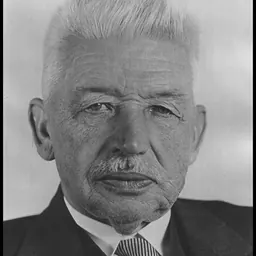
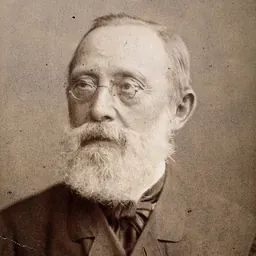
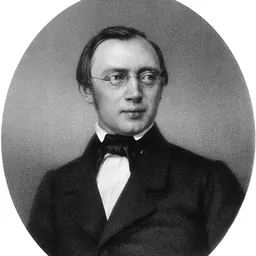
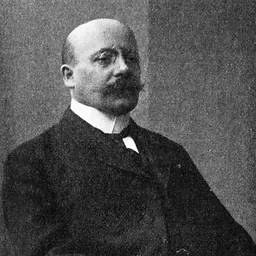

Related people
Same field, nearest in time

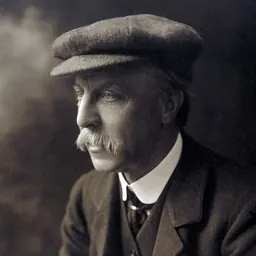

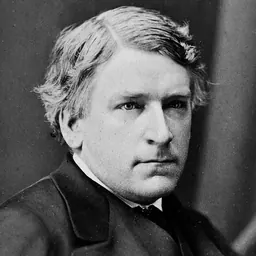

Contemporaries
People whose lives overlapped Friedrich Albin Hoffmann's
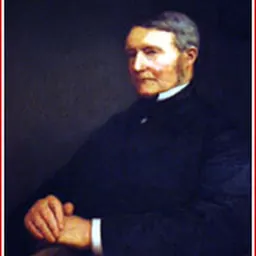
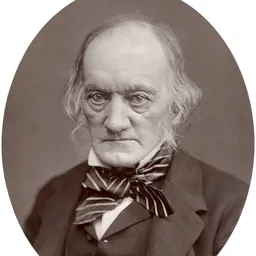
Frequently asked questions
Who was Friedrich Albin Hoffmann?
German internist (1843-1924)
When was Friedrich Albin Hoffmann born?
Friedrich Albin Hoffmann was born on 13 November 1843 in Ruhrort.
When did Friedrich Albin Hoffmann die?
Friedrich Albin Hoffmann died on 13 November 1924 in Leipzig.
What was Friedrich Albin Hoffmann's occupation?
Friedrich Albin Hoffmann was a physician, internist, university teacher and anatomist.
What nationality was Friedrich Albin Hoffmann?
Friedrich Albin Hoffmann was German.
Sources & further reading
· Wikipedia: Friedrich Albin Hoffmann
· DBpedia: Friedrich Albin Hoffmann
Cite this page
APA: Biography.guide. (2026). Friedrich Albin Hoffmann. https://biography.guide/friedrich-albin-hoffmann/
MLA: "Friedrich Albin Hoffmann." Biography.guide, https://biography.guide/friedrich-albin-hoffmann/.
Chicago: "Friedrich Albin Hoffmann." Biography.guide. https://biography.guide/friedrich-albin-hoffmann/.
Data last updated: 2026-09-25 · Spot an error? Report a correction.
Page generated 2026-09-27 05:13 UTC