
About Friederike Kempner
Lived 1828 – 1904 (aged 75). Friederike Kempner was a German poet, writer and librettist.
Friederike Kempner (25 June 1828 – 23 February 1904) was a German-Jewish poet.
The daughter of a well-off family from Kępno , Kempner was born in Opatów, then part of the Prussian Grand Duchy of Posen (today Poland). In 1844, her father purchased a manor (Rittergut) in Droschkau, Silesia, where she and her siblings spent a sheltered youth. By her mother, she received education in the French language, literature, and the Jewish Enlightenment. In 1864, she was able to establish her own residence at a family estate called Friederikenhof (Gierczyce) near Reichthal (Rychtal), where she wrote many of her works. By her niece Doris Davidsohn, née Kempner, she was the great-aunt of Jakob van Hoddis.
The death of both her parents in 1868 had a lasting effect on Kempner's work. Early in life, she developed an interest in general humanitarian questions, especially in hygiene, as well as in reforms of the prison system and the abolition of solitary confinement. Suffering from taphophobia like many of her contemporaries, she urgently advocated the introduction of morgues and a waiting time in cases of suspended animation. Kempner left a comprehensive oeuvre of pamphlets, as well as several novellas and theatre plays which, however, remained largely unheeded by literary critics.
Some of her exalted poems attained notoriety for their unintentional humor; she was mocked as "The Silesian Swan" by editors like Paul Lindau and many parodies were created which later were occasionally even attributed to Kempner herself. This "literary heritage" prompted the author and critic Alfred Kempner (not a direct relative) to adopt the surname Kerr in 1887. In 1905 Sigmund Freud mocked the "involuntary comedy" of her poetry in "The Joke and Its Relation to the Unconscious," tr. Joyce Crick. London: Penguin, 2002, 208-09.
Friedrike Kempner remained unmarried. Some years before her death she was stricken with blindness. She died at her Friederikenhof manor and is buried in the Old Jewish Cemetery, Wrocław.
Literary works Gedichte, 2d ed., Breslau, 1852 (frequently republished) Novellen, 1861 Denkschrift über die Nothwendigkeit einer Gesetzlichen Einführung von Leichenhäusern), 1867 (republished five times) Nettelbeck als Patriot und Kosmopolit, a novel, 1868 Dramas Berenice, 1860 Rudolf der Zweite, 1867 Antigonos, 1880
Don’t just read it —
keep it.
Full-length biographies made to live with: read them, listen on the way to work, watch them tonight.
- E-book
- Audio
- Video
Instant download · yours to keep · every purchase keeps this site free
Important facts
People in Friederike Kempner's life
Named in this biography and alive at the same time


Related people
Same field, nearest in time
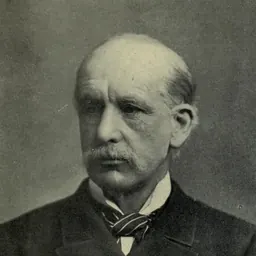
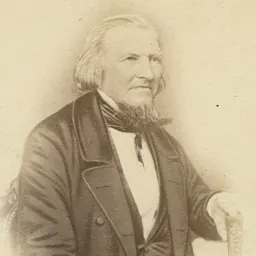

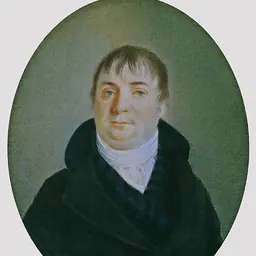
Contemporaries
People whose lives overlapped Friederike Kempner's




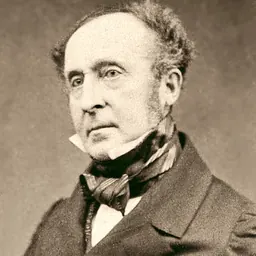
Frequently asked questions
Who was Friederike Kempner?
German writer (1828-1904)
When was Friederike Kempner born?
Friederike Kempner was born on 25 June 1828 in Opatów, Greater Poland Voivodeship.
When did Friederike Kempner die?
Friederike Kempner died on 23 February 1904.
What was Friederike Kempner's occupation?
Friederike Kempner was a poet, writer and librettist.
What nationality was Friederike Kempner?
Friederike Kempner was German.
Sources & further reading
· Wikipedia: Friederike Kempner
Cite this page
APA: Biography.guide. (2026). Friederike Kempner. https://biography.guide/friederike-kempner/
MLA: "Friederike Kempner." Biography.guide, https://biography.guide/friederike-kempner/.
Chicago: "Friederike Kempner." Biography.guide. https://biography.guide/friederike-kempner/.
Data last updated: 2026-09-20 · Spot an error? Report a correction.
Page generated 2026-09-27 05:28 UTC