
Fredric Jameson
American academic and literary critic
About Fredric Jameson
Lived 1934 – 2024 (aged 90). Fredric Jameson was an American essayist, political scientist, writer, literary critic, sociologist and journalist.
Early life and works Fredric Ruff Jameson was born in Cleveland, Ohio, on April 14, 1934. He was the only child of Frank S. Jameson (c.1890–?), a New York-born medical doctor with his own private practice, and Bernice née Ruff (c.1904–1966), a Michigan-born Barnard College graduate who did not work outside the family home. Both his parents had non-wage income over $50 in 1939 (about USD$1130 in 2024). By April 1935 he moved with his parents to Gloucester City, New Jersey, and by 1949 the family occupied a house in the nearby middle-class suburb of Haddon Heights, New Jersey. He graduated from Moorestown Friends School in 1950.
He completed a BA summa cum laude in French at Haverford College, where he was elected to the Phi Beta Kappa society in his junior year. His professors at Haverford included Wayne Booth, to whom A Singular Modernity (2002) is dedicated. After graduation in 1954 he briefly traveled to Europe, studying at Aix-en-Provence, Munich, and Berlin, where he learned of new developments in continental philosophy, including the rise of structuralism. He returned to America the following year to study at Yale University under Erich Auerbach in pursuit of a PhD, which was awarded in 1959 for a dissertation on The Origins of Sartre's Style.
Career summary From 1959 to 1967 he taught French and Comparative Literature at Harvard University.
He was employed by the University of California, San Diego from 1967 to 1976, where he worked alongside Herbert Marcuse. He taught classes on Marxist literary criticism, the Frankfurt School, the French novel and poetry, and Sartre.
In 1985 he was elected to the American Academy of Arts and Sciences.
Early works Erich Auerbach would prove to be a lasting influence on Jameson's thought. This was already apparent in Jameson's doctoral dissertation, published in 1961 as Sartre: The Origins of a Style. Auerbach's concerns were rooted in the German philological tradition; his works on the history of style analyzed literary form within social history. Jameson would follow in these steps, examining the articulation of poetry, history, philology, and philosophy in the works of Jean-Paul Sartre, who was the subject of his dissertation. His research focused on critical theory: thinkers of, and influenced by, the Frankfurt School, such as Kenneth Burke, György Lukács, Ernst Bloch, Theodor Adorno, Walter Benjamin, Herbert Marcuse, Louis Althusser, and Sartre, who viewed cultural criticism as an integral feature of Marxist theory. In 1969, Jameson co-founded the Marxist Literary Group with a number of his graduate students at the University of California, San Diego.
While the Orthodox Marxist view of ideology held that the cultural "superstructure" was completely determined by the economic "base", the Western Marxists critically analyzed culture as a historical and social phenomenon alongside economic production and distribution or political power relationships. They held that culture must be studied using the Hegelian concept of immanent critique: the theory that adequate description and criticism of a philosophical or cultural text must be carried out in the same terms that text itself employs, in order to develop its internal inconsistencies in a manner that allows intellectual advancement. Marx highlighted immanent critique in his early writings, derived from Hegel's development of a new form of dialectical thinking that would attempt, as Jameson comments, "to lift itself mightily up by its own bootstraps".
Narrative and history History came to play an increasingly central role in Jameson's interpretation of both the reading (consumption) and writing (production) of literary texts. Jameson marked his full-fledged commitment to Hegelian-Marxist philosophy with the publication of The Political Unconscious: Narrative as a Socially Symbolic Act, the opening slogan of which is "always historicize" (1981).
The book's argument emphasized history as the "ultimate horizon" of literary and cultural analysis. It borrowed notions from the structuralist tradition and from Raymond Williams's work in cultural studies, and joined them to a largely Marxist view of labor (whether blue-collar or intellectual) as the focal point of analysis. Jameson's readings exploited both the explicit formal and thematic choices of the writer and the unconscious framework guiding these. Artistic choices that were ordinarily viewed in purely aesthetic terms were recast in terms of historical literary practices and norms, in an attempt to develop a systematic inventory of the constraints they imposed on the artist as an individual creative subject. To further this meta-commentary, Jameson described the ideologeme, or "the smallest intelligible unit of the essentially antagonistic collective discourses of social classes", the smallest legible residue of the real-life, ongoing struggles occurring between social classes.
Jameson's establishment of history as the only pertinent factor in this analysis, which derived the categories governing artistic production from their historical framework, was paired with a bold theoretical claim. His book claimed to establish Marxian literary criticism, centered in the notion of an artistic mode of production, as the most all-inclusive and comprehensive theoretical framework for understanding literature. According to Vincent B. Leitch, the publication of The Political Unconscious "rendered Jameson the leading Marxist literary critic in America."
Analysis of postmodernism
Background It is Jameson's contribution to a conception and analysis of postmodernism that has had the most impact in its breadth and reach. At the time of his death in 2024, it was generally recognized that he was the preeminent critic of postmodernism. Postmodernism represents the form of an enormous cultural expansion into an economy of spectacle and style, rather than the production of goods.
Jameson developed this form of analysis during a time when "an art-historical debate had wondered for several years whether our age had moved beyond modern art and on to 'postmodern' art". He later expanded the article into a book, which he published in 1991.
Jameson's argument Jameson's argument centered around his assertion that the various phenomena of the postmodern had been, or could have been, understood successfully within a modernist framework.
Following Adorno and Horkheimer's analysis of the culture industry, Jameson discussed this phenomenon in his critical discussion of architecture, film, narrative, and visual arts, as well as in his strictly philosophical work. And since postmodernism — as was mentioned above — represents the form of an enormous cultural expansion into an economy of spectacle and style, rather than the production of goods,
Relatedly, Jameson argues that the postmodern era suffers from a crisis in historicity: "there no longer does seem to be any organic relationship between the [...] history we learn from schoolbooks and the lived experience of the current, multinational, high-rise, stagflated city of the newspapers and of our own everyday life".
Jameson's analysis of postmodernism attempts to view it as historically grounded; he therefore explicitly rejects any moralistic opposition to postmodernity as a cultural phenomenon. Instead, Jameson insists upon a Hegelian immanent critique that would "think the cultural evolution of late capitalism dialectically, as catastrophe and progress all together". (adapted from Kevin A. Lynch; a form of class consciousness mediated by popular culture that corresponds to the era of capitalist globalization), the "vanishing mediator", totality as conspiracy, "alternate modernity" (the postcolonial notion of distinct regional pathways of capitalism, linked to the political project of BRICS), "wrapping" and antagonism as the principle of totalisation.
Later work Several of Jameson's later works, along with Postmodernism, are part of what he called both a "sequence" and "project" entitled The Poetics of Social Forms. While the individual works are formally named on the flyleaf of Inventions of a Present, its more nuanced structure—six volumes comprising seven publications grouped into three subdivisions—can be gleaned from mentions in the books themselves.
A memorial piece published by the editorial team of the Marxist journal Historical Materialism: Research in Critical Marxist Theory described Jameson as an "intellectual giant" responsible for an "enduring legacy that has inspired generations of thinkers, activists and scholars".
Reissued: Verso, 2008.
Postmodernism and Cultural Theories . Tr. Tang Xiaobing. Xi'an: Shaanxi Normal University Press. 1987. (anthology) (anthology) Nationalism, Colonialism, and Literature. (with Terry Eagleton and Edward Said) Derry: Field Day, 1988.
Reissued: 2011. Reissued: 2009. (anthology) The Jameson Reader. Ed. Michael Hardt and Kathi Weeks. Oxford: Blackwell. 2000. (anthology) (semi-anthology)
Jameson on Jameson: Conversations on Cultural Marxism. Ed. Ian Buchanan. Durham, NC: Duke University Press. 2007. (anthology; altered one-volume re-edition, with additional essays)
(with others) An American Utopia: Dual Power and the Universal Army. Ed. Slavoj Žižek. London and New York: Verso. 2016. Raymond Chandler: The Detections of Totality. London and New York: Verso. 2016. Allegory and Ideology. London and New York: Verso. 2019. The Benjamin Files. London and New York: Verso. 2020. Mimesis, Expression, Construction: Fredric Jameson's Seminar on Aesthetic Theory. Ed. Octavian Esanu. London: Repeater. 2024 Inventions of a Present: The Novel in its Crisis of Globalization. London and New York: Verso. 2024 The Years of Theory: Postwar French Thought to the Present. Ed. Carson Welch. London and New York: Verso. 2024
Selected articles
(reprinted in Dissent from the Homeland: Essays after September 11, ed. Frank Lentricchia and Stanley Hauerwas, Durham, NC: Duke University Press, 2003, pp. 55–62)
Don’t just read it —
keep it.
Full-length biographies made to live with: read them, listen on the way to work, watch them tonight.
- E-book
- Audio
- Video
Instant download · yours to keep · every purchase keeps this site free
Important facts
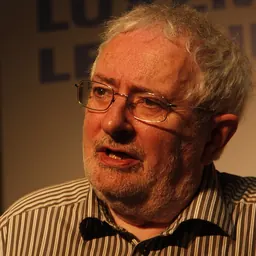
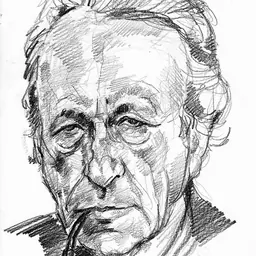
People in Fredric Jameson's life
Named in this biography and alive at the same time


Related people
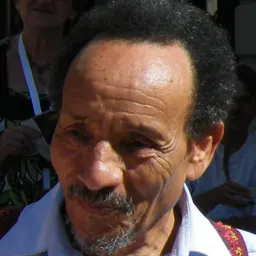
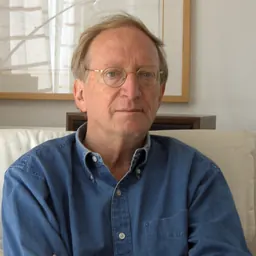
Same field, nearest in time



Contemporaries
People whose lives overlapped Fredric Jameson's



Frequently asked questions
Who was Fredric Jameson?
American academic and literary critic (1934–2024)
When was Fredric Jameson born?
Fredric Jameson was born on 14 April 1934 in Cleveland.
When did Fredric Jameson die?
Fredric Jameson died on 22 September 2024 in Durham.
What was Fredric Jameson's occupation?
Fredric Jameson was an essayist, political scientist, writer, literary critic, sociologist and journalist.
What nationality was Fredric Jameson?
Fredric Jameson was American.
Sources & further reading
Cite this page
APA: Biography.guide. (2026). Fredric Jameson. https://biography.guide/fredric-jameson/
MLA: "Fredric Jameson." Biography.guide, https://biography.guide/fredric-jameson/.
Chicago: "Fredric Jameson." Biography.guide. https://biography.guide/fredric-jameson/.
Data last updated: 2026-09-20 · Spot an error? Report a correction.
Page generated 2026-09-27 05:18 UTC