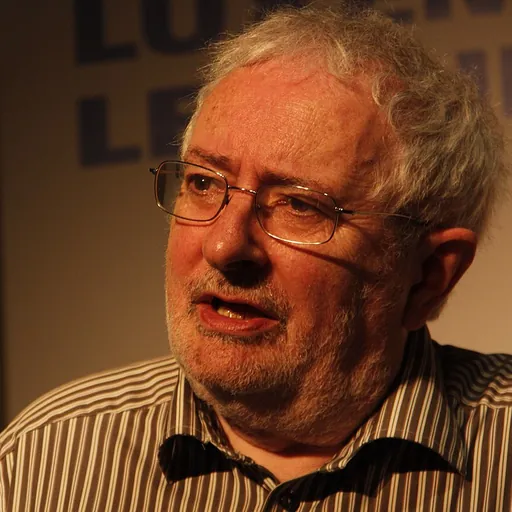
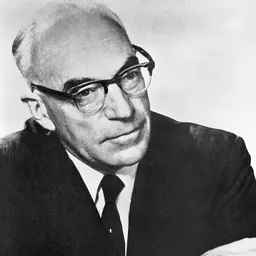
Terry Eagleton
British writer, academic and educator
About Terry Eagleton
Born 1943. Terry Eagleton is a British literary critic, non-fiction writer, university teacher, literary historian, literary theorist and writer.
Early life Eagleton was born in Salford, Lancashire, England, on 22 February 1943, to Francis Paul Eagleton and his wife, Rosaleen (née Riley) Eagleton. He grew up in a working-class Catholic family of Irish descent in Salford, with roots in County Galway. His mother's side of the family had strong Irish republican sympathies. He served as an altar boy at a local Carmelite convent where he was responsible for escorting novice nuns taking their vows, a role referred to in the title of his memoir The Gatekeeper (2002).
Education and academia Eagleton was educated at De La Salle College, a Roman Catholic grammar school in Pendleton, Salford. It was during this period that his socialist convictions began to take hold, and he edited a radical Catholic leftist periodical called Slant.
Career Eagleton began his literary studies with the 19th and 20th centuries, then conformed to the stringent academic Marxism of the 1970s. He then published an attack on his mentor Williams's relation to the Marxist tradition in the pages of the New Left Review, in the mode of the French critic Louis Althusser. In the 1960s, he became involved with the left-wing Catholic group Slant, authoring a number of theological articles (including A Marxist Interpretation of Benediction), as well as a book Towards a New Left Theology. A major turning point was his Criticism & Ideology (1976) in which Eagleton discusses various theorists and critics from F. R. Leavis and (his tutor) Raymond Williams to Pierre Macherey. This earliest response to Theory is critical and substantive with Eagleton supplying a dense web of categories for "a materialist criticism" which situates the author as well as the text in the general mode of production, the literary mode of production and particular ideologies. In chapter 4 he gives a thorough overview of one theme in the English context – "organicist concepts of society" or "community" – as worked by petty-bourgeois Victorian writers, from George Eliot to D. H. Lawrence, and how this determines textual form in each instance.
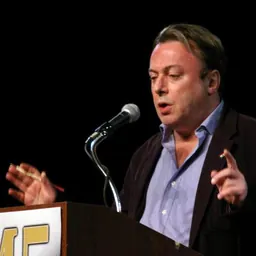
Literary Theory and After Theory In Literary Theory: An Introduction (1983, revised 1996), Eagleton surveys the history of theoretical approaches to literature, from its beginnings with Matthew Arnold, through formalism, psychoanalysis, and structuralism, to post-structuralism. In the process, he demonstrates what is the thesis of the book: that theory is necessarily political. Theory is always presented as if it is unstained by point of view and is neutral, but in fact it is impossible to avoid having a political perspective. Peter Barry has said of the book that it "greatly contributed to the 'consolidation' of literary theory and helped to establish it firmly on the undergraduate curriculum". Eagleton's approach to literary criticism is one firmly rooted in the Marxist tradition, though he has also incorporated techniques and ideas from more recent modes of thought as structuralism, Lacanian analysis and deconstruction. As his memoir The Gatekeeper recounts, Eagleton's Marxism has never been solely an academic pursuit. He was active in the International Socialists (along with Christopher Hitchens) and then the Workers' Socialist League whilst in Oxford. He has been a regular contributor to the London Review of Books.
After Theory (2003) was written two decades later, after the end of the great period of High Theory – the cultural theory of Foucault, the postmodernists, Derrida, et al. Looking back, Eagleton evaluates its achievements and failures, and proposes new directions needing to be pursued. He considers that among the great achievements of Theory were the expansion of objects of study (to include gender, sexuality, popular culture, post-colonialism, etc.), and the wide-ranging self-reflective criticism of traditional assumptions. But in Eagleton's estimation there were also many serious mistakes, for instance: the assault on the normative and the insistence on the relativity of truth leaves us powerless to criticize oppression; the rejection of objectivity and (excessively) of all forms of essentialism bespeak an unrecognized idealism, or at least a blindness to our human materiality, ultimately born of an unconscious fear of death; and cultural studies has wrongly avoided consideration of ethics, which for Eagleton is inextricably tied to a proper politics. It is virtue and politics and how they may be realized, among other things, that Eagleton offers as new avenues needing to be explored by cultural studies. After Theory fleshes out this political aspect, tied to ethics, growing out of the fact that humans exist in neediness and dependency on others, their freedom bounded by the common fact of death.
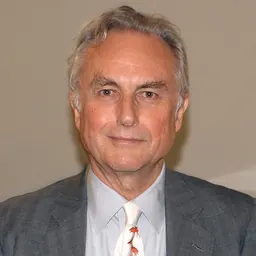
Dawkins, Hitchens and the New Atheism Eagleton has become a vocal critic of what has been called the New Atheism. In October 2006, he published a review of Richard Dawkins's The God Delusion in the London Review of Books. Eagleton begins by questioning Dawkins's methodology and understanding: "Imagine someone holding forth on biology whose only knowledge of the subject is the Book of British Birds, and you have a rough idea of what it feels like to read Richard Dawkins on theology." Eagleton further writes, "Nor does [Dawkins] understand that because God is transcendent of us (which is another way of saying that he did not have to bring us about), he is free of any neurotic need for us and wants simply to be allowed to love us." He concludes by suggesting Dawkins has not been attacking organised faith so much as a sort of rhetorical straw man:
Terry and Gifford Lectures In April 2008 Eagleton delivered Yale University's Terry Lectures, with the title Faith and Fundamentalism: Is belief in Richard Dawkins necessary for salvation?, constituting a continuation of the critique he had begun in The London Review of Books. Introducing his first lecture with an admission of ignorance of both theology and science, Eagleton goes on to affirm: "All I can claim in this respect, alas, is that I think I may know just about enough theology to be able to spot when someone like Richard Dawkins or Christopher Hitchens – a couplet I shall henceforth reduce for convenience to the solitary signifier Ditchkins – is talking out of the back of his neck." An expanded version of these lectures was published in 2009 as Reason, Faith, and Revolution: Reflections on the God Debate.
Football Eagleton sees football as a new opium of the people distracting ordinary people from more serious, important social concerns. Eagleton is pessimistic as to whether this distraction can be ended:
Politics Eagleton joined the Stockport Young Socialists at 16, influenced by his schoolfriend Bernard Regan. As a student at Cambridge, he was involved with the left-wing Catholic group Slant. He read Marx and Lenin in this period. Eagleton was also involved in the Cambridge Left Forum, which aimed to bring socialists in the university and local trade unionists together. At the end of the 1960s, Eagleton left the Slant group and moved to the secular, revolutionary left by joining the International Socialists. In the late 1970s he re-joined the Labour Party in Oxford and become a member of the Labour Committee on Ireland. In the early 1980s, he was a member of the Workers' Socialist League, whose activities were centred on the car factory in Cowley.
Criticism of Martin and Kingsley Amis
In late 2007, a critique of Martin Amis included in the introduction to a 2007 edition of Eagleton's book Ideology was widely reprinted in the British press. In it, Eagleton took issue with Amis' widely quoted writings on "Islamism", directing particular attention to one specific passage from an interview with Ginny Dougary published in The Times on 9 September 2006.
Eagleton criticised Amis and expressed surprise as to its source, stating: "[these are] not the ramblings of a British National Party thug ... but the reflections of Martin Amis, leading luminary of the English metropolitan literary world." He drew a connection between Amis and his father (the novelist Kingsley Amis). Eagleton went on to write that Martin Amis had learned more from his father – whom Eagleton described as a reactionary "racist, anti-Semitic boor, a drink-sodden, self-hating reviler of women, gays and liberals" – than merely "how to turn a shapely phrase." Eagleton added there was "something rather stomach-churning at the sight of those such as Amis and his political allies, champions of a civilisation that for centuries has wreaked untold carnage throughout the world, shrieking for illegal measures when they find themselves for the first time on the sticky end of the same treatment." about the affair, to which Amis responded via open letter, calling Eagleton "an ideological relict ... unable to get out of bed in the morning without the dual guidance of God and Karl Marx." Amis said the views Eagleton attributed to him as his considered opinion was in fact his spoken description of a tempting urge, in relation to the need to "raise the price" of terrorist actions. Eagleton's personal comments on Kingsley Amis prompted a further response from Kingsley's widow, the novelist Elizabeth Jane Howard. Howard wrote to The Daily Telegraph, noting that for a supposed "anti-semitic homophobe", it was peculiar that the only guests at the Howard–Amis nuptials were either Jewish or gay. As Howard explained, "Kingsley was never a racist, nor an anti-Semitic boor. Our four great friends who witnessed our wedding were three Jews and one homosexual." Colin Howard, Howard's homosexual brother, called Eagleton "a little squirt", adding that Sir Kingsley, far from being homophobic, had extended an affectionate friendship to him and helped him come to terms with his sexuality.
Critical reactions William Deresiewicz wrote of After Theory, Eagleton's book, as follows:
The novelist and critic David Lodge, writing in the May 2004 New York Review of Books on Theory and After Theory, concluded:
Jonathan Bate stressed the importance of Eagleton's Catholic background in "Saint Terence", a 1991 review-essay in the London Review of Books before the overt religious turn in Eagleton's later works.
Personal life Eagleton has been married twice. His first marriage was to Rosemary Galpin, a nurse; his second marriage was to American academic Willa Murphy. They have since divorced. Eagleton has five children, including the journalist Oliver Eagleton.
Publications The New Left Church [as Terence Eagleton] (1966) Shakespeare and Society: Critical Studies in Shakespearean Drama (1967) Exiles and Émigrés: Studies in Modern Literature (1970) The Body as Language: Outline of a New Left Theology (1970) Myths of Power: A Marxist Study of the Brontës (1975) Criticism & Ideology (1976) Marxism and Literary Criticism (1976) Walter Benjamin, or Towards a Revolutionary Criticism (1981) The Rape of Clarissa: Writing, Sexuality, and Class Struggle in Samuel Richardson (1982) Literary Theory: An Introduction (1983) The Function of Criticism (1984) Saints and Scholars (1987; a novel) Raymond Williams: Critical Perspectives (1989; editor) Saint Oscar (1989; a play about Oscar Wilde) The Significance of Theory (1989) The Ideology of the Aesthetic (1990) Nationalism, Colonialism, and Literature (1990) Ideology: An Introduction (1991–2007) Wittgenstein: The Terry Eagleton Script, The Derek Jarman Film (1993) Literary Theory (1996) The Illusions of Postmodernism (1996) Heathcliff and the Great Hunger (1996) Marx and Freedom (1997) Crazy John and the Bishop and Other Essays on Irish Culture (1998) The Idea of Culture (2000) The Truth about the Irish (2001) The Gatekeeper: A Memoir (2002) Sweet Violence: The Idea of the Tragic (2002) After Theory (2003) Figures of Dissent: Reviewing Fish, Spivak, Zizek and Others (2003) The English Novel: An Introduction (2005) Holy Terror (2005) The Meaning of Life (2007) How to Read a Poem (2007) Trouble with Strangers: A Study of Ethics (2008) Literary Theory, Anniversary Edition (2008) Reason, Faith, and Revolution: Reflections on the God Debate (2009) The Task of the Critic: Terry Eagleton in Dialogue with Matthew Beaumont (2009) On Evil (2010) Why Marx Was Right (2011) The Event of Literature (2012) Across the Pond: An Englishman's View of America (2013) How to Read Literature (2013) Culture and the Death of God (2014) Hope without Optimism (2015) Culture (2016) Materialism (2017) Radical Sacrifice (2018) Humour (2019) Tragedy (2020) Critical Revolutionaries: Five Critics Who Changed the Way We Read (2022) The Real Thing: Reflections on a Literary Form (2024)
Don’t just read it —
keep it.
Full-length biographies made to live with: read them, listen on the way to work, watch them tonight.
- E-book
- Audio
- Video
Instant download · yours to keep · every purchase keeps this site free
Important facts
People in Terry Eagleton's life
Named in this biography and alive at the same time





Related people
Same field, nearest in time


Contemporaries
People whose lives overlapped Terry Eagleton's


Frequently asked questions
Who is Terry Eagleton?
British writer, academic and educator
When was Terry Eagleton born?
Terry Eagleton was born on 22 February 1943 in Salford.
What is Terry Eagleton's occupation?
Terry Eagleton is a literary critic, non-fiction writer, university teacher, literary historian, literary theorist and writer.
What nationality is Terry Eagleton?
Terry Eagleton is British.
Sources & further reading
Cite this page
APA: Biography.guide. (2026). Terry Eagleton. https://biography.guide/terry-eagleton/
MLA: "Terry Eagleton." Biography.guide, https://biography.guide/terry-eagleton/.
Chicago: "Terry Eagleton." Biography.guide. https://biography.guide/terry-eagleton/.
Data last updated: 2026-09-23 · Spot an error? Report a correction.
Portrait: Wikimedia Commons · author & licence
Page generated 2026-09-27 05:05 UTC